By John Attah
The Benue State Universal Basic Education Board, SUBEB, has turned to Lagos State for strategies to tackle the growing number of out-of-school children, with a delegation studying the Lagos State Universal Basic Education Board’s, LASUBEB, Project Zero initiative.
The engagement is part of efforts to strengthen the implementation of Benue’s Project BRACE-UP, Building Rights to Access and Compulsory Education for Un-enrolled Pupils, which is designed to identify children outside the school system and address barriers preventing them from enrolling and remaining in school.
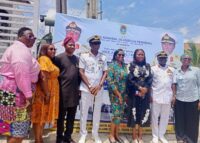
Executive Chairman of Benue SUBEB, Dr Grace Adagba, led the Benue delegation to Lagos for the weekend engagement with LASUBEB.
Lagos’ Project Zero, launched in 2020, focuses on identifying and tracking children who have dropped out of school or are at risk of dropping out, facilitating their return to school and improving retention through targeted interventions and partnerships.
The Special Assistant to the Benue SUBEB Chairman on Corporate Communications and Community Engagements, Msughter Ataigbough, said the engagement would enable Benue to learn from Lagos’ experience and adapt strategies relevant to its own education challenges.
Speaking during the meeting, Adagba said both initiatives were driven by the need to get children into school and keep them there, but noted that Project BRACE-UP adopted a broader approach to tackling school exclusion.
She said: “Although both initiatives are anchored on the imperative of getting children into school and keeping them there, Project BRACE-UP adopts a broader, multi-dimensional framework encompassing community mobilisation, data mapping, advocacy, capacity building, quality assurance mechanisms, learning support and alternative learning pathways for sustained participation.”
According to her, the Benue programme was designed to go beyond returning children to classrooms by addressing the underlying factors responsible for exclusion and dropout.
She said the programme would also create mechanisms to support children’s continued participation in education, rather than simply focusing on initial enrolment.
Adagba said Benue SUBEB was particularly interested in Lagos’ experience in child identification, data management, community engagement and retention strategies.
She added that lessons from the engagement would help strengthen the implementation of Project BRACE-UP and improve the state’s response to children who are out of school or at risk of dropping out.
Ataigbough said the engagement underscored the commitment of both states to reducing the number of children excluded from basic education and ensuring that more children were enrolled and retained in school.
He said the collaboration would also support efforts to ensure that children who had dropped out or never enrolled were identified and given pathways back into the education system.