By Joyce Ekeh
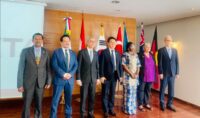
Diplomats from MIKTA member countries and the Federal Government have called for easier access to climate finance, stronger international partnerships and increased investment to help African countries tackle climate change ahead of the COP31 summit in Türkiye.
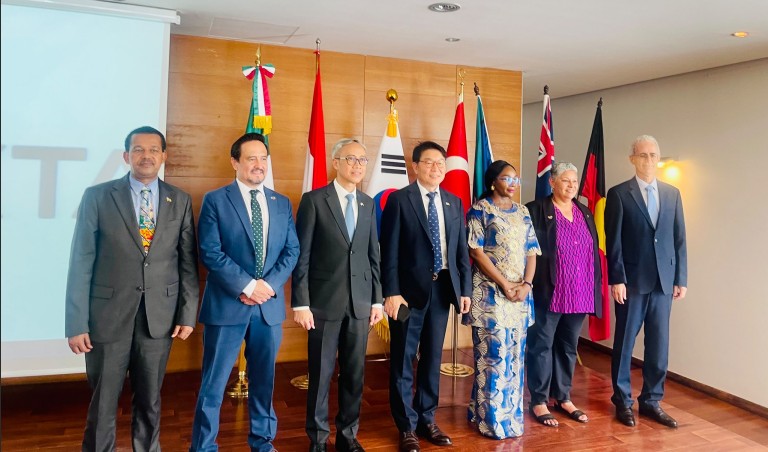
The call was made on Tuesday at a MIKTA roundtable on Climate Finance and Implementation Partnerships in Africa, held in Abuja ahead of the United Nations Climate Change Conference scheduled for November 9–20 in Antalya, Türkiye.
The discussions focused on translating climate commitments into bankable projects capable of supporting clean energy, agriculture, food security, green industries and community resilience.
Australian High Commissioner to Nigeria, Ms Leilani Bin-Juda, said climate action must deliver practical outcomes, particularly for developing countries facing difficulties accessing funding because of complex applications, fragmented systems and lengthy approval processes.
“For Australia, COP31 is about turning climate ambition into practical outcomes,” she said.
Bin-Juda highlighted a Pacific-led action plan launched at Pre-COP in Fiji on October 8 to simplify climate finance applications, approvals and disbursements, mobilise private investment and strengthen countries’ capacity to develop investment-ready projects. She urged Nigeria to support the initiative.
Turkish Ambassador to Nigeria, Mehmet Poroy, said COP31 should prioritise implementation of existing commitments and ensure that climate ambitions translated into measurable results.
He said African countries needed adequate finance, technology and institutional support to implement their national climate plans.
Poroy also highlighted Türkiye’s Climate Implementation Bridge initiative, being developed with the United Nations Development Programme, to connect developing countries’ climate priorities with appropriate financing and private capital.
He clarified that the initiative was not intended to establish a new fund or replace existing climate finance mechanisms, but to bridge the gap between commitments and investment-ready projects.
Indonesian Ambassador to Nigeria, Bambang Suharto, said the scale of funding required to achieve climate targets made it necessary to combine public resources, private investment and international support.
He said Indonesia estimated that it needed about $472.6 billion to achieve its climate targets, with annual financing requirements of approximately $14.5 billion through 2030, compared with an annual state budget allocation of about $4.42 billion.
Suharto said Indonesia was exploring green sukuk, blended finance, thematic bonds and concessional funding to support climate action. He also proposed consultations with Nigeria and interested partners on a possible Indonesia-Nigeria Climate Finance and Resilience Partnership covering climate-smart agriculture, land restoration, coastal protection, clean energy and green industrialisation.
South Korean Ambassador to Nigeria, Jeong Yoan, identified renewable energy, agricultural technology, infrastructure and green investment as areas for stronger cooperation with Nigeria.
He highlighted a planned 2026–2030 partnership involving the Korea International Cooperation Agency (KOICA) and the Food and Agriculture Organisation (FAO) to create green jobs for young people in agriculture and food systems.
Jeong also stressed the importance of clear regulations, transparent procedures and reliable infrastructure in attracting long-term private investment.
He said Nigeria estimated that it would require about $337 billion between 2026 and 2035 to meet its climate commitments, underscoring the need for domestic resources, international financing and private-sector participation.
Mexican Charge d’Affaires in Nigeria, Jose Manuel Briseno Flores, also called for climate resources to translate into practical solutions, including renewable energy projects that meet community needs.
In her remarks, Director-General of the National Council on Climate Change (NCCC), Mrs Omotenioye Majekodunmi, represented by the council’s Mrs Jummai Vandu, said Nigeria was committed to translating its Nationally Determined Contributions into bankable, investment-ready projects.
She identified adaptation finance, decentralised climate action, gender inclusion and a just transition as key national priorities.
Majekodunmi said climate finance must be predictable and accessible to vulnerable communities, while partnerships should enable states, cities and local governments to implement projects.
She also stressed the need to empower women and young people as decision-makers and beneficiaries of climate investments, adding that the transition to clean energy must protect energy security, jobs and economic equity.
Ethiopian Ambassador to Nigeria, Legesse Geremew Haile, said Africa faced disproportionate climate vulnerabilities despite contributing relatively little to global emissions.
He called for predictable, grant-based financing and technology transfers to help African countries implement their climate priorities.
Haile highlighted Ethiopia’s Climate Resilient Green Economy Strategy and Green Legacy Initiative as examples of efforts to combine environmental protection with employment and sustainable development.
He said Ethiopia looked forward to hosting COP32 in 2027, where it would seek greater attention to African development priorities, just energy transitions and loss-and-damage financing.
MIKTA is a cross-regional partnership comprising Mexico, Indonesia, the Republic of Korea, Türkiye and Australia.