By Blessing Elo Oghene
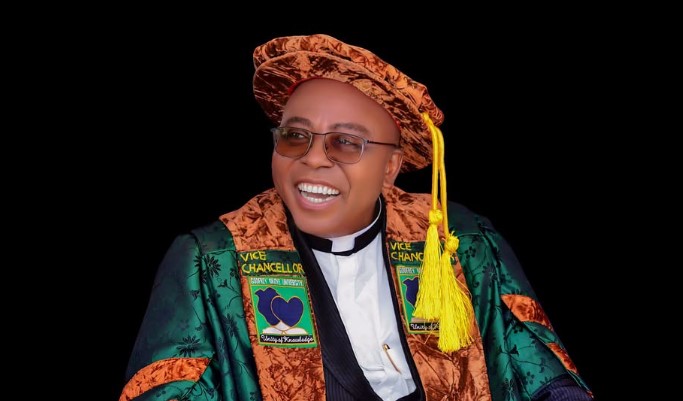
The Vice-Chancellor of Godfrey Okoye University (GOUNI), Enugu, Prof. Christian Aneke, has raised concerns over the impact of Nigeria’s socio-economic challenges on students’ psychological well-being, saying the situation affects their concentration and academic performance during examinations.
Aneke disclosed this during a press briefing at the Goodluck Jonathan Arena, Enugu, ahead of the university’s 14th convocation ceremony scheduled for Saturday, November 28, 2026.
He explained that the prevailing economic and social difficulties in the country were increasingly affecting students’ ability to concentrate during examinations, despite efforts by lecturers to provide quality education.
According to him, students were not insulated from the challenges facing the country, stressing that the pressures could negatively affect their academic performance.
The Vice-Chancellor partly attributed the higher number of graduates with Second Class Lower Division compared to those with Second Class Upper Division to the psychological and socio-economic challenges confronting students.
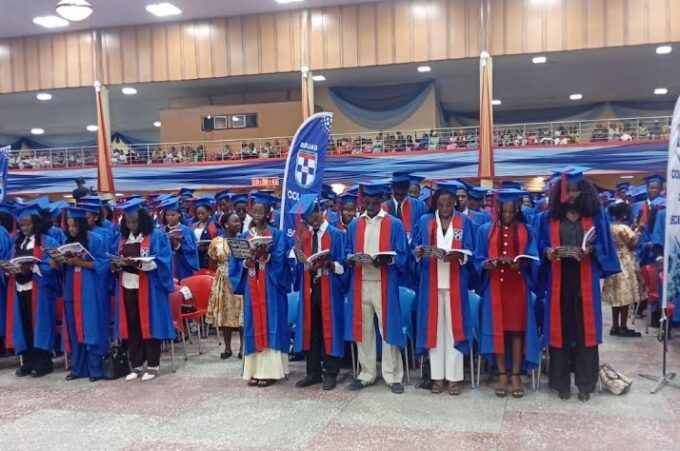
Speaking on the forthcoming convocation, Aneke announced that 666 students would graduate, comprising 584 undergraduates and 82 postgraduate students.
He disclosed that 27 students earned First Class honours, 206 obtained Second Class Upper Division, 262 graduated with Second Class Lower Division, while 89 received Third Class degrees.
He added that the overall best graduating student recorded a Cumulative Grade Point Average (CGPA) of 4.97 and had previously emerged as the university’s Vice-Chancellor for a Day.
“Six hundred and sixty-six graduates will be celebrated on Saturday. Of this number, 584 are undergraduates, while 82 are postgraduate students.
“Twenty-seven made First Class, 206 made Second Class Upper Division, 262 made Second Class Lower Division, while 89 made Third Class. This year, the university has made progress and achieved something significant,” he said.
Highlighting the institution’s achievements, Aneke said the university had experienced remarkable growth in its 17 years of existence, increasing from about 250 students and fewer than 100 staff members to over 4,000 students and more than 1,500 staff.
He attributed the development to deliberate investments in academic excellence, research, innovation, entrepreneurship and competitive engagements.
Established on October 21, 2009, the university commenced academic activities with two faculties and a modest student population but has since expanded to more than eight faculties, including Medical Sciences.
He further noted that the institution had recorded significant infrastructural development, particularly at its main campus, which occupies more than 173 hectares of land.
According to him, the university’s development philosophy is driven by its commitment to measurable academic excellence, encapsulated in its guiding question: “What is evidence?”
In another development, Aneke announced that the university was developing a DNA Centre for Forensics and Criminal Investigations at its main campus to strengthen scientific research and support criminal justice administration in Nigeria.
He explained that the project developed from the university’s DNA Learning Centre, where Natural Sciences students receive training in DNA sequencing and other related scientific procedures.
The proposed centre, he said, would provide services such as DNA paternity testing, fingerprint analysis and human identification in accident cases and criminal investigations.
He noted that the initiative would help reduce Nigeria’s dependence on foreign laboratories for forensic investigations.
“We want to show Nigeria the power of DNA. A university should be able to tell a man who doubts the paternity of a child, through verifiable scientific evidence, whether he is the father.
“We should also be able to establish the identity of someone who has committed a crime through scientific evidence and identify human remains in cases of accidents.
“We don’t need to export these things to South Africa or the United States,” he said.
However, the Vice-Chancellor disclosed that the university was awaiting the necessary licences and regulatory approvals to ensure that forensic evidence generated by the centre would be admissible in courts.