By Kazeem Waris
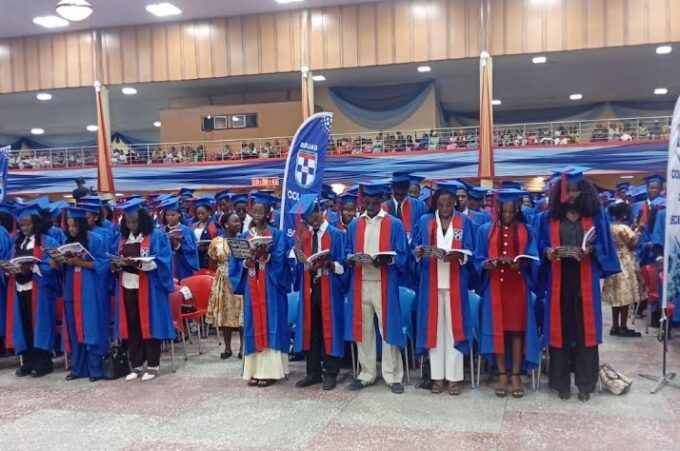
The National Universities Commission (NUC) has proposed a three-to-four-week break for universities to accommodate the 2027 general elections, assuring that the adjustment would not disrupt students’ academic programmes.
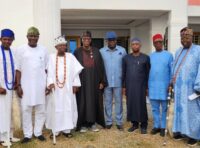
The Executive Secretary of NUC, Prof. Abdullahi Yusufu Ribadu, made the proposal on Monday in Abuja during a courtesy visit by the Chairman of the Independent National Electoral Commission (INEC), Prof. Joash Amupitan, SAN.
Ribadu said the entire election cycle would last no more than four weeks, urging universities to adjust their academic calendars to accommodate the polls without compromising students’ studies.
The proposal comes as INEC seeks stronger collaboration with universities, which have played critical roles in the conduct of elections, particularly through the deployment of Vice-Chancellors and other academics as collation and returning officers.
The 2027 Presidential and National Assembly elections are scheduled for Saturday, January 16, while the governorship and State Houses of Assembly elections will hold on February 6.
According to a statement issued by INEC, Amupitan, who was accompanied by national commissioners and senior officials, outlined a series of operational, technological and security reforms aimed at improving the safety and effectiveness of election officials.
He said the commission had introduced measures to strengthen the credibility of result management, including automated arithmetic consistency and over-voting checks on polling unit results recorded on Form EC8A before transmission to the INEC Result Viewing Portal (IReV).
Amupitan disclosed that INEC had procured 57,000 new Bimodal Voter Accreditation System (BVAS) devices, reducing the voter-to-device ratio to 850 per machine.
He also announced that the commission would conduct a nationwide mock accreditation and result transmission exercise across the 36 states and the Federal Capital Territory on Saturday, November 28, 2026.
On election security, the INEC chairman said the Inter-Agency Consultative Committee on Election Security (ICCES) had been decentralised to every local government area and registration area, with dedicated security cordons and escort protocols around collation centres.
He cited Sections 96 and 97 of the Electoral Act 2026, which criminalise violence, abusive rhetoric and threats against electoral personnel, as well as Section 148, which empowers INEC to prosecute offenders directly.
“No Returning Officer or Collation Officer will be left to stand alone against lawlessness,” Amupitan declared.
He sought the NUC’s support in four key areas: timely nomination of verified non-partisan academic personnel, adjustment of university academic calendars to accommodate election dates, collaboration on voter education and countering disinformation on campuses, and improved welfare and recognition for academics deployed for election duties.
Responding, Ribadu congratulated Amupitan on his appointment, describing him as a lawyer and academic of international repute and “a round peg in a round hole.”
He assured INEC that the NUC would engage Vice-Chancellors on the nomination of academic personnel, including through an online meeting, and issue a circular to universities once the commission formally communicates its requests.
“Since we want to have credible elections, we also have to have credible personnel,” Ribadu said, stressing that all ad hoc election personnel should take an oath of neutrality.
On the proposed academic break, he said the commission would consult university authorities to ensure that the election timetable did not disrupt academic activities.
“We will discuss with the Vice-Chancellors and have their calendars tweaked in such a way that it will not affect the elections, nor will it affect the studies of the students,” he said.
Ribadu added that students could also contribute to the electoral process through campus clubs and other platforms promoting voter education.
He expressed confidence that INEC would conduct transparent, free and fair elections capable of setting an example for other African countries.
The NUC executive secretary also proposed broader institutional collaboration, including student internship opportunities at INEC offices, the possible introduction of a programme in electoral studies and joint research in artificial intelligence, robotics and data analytics.