By Blessing Elo Oghene
Experts in linguistics and education have called on the Federal Government to reverse its decision to stop the use of Mother Tongue (MT) as the medium of instruction in early childhood education.
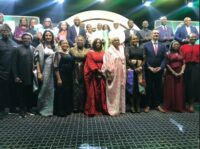
The experts spoke in Lagos on Wednesday during the Annual Lecture/Symposium of the Fafunwa Educational Foundation, established by the late Education Minister, Prof. Babatunde Fafunwa, a pioneer researcher on the use of Mother Tongue in Nigeria.
The call came as Abia State Governor, Dr Alex Otti, urged Nigeria to learn from countries such as China, India and South Korea, where instruction in indigenous languages has been used successfully and, according to him, has contributed to their technological and economic development.
In a communique issued at the end of the event, participants identified weak and half-hearted implementation as major obstacles to Mother Tongue education in Nigeria.
They listed inadequate funding, insufficient teacher training and a shortage of instructional materials among factors undermining the effective implementation of Mother Tongue education.
The participants therefore called on the Federal Government to reverse its cancellation of the 2022 National Language Policy and reinstate Mother Tongue as the medium and basis of basic education in the country.
In his keynote address, Professor Francis O. Egbokhare of the University of Ibadan argued that the mismatch between the language of instruction and the mother tongue of learners was a major factor contributing to Nigeria’s persistent learning crisis.
He said poor academic performance could sometimes be a reflection of language barriers rather than intellectual limitations, adding that educating children in foreign languages could limit their access to knowledge embedded in their indigenous linguistic traditions.
According to him, sidelining Mother Tongue in education could consequently lead to both language and worldview loss.

The guest speaker, Professor Angelina Kioko of the United States International University-Africa, Kenya, also urged African countries to take seriously UNESCO’s position that every learner has a right to learn in a language they understand.
Kioko acknowledged that familiar languages could strengthen foundational learning but stressed that effective Mother Tongue education required consistent implementation of language policies, strong political will, sustained teacher preparation, appropriate teaching materials, multilingual practices and community engagement.
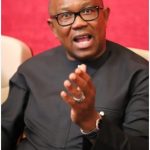
Governor Otti, who chaired the occasion, described the use of Mother Tongue at the early childhood level as relevant to the development of education, particularly at the foundational stage.
He said the findings of research supporting indigenous-language instruction should not be rejected simply because they challenge existing beliefs.
Otti said Nigeria could examine the experiences of countries such as South Korea, India and China to identify lessons on how indigenous languages could be effectively used in early education.
He said: “If research says that early learners do better when instructions are passed through the vehicle of indigenous languages, my preference would be to identify and address the probable limitations to teaching pupils in their native languages, including inadequacy of skilled instructors that are fluent in the languages or perhaps, the challenge of limited relevance outside one’s own community or maybe region.”
He added that examining countries where indigenous languages are used in early education could provide insights into how language policy may have influenced their technological and economic development.
In her message, delivered by her daughter, Prof. Sheri Ndibe, the wife of the late minister, Chief Mrs Doris Fafunwa, described her husband as a man who was willing to stand alone on issues about which he held strong convictions.
The event also featured a panel discussion on the theme, “What Does Research Say? Mother Tongue Instruction and the Future of Early Education in Nigeria.”
The panel comprised Prof. A. A. Adeyinka, Dr Ebele Okafor and Dr Hamisu Aliyu.
Post-doctoral awards in education were also presented to Dr Ogundowole Ayodeji of Lagos State University, Ojo; Dr Tomi Ogundipe of the University of Ibadan; and Dr Ishola Joshua of Ekiti State University, Ado-Ekiti.