By Desire Uzochukwu
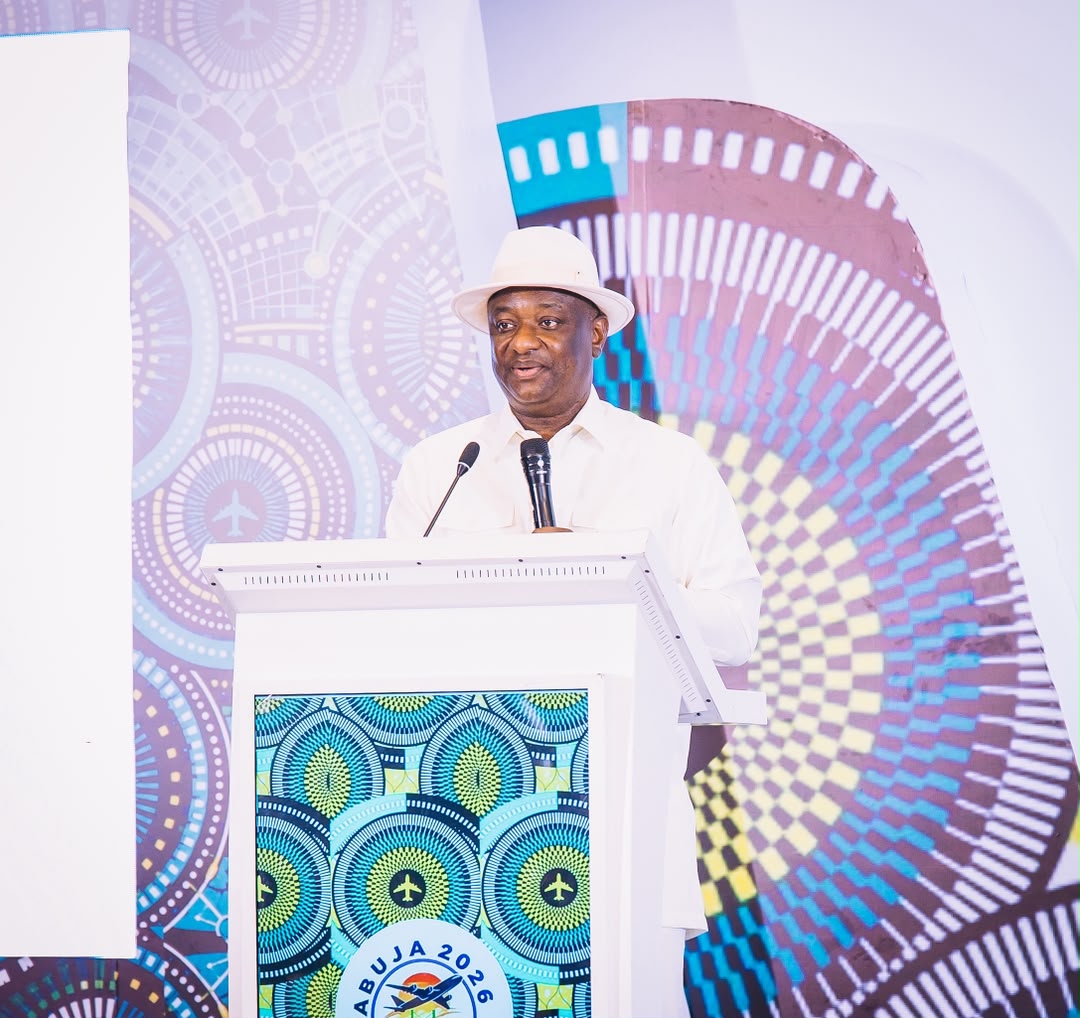
The Minister of Aviation and Aerospace Development, Mr Festus Keyamo, has called for seamless air connectivity across Africa, saying it should not be easier to travel from an African city to a destination outside the continent than to travel between two African cities.
Keyamo, who advocated full implementation of the Single African Air Transport Market, SAATM, said stronger intra-African connectivity, commercially viable airports, appropriate regulatory frameworks and closer cooperation among governments, airlines and airport operators were critical to unlocking the continent’s aviation potential.
He spoke yesterday at the opening of the 35th ACI Africa Annual General Assembly, 76th Board and Committee Meetings, Regional Conference and Exhibition in Abuja, themed, “Next-Gen Airports: Driving Performance and Resilience.”
The minister said the African Continental Free Trade Area, AfCFTA, was creating a larger economic space, adding that aviation must help translate the integration into increased movement of people, goods and services across the continent.
“There is, significantly, one challenge we must confront collectively, and that is the challenge of connectivity. It should not be easier to travel between an African city and a destination outside the continent than to travel between two African cities,” he said.
“Africa needs stronger intra-African connectivity, commercially viable airports, appropriate regulatory frameworks and closer cooperation among governments, airlines, airport operators and other stakeholders.”
Keyamo said African airports must embrace digital transformation, smarter infrastructure, data-driven decision-making and innovative commercial models, while keeping passengers at the centre of aviation.
“The passenger must remain our ultimate measure of success. A smart airport must also be a welcoming airport,” he said.

He said airports were increasingly becoming platforms for commerce, logistics, tourism, technology and investment, requiring operators to understand passengers, manage resources efficiently, diversify revenue and build stronger relationships with airlines, communities and governments.
On Nigeria’s aviation reforms, Keyamo said the country recorded a 91.45 per cent Effective Implementation score following the 2026 International Civil Aviation Organisation, ICAO, Coordinated Validation Mission.
“This achievement demonstrates that sustained reform, professional commitment and institutional collaboration can deliver measurable results. Let me be clear, however, that 91.45 per cent is not our destination. It is our new baseline. We must continue to raise the bar,” he said.
He also highlighted the rehabilitation and expansion of the Murtala Muhammed International Airport Terminal 1, Lagos, describing it as a major intervention to transform the historic gateway into a more modern, efficient and passenger-centred airport.
“This is not merely about concrete, steel and glass. An airport is a country’s front door,” Keyamo said.
He said the Federal Government wanted Nigerian airports to project “efficiency, dignity, hospitality and confidence,” while serving as economic ecosystems that create jobs, support tourism and logistics, attract investment and connect businesses to markets.
Keyamo called for greater private-sector participation in airport infrastructure and services, while maintaining safety, security, service and public-interest standards.
He said the government was also supporting the development of Maintenance, Repair and Overhaul, MRO, capacity, aircraft leasing, cargo infrastructure and other parts of the aviation value chain.
“Nigeria should not merely consume aviation services. We must increasingly produce aviation value. And we believe Africa should do the same,” he said.
The minister said Africa had the market, people, geography, tourism assets and entrepreneurial energy to expand its aviation industry, but needed the infrastructure, policies, connectivity and institutional capacity to convert the potential into sustainable economic value.