By Kazeem Waris
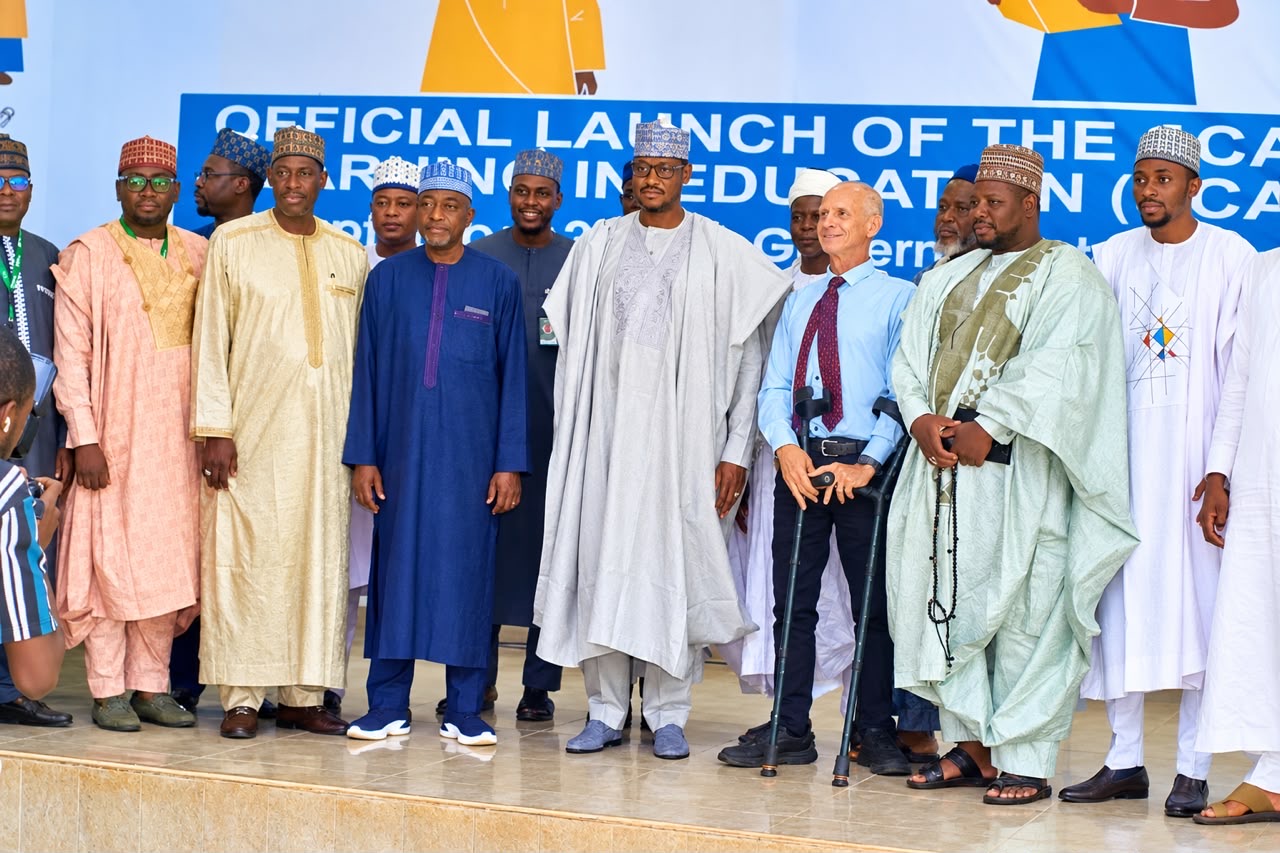
The Katsina State Government, in partnership with the United Kingdom Government, has launched a new education programme aimed at improving foundational reading and mathematics skills among children in Integrated Qur’anic and Tsangaya Education, IQTE, schools in Katsina and Zamfara states.
The Scaling Access and Learning in Education, SCALE, programme, funded by the UK Government, is being implemented in partnership with Education Development Trust, EDT, Teaching at the Right Level Africa, TaRL Africa, and Innovations for Poverty Action, IPA.
The initiative will also support a national review of the Accelerated Basic Education Programme, ABEP, curriculum, designed to provide accelerated basic education opportunities for over-age and out-of-school children.
Speaking at the launch in Katsina, Governor Umar Dikko Radda said the programme reflected the state government’s determination to move beyond school enrolment to ensuring that children actually acquire the skills they need to learn and progress.
“For us, education is not simply about getting a child into the school. Access is only the beginning, but learning is the ultimate objective,” Radda said.
He said the state government was interested in building an education system capable of continuously improving through evidence and proven interventions.
“Our intention is not only to implement isolated projects. Our ambition is to build an education system that can continuously improve,” the governor said.
“Where an approach demonstrates value and produces results, we will continue to explore appropriate ways to integrate and sustain such approaches within our educational system.”
The programme is expected to build on the results of a pilot intervention in Kaduna State, where the Teaching at the Right Level approach was introduced in IQTE schools.
Under the approach, pupils are grouped according to their actual learning levels rather than their ages or school grades, while regular assessments and dedicated teaching periods are used to improve reading and mathematics.
The model is expected to be adapted to the realities of schools and communities in Katsina and Zamfara, with government and development partners working to strengthen foundational learning across different education pathways.
Commissioner for Basic and Secondary Education, Katsina State, Hon. Suleiman Usman Jibia, described the launch as a significant milestone in expanding learning opportunities for IQTE learners.
“Today’s launch therefore marks a significant milestone in our collective efforts to expand the reach of the programme and strengthen the learning opportunities and support for more emerging and IQTE learners across Katsina State,” Jibia said.
He said the state looked forward to building on the successes recorded during the pilot phase and working with partners towards a broader and sustainable implementation of the programme.
At the event, Head of Development Cooperation at the British High Commission in Abuja, Ms Cynthia Rowe, said the UK Government remained committed to supporting evidence-based approaches capable of improving literacy and numeracy among Nigerian children.
“The launch of SCALE marks an important step in our shared mission to ensure that every child, regardless of the type of school they attend, has the opportunity to build strong foundational literacy and numeracy skills,” Rowe said.
“We are proud to support the Katsina State Government in bringing proven, evidence-based teaching approaches into IQTE schools, and we look forward to seeing the difference this will make, assisting all children to realise their full potential.”
Also speaking, Senior Education Adviser at the British High Commission, Abuja, Ian Attfield, said more flexible pathways were required to address educational exclusion, particularly in Northern Nigeria.
“Far too many girls and boys have been denied access to quality education in Northern Nigeria. We must all step-up to open flexible, evidence-backed pathways to learning, to ensure that no child is left behind,” Attfield said.
The SCALE programme is expected to strengthen the capacity of teachers and education stakeholders while using regular learning assessments to identify gaps and tailor instruction to pupils’ actual abilities.
The intervention also seeks to demonstrate how evidence-based teaching methods can be integrated into existing education structures and sustained beyond the life of the programme.
With IQTE schools serving children who may otherwise face barriers to conventional basic education, stakeholders said the initiative could help bridge learning gaps and provide more children with the foundational skills required to progress in education and later life.