By Editor
A vitamin D-based drug could help crack one of pancreatic cancer’s toughest defences, potentially making the deadly disease more vulnerable to chemotherapy and attack by the immune system, researchers have found.
The promising findings emerged from a small clinical trial involving patients with previously untreated metastatic pancreatic cancer and built on years of laboratory research at the Salk Institute.
Researchers found that paricalcitol, a vitamin D analog already approved for other medical uses, could alter the environment surrounding pancreatic tumours by reducing the activation of fibroblasts—cells that contribute to the dense, protective tissue surrounding the cancer.
The study, published in Nature Cancer, suggested that changing the tumour’s protective environment rather than targeting cancer cells alone could offer a new strategy for overcoming treatment resistance.
“This study really takes a novel approach for cracking therapeutic resistance in pancreatic cancer,” said study co-author Ronald Evans, professor and March of Dimes Chair in Molecular and Developmental Biology at Salk.
“By using vitamin D analogs to engage the body’s own natural system for dampening fibrotic and inflammatory responses, we can enable other therapies to do their job.”
Drug targets cancer’s protective environment
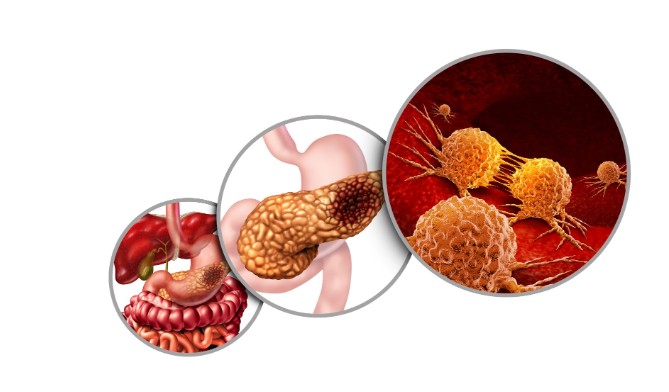
Pancreatic cancer is notoriously difficult to treat partly because tumours can develop a dense network of connective tissue around themselves.
This tissue contains fibroblasts that can help create a physical barrier around the tumour, limiting the penetration of cancer drugs while also contributing to an environment that suppresses immune responses.
Evans and his colleagues had previously discovered that the vitamin D receptor plays an important role in regulating fibroblasts in the pancreas and liver.
Laboratory experiments subsequently showed that synthetic vitamin D compounds, including paricalcitol, could reverse the activation of cancer-associated fibroblasts and improve responses to chemotherapy in pancreatic cancer models.
The latest clinical study represents an effort to determine whether those laboratory findings could also be observed in patients.
36 patients enrolled
The randomized clinical trial enrolled 36 patients with previously untreated metastatic pancreatic cancer.
Participants received standard chemotherapy consisting of gemcitabine and nab-paclitaxel, together with either a placebo, intravenous paricalcitol or oral paricalcitol.
The primary objective was to assess safety.
Researchers found that paricalcitol could generally be administered safely alongside chemotherapy. However, five of the 12 patients who received the oral form developed elevated blood calcium levels, a side effect that was managed through standard dose reductions.
The researchers also collected tumour biopsies before treatment and again after four to six weeks.
Using advanced techniques to analyse the tumour environment, they found that paricalcitol reduced the activation of fibroblasts without reducing their overall numbers.
The treatment was also associated with increased infiltration of T cells, immune cells that are often prevented from effectively entering pancreatic tumours.
The findings provided evidence that the drug could remodel the environment surrounding pancreatic cancer and potentially make the tumour less resistant to treatment.
Encouraging signals, but not yet proof
Although the trial was not designed to determine whether paricalcitol improves survival, researchers observed encouraging treatment responses.
Of the 24 patients who received paricalcitol, 10 experienced a partial response, representing 42 per cent.
By comparison, only one of the 12 patients who received the placebo had a partial response, representing 9 per cent.
Five patients in the paricalcitol groups also remained free of disease progression after one year, compared with none in the placebo group.
Researchers identified another potentially important clue when they examined levels of the vitamin D receptor in patients’ tumours.
Those with high levels of the vitamin D receptor who received paricalcitol appeared to respond better to chemotherapy and recorded the longest overall survival.
The finding raises the possibility that vitamin D receptor levels could eventually help doctors identify pancreatic cancer patients most likely to benefit from the treatment strategy.
More research needed
Despite the encouraging results, researchers cautioned that the study was small and was primarily designed to evaluate safety rather than prove that paricalcitol improves survival.
Larger clinical trials will be needed to determine whether adding the vitamin D analog to chemotherapy or other cancer treatments can significantly extend patients’ lives.
Future research will also need to establish whether vitamin D receptor levels can reliably predict which patients are most likely to benefit.
“This study is an important step forward for the use of a vitamin D analog as a stromal remodeling therapy that can overcome therapeutic resistance in pancreatic said Kimberly Perez, one of the study leaders.
She said the research, which grew out of foundational work at the Salk Institute, “provides a road map for future studies that could someday establish a new treatment standard.”