By Chidimma Oparaochaekwe
The Corporate Accountability and Public Participation Africa (CAPPA), labour representatives and community members have called on the Lagos State Government to halt plans that could lead to water privatisation and the expansion of prepaid water metering, urging the government to invest in public water infrastructure and ensure affordable access for all residents.
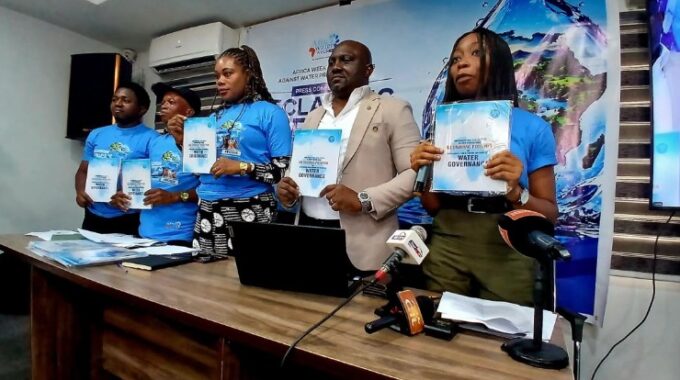
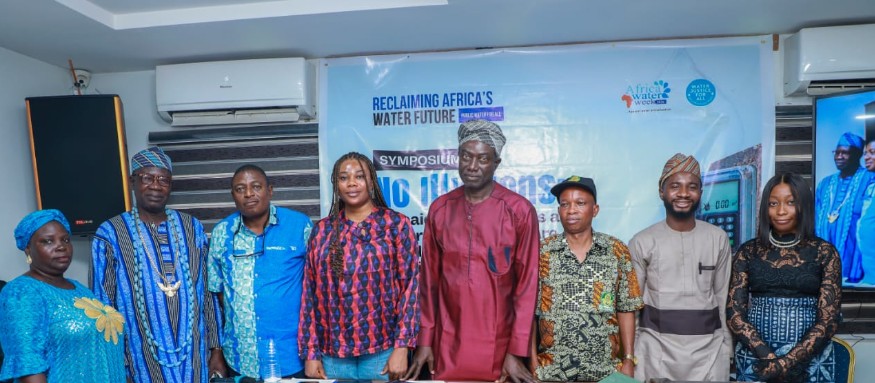
The call was made at a symposium organised by CAPPA in Ogba, Lagos, to mark the Africa Week of Action Against Water Privatisation, with the theme, “No Illusions: Prepaid Water Meters and Water Privatisation Are Failed Models for Lagos, Nigeria.”
Speaking at the event, CAPPA’s Executive Director, Akinbode Oluwafemi, in his welcome remarks, said private sector participation did not automatically guarantee efficient service delivery, stressing that water was too essential to be controlled by profit-driven interests.
“Some services are too essential to be governed by the pursuit of private returns. Water is foremost among them.”
He questioned how low-income households, unemployed residents and families facing emergencies would maintain access to water under a prepaid system that automatically cuts off supply when credit runs out.
“When a meter cuts off supply because credit has expired, it cannot distinguish between leaking pipes or a family waiting for daily wages. It cannot account for unemployment, illness or an emergency. It simply enforces exclusion.”
Oluwafemi also cited the withdrawal and termination of contracts involving private waste operators by the Lagos State Waste Management Authority as an example of how private participation does not always guarantee efficiency. He expressed concern over the Lagos Water Corporation’s proposed framework for standardised 20-year concessions, cost-reflective tariffs and foreign exchange protections for investors, arguing that residents deserved transparency and access to the agreements guiding such arrangements.
Providing the background to the symposium, CAPPA’s Assistant Director, Zikora Ibeh, and Water Campaign Officer, Holiness Segun-Olufemi, highlighted concerns about the commercialisation of water services and the possible consequences for workers and residents. The Africa Week of Action Against Water Privatisation has been observed since 2020, bringing campaigners together to challenge policies that place essential services under profit-driven arrangements.
They raised concerns over the dismissal of more than 800 contract and permanent workers in 2023 and 2024, non-functional water facilities, proposed public-private partnerships and limited public participation in decision-making.
They also warned that prepaid water meters could make access to water dependent on residents’ ability to pay, calling for adequate public funding, accountable management and community participation in water delivery.
Speaking on the theme, No Illusions: Prepaid Water Meters and Water Privatisation are Failed models for Lagos, Nigeria, Comrade Dagar Tolar, of Movement for Socialist Alternative, said Lagos’ water crisis was not only about supply but also about the management and distribution of available resources.
He questioned why facilities had been established across the state while many residents still struggled to obtain reliable public water, calling for a Water-for-All programme to rehabilitate existing facilities, expand mini-waterworks and establish new facilities in underserved communities.
“We must not allow the same situation to be repeated with water.”
Tolar warned that the experience of electricity privatisation should serve as a lesson for the water sector. He also referred to developments in Johannesburg, South Africa, where prepaid water metering had generated controversy, and called for legal action, public awareness campaigns and protests against policies that could restrict access to water.
He urged trade unions and community groups to resist privatisation and make access to water a major issue in public debate and future elections.
Presenting findings on community water provision, the Founder and Director of Sustainable Development Futures Development Initiative, Favour John, said many communities were struggling to maintain water facilities because of inadequate public support, unreliable electricity and the high cost of repairs.
His presentation, titled “Strengthening and Building Resilient Public Water Services in Lagos Through Lessons from Community Water Provision,” highlighted how community development associations had taken responsibility for managing boreholes, purchasing fuel, paying electricity bills and repairing damaged equipment.
He cited Eko-Oloto as an example, saying a community development association reportedly spent ₦85,000 weekly on tanker water, yet the supply remained insufficient for four streets.
“In some communities, residents are forced to become the owners, managers and even engineers of these facilities.”
John said some donated boreholes stopped working within days, while other public water facilities had become dilapidated despite previous investments. He added that women and children often bore the greatest burden of finding water, while women remained underrepresented in community decision-making structures.
He called for direct public funding to rehabilitate water facilities and mains, the use of solar energy to reduce operating costs, and partnerships between government and communities.
He also advocated a cross-subsidisation system in which wealthier and industrial users could help support water access in low-income communities.
“Community resilience should not become an excuse for government inaction.”
The National President of the Precision Electrical and Related Equipment Senior Staff Association, Comrade Rufus Olusesan, in his presentation, described water as a human right and a responsibility of the state, warning against treating it as a commodity governed by profit.
He argued that privatisation could allow operators to concentrate on profitable areas while leaving low-income communities underserved. He also raised concerns about tariff increases, worker casualisation and job losses associated with commercialisation policies.
“The question of who controls water is a question of who controls life itself.”
Olusesan called for increased public investment, stronger water corporations, community water-monitoring committees and worker representation on water boards.
He also urged governments to protect workers’ jobs and ensure that communities were meaningfully consulted before decisions affecting water services were made.
“Water is public. Water is life, and life is not for sale.”
Community members who attended the symposium described the difficulties they faced in accessing safe and reliable water, saying repeated promises by government officials had not produced lasting improvements.
A resident of Baruwa Community said residents had continued to raise concerns about polluted water sources and inadequate public supply.
He said the community had approached public officials and the National Assembly, but access remained unreliable.
“Our water is totally polluted. We don’t have any access to any public water.”
He added that water supply was affected by electricity problems and that his prepaid meter had not delivered water since the previous week, despite attempts to contact the relevant officials.
Other participants warned that prepaid metering could further burden residents who already struggled to pay for basic necessities.
They called for legislative action, public protests and stronger civil society involvement to prevent the model from spreading to more communities.
A participant from Bariga said public water facilities that once served residents had largely disappeared, urging candidates seeking political office to make access to water a major election issue. Others called for renewed community mobilisation and demonstrations at the Lagos State Government Secretariat in Alausa to demand action on longstanding promises to restore water facilities.
Responding to the concerns, Oluwafemi said CAPPA had campaigned against water privatisation since 2015 and had helped challenge proposals that could restrict access to informal water sources, rainwater harvesting and borehole drilling. He said public pressure had contributed to the withdrawal or revision of a proposed Lagos State Water Bill that critics feared could criminalise some community water practices.
“We will match them intellect for intellect and street for street.”
He urged residents, labour unions and civil society groups to take a more active role in the campaign, stressing that CAPPA could not achieve its objectives without wider public participation. He said CAPPA would continue to present evidence of problems associated with privatised and prepaid utility systems while challenging assumptions that residents could afford cost-reflective tariffs. He also urged affected communities to document their experiences and work collectively to demand accountability.
The symposium ended with a call on the Lagos State Government to prioritise public investment in water infrastructure, repair non-functional facilities, protect workers’ rights and ensure that residents participate in decisions affecting water delivery.