By Emmanuel Nnadozie Onwubiko
Nigeria has practised what is constitutionally recognised as representative democracy since 1999. Democracy, as a system of government, places the people at the centre of governance. Indeed, it has famously been described by the political thinker Abraham Lincoln as “government of the people, by the people, for the people.”
However, more than two decades after Nigeria embarked on its experiment with constitutional democracy, it is difficult to argue persuasively that the collective interests and common good of the overwhelming majority of Nigerians have been adequately served. Neither can we justifiably claim that the economic circumstances of most Nigerians have improved significantly since the return to democratic governance in 1999.
An objective assessment of the living conditions of the majority of Nigerians since the commencement of constitutional democracy would suggest that most citizens have become poorer, while unemployment, particularly among the younger population, has become a major national challenge. Infrastructure across the length and breadth of the country has deteriorated, largely due to inadequate maintenance and investment, while several critical sectors of the national economy continue to experience serious structural difficulties.
It would not be an exaggeration to argue that many Nigerians feel betrayed by their political leaders. One fundamental explanation for this growing dissatisfaction is the deficit of trust in our system of government. Politicians entrusted with the responsibility of managing public resources and coordinating national development have, through their actions and omissions, made it increasingly difficult for citizens to trust government institutions to deliver essential services and fulfil their constitutional responsibilities.
In examining this deficit of trust in our political leadership, the current political campaign period, in preparation for the January 16 presidential poll, provides an appropriate opportunity to engage in a serious and analytical debate about the place of public trust in the institutionalisation of good governance.
Put differently, what exactly must politicians do, demonstrate or communicate to rebuild public confidence in government?
While reflecting on this question, I came across a paper by James A. Robinson, dated January 21, 2026, titled Rebuilding Trust in Governance in Africa. His observations provide an interesting framework for examining the relationship between public institutions, political accountability and citizens’ trust in government.
Rebuilding trust in governance in Africa: James A. Robinson’s perspective
Robinson observes that comparative data suggest a serious trust deficit across Africa. Drawing on data from 30 Afrobarometer surveys, he refers to research by Amessou Adaba and Boio, which reportedly found that fewer than half of those surveyed said they trusted their presidents, while confidence in the police, courts and parliaments was even lower.
Although some scholars might interpret these findings as sociological characteristics of African societies, Robinson argues that they instead reflect the failure of national institutions to establish legitimacy and accountability.
He does not stop at identifying the problem. He also attempts to explain why trust in government remains so low in many African countries, particularly in the post-colonial political environment.
For Robinson, one important explanation was brilliantly characterised by the sociologist Peter Ekeh in the 1970s. Ekeh persuasively argued that understanding the nature of the post-colonial African state requires an appreciation of what he described as the existence of the “Two Publics”.
Robinson quotes Ekeh as arguing that, in Western societies, what is considered morally wrong in the private realm is also generally considered morally wrong in the public realm. In post-colonial Africa, however, there are two public realms, each maintaining different moral relationships with the private realm.
Ekeh identified these as the primordial public and the civic public.
The primordial public, according to Ekeh, corresponds to traditional, small-scale African society. It is moral and operates according to the same moral imperatives that govern the private realm.
However, colonial powers brought different traditional communities together under colonial administrations, creating another public realm that became associated with colonial administration and, subsequently, popular politics in post-colonial Africa. Ekeh described this as the civic public.
Critically, Ekeh argued that the civic public in Africa is amoral because it lacks the generalised moral imperatives that operate within the private realm and the primordial public.
It is this perceived amorality of the civic public that, in Ekeh’s analysis, creates a fundamental problem of trust. His argument suggests that one of the central political challenges confronting post-colonial Africa is how to develop a political project or institutional framework capable of reconciling the primordial public with the civic public.
Having considered this distinction between public and private morality, as presented by Ekeh, I find it difficult to accept that this explanation sufficiently accounts for the trust deficit in contemporary Nigeria.
My difficulty with this argument is that the constitutional democracy supposedly practised in Nigeria, including the modalities through which public institutions are expected to operate, is clearly established by law. The Constitution of the Federal Republic of Nigeria is the supreme law of the land and provides an elaborate framework governing the exercise of public authority and the responsibilities of those occupying public offices.
Furthermore, several institutions established by legislation are constitutionally and statutorily empowered to investigate misconduct, address administrative violations and impose appropriate sanctions on public office holders. Legal and administrative mechanisms exist to ensure that those entrusted with public responsibilities act within the limits of their mandates.
The fundamental problem, therefore, is not necessarily the absence of laws or institutional frameworks. Rather, it is the failure to implement existing laws effectively and to hold those entrusted with public responsibilities accountable.
My argument is that many politically exposed persons have become accustomed to operating in an environment where citizens are not sufficiently empowered, organised or willing to demand accountability consistently. Consequently, some politicians have developed the impression that they can disregard their constitutional obligations, fail to fulfil electoral promises and abandon their responsibilities to the electorate without facing meaningful consequences.
This is one of the reasons public trust has continued to deteriorate.
The 2027 elections and the politics of broken promises
I believe this campaign period presents an appropriate opportunity for both citizens and politicians to rebuild trust in government. Unfortunately, there are indications that many politicians believe very little will change, even if they make no genuine effort to restore public confidence.
Politicians across different political formations are therefore making promises that appear unrealistic, exaggerated and, in some instances, completely disconnected from the practical challenges confronting the country.
For instance, President Bola Ahmed Tinubu promised Nigerians, before the 2023 presidential election, that he would deliver 24-hour electricity if elected. However, as his four-year tenure approaches its conclusion, that promise remains unfulfilled.
The President has once again made commitments concerning reliable electricity supply, raising a fundamental question: should Nigerians continue to trust promises that have previously failed to materialise?
He has also pledged to address the worsening insecurity confronting the country and improve agricultural investment. Yet, his administration has continued to grapple with persistent terrorist attacks, kidnappings and killings. The number of Nigerians reportedly killed by terrorists since he assumed office remains a subject requiring careful verification, but the scale of insecurity is undeniable.
Similarly, the policies introduced by the Tinubu administration have not yet translated into sufficiently meaningful improvements in the living conditions of millions of Nigerians.
BusinessDay newspaper has reported that Nigeria’s poverty rate remained at approximately 63 per cent in 2026, despite what it described as improvements in macroeconomic stability. The newspaper’s assessment reportedly underscores the difficulty of translating lower inflation, a more stable naira and stronger economic growth into improved household living conditions.
This raises an important question about the relationship between macroeconomic indicators and the everyday experiences of ordinary citizens. Economic growth figures are important, but they become meaningful to the population when they translate into employment, affordable food, accessible healthcare, reliable electricity and improved purchasing power.
Tinubu renews promise of reliable electricity supply
President Bola Tinubu has renewed his promise to provide Nigerians with reliable electricity.
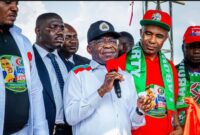
Tinubu made the latest pledge on Tuesday at an All Progressives Congress rally at the Dutse Township Stadium in Jigawa State, where he outlined his administration’s priorities ahead of the 2027 general election.
The President said his government would adopt a different approach to addressing the country’s electricity challenges, criticising the existing privatisation model.
“We will provide reliable power, not the old privatisation that is not working,” he said.
“We will provide you with reliable power in this Nigeria,” he added.
The latest promise echoes a commitment Tinubu made during a meeting with members of the Organised Private Sector in Lagos ahead of the 2023 presidential election.
At that meeting, he pledged to provide constant electricity and end estimated billing. He reportedly challenged Nigerians not to re-elect him if he failed to fulfil the promise, unless he could provide adequate reasons for his inability to deliver.
The President also outlined other priorities in the APC manifesto, including investment in healthcare, reducing the cost of living, strengthening national security and expanding economic opportunities.
He said his government would invest in medical facilities and create opportunities in every local government area.
Tinubu also promised to strengthen Nigeria’s industrial base and support businesses of different sizes.
“We will stimulate stronger industrial base of our country. We will help the nano, the small scale business and medium scale business,” he said.
He added that his administration would expand employment opportunities, improve incomes and develop the skills of Nigerians.
“We will expand the job opportunity across real income earners. We will develop their skills,” the President said.
Tinubu’s visit to Jigawa also included the commissioning of four development projects and participation in the APC rally as the party intensifies its mobilisation ahead of the 2027 general election.
HURIWA challenges Tinubu over the deepening electricity crisis
The Human Rights Writers Association of Nigeria (HURIWA) has challenged President Bola Ahmed Tinubu to explain why his administration appears unwilling to confront the worsening electricity crisis despite making efficient and reliable power supply a major pillar of its second-term re-election campaign.
HURIWA said it was particularly disturbing that Nigerians continue to endure prolonged blackouts, erratic electricity supply and excessive electricity bills while the Federal Government appears more comfortable issuing repeated explanations than delivering lasting solutions.
The association expressed concern that the President had remained largely indifferent to the worsening situation in the power sector, despite the enormous economic and social consequences of persistent electricity shortages for households, businesses, industries, hospitals, schools and other essential services.
HURIWA recalled that President Tinubu had publicly promised Nigerians 24-hour electricity, declaring during his political campaign that he would not seek re-election if he failed to deliver on that commitment.
The association therefore questioned whether the President still considers that promise binding or whether it was merely another political declaration designed to secure electoral support.
HURIWA also questioned why President Tinubu appeared unconcerned about what it described as persistent inconsistencies, questionable public explanations and an apparent lack of proactive leadership within the Ministry of Power.
Reacting to the recent explanation by the Minister of Power, Joseph Tegbe, that electricity shortages were caused by scheduled maintenance at the Egbin Power Station and gas supply constraints affecting thermal power plants, HURIWA described the development as another disturbing illustration of the government’s failure to provide Nigerians with predictable and reliable electricity.
The association noted that the minister’s promise to restore affected generating units within 48 to 72 hours did not address the fundamental question of why Nigeria’s electricity supply remained so vulnerable to recurring disruptions.
HURIWA said Nigerians deserved a power sector managed through strategic planning, competent leadership, transparent investment and effective regulation, rather than repeated assurances that electricity supply would improve after every major disruption.
The association further questioned the circumstances surrounding political appointments in such a critical economic sector, asking why technical competence, professional experience and demonstrable capacity should not be the overriding considerations when selecting those entrusted with managing the nation’s electricity industry.
It asked President Tinubu whether political patronage, party loyalty and considerations of political affiliation had been allowed to overshadow merit in appointments to sensitive economic institutions.
HURIWA insisted that the power sector was too important to be treated as a reward system for political loyalists or an avenue for accommodating individuals on the basis of ethnic, personal or political considerations.
According to the association, Nigeria needs a proven electricity-sector technocrat with the requisite professional background, institutional experience and capacity to coordinate generation, transmission, distribution, gas supply and regulatory reforms.
The association stressed that appointing a competent technocrat would not automatically resolve every structural problem in the sector. However, it would demonstrate that the administration understands the technical complexity of electricity management and is prepared to place the national interest above political considerations.
HURIWA also questioned the apparent failure of relevant anti-corruption institutions, particularly the Economic and Financial Crimes Commission (EFCC) and the Independent Corrupt Practices and Other Related Offences Commission (ICPC), to establish effective accountability mechanisms around the enormous public resources committed to the electricity sector over the years.
The association demanded a comprehensive and independent audit of power-sector expenditure, contracts, abandoned projects, transmission infrastructure and financial obligations to determine why successive administrations had committed substantial resources without delivering commensurate improvements in electricity supply.
HURIWA noted that the minister’s announcement that 98 out of 300 containers of transmission equipment, reportedly stranded at the ports for nearly two decades, had been released raised further questions about institutional negligence, administrative inefficiency and the circumstances that allowed critical national infrastructure to remain stranded for so long.
The association said the Federal Government must explain the ownership, procurement history, financial implications and responsibilities surrounding the equipment rather than presenting its release as sufficient evidence of progress.
HURIWA further condemned the situation in which electricity consumers continued to receive estimated or inflated bills despite enduring prolonged periods without adequate electricity supply.
It called on the relevant regulatory authorities to protect consumers against arbitrary billing practices and ensure that electricity distribution companies were held accountable for the quality and quantity of electricity supplied to their customers.
The association maintained that Nigerians could not continue to shoulder the financial burden of an inefficient electricity system while public officials responsible for its management escaped meaningful accountability.
HURIWA therefore demanded that President Tinubu:
1. Publicly explain why his administration had failed to translate its 24-hour electricity campaign promise into a credible and measurable national power delivery programme.
2. Conduct an urgent and independent performance assessment of the Ministry of Power and the leadership of relevant electricity-sector institutions.
3. Demonstrate that appointments into the power sector were based on professional competence, technical expertise, integrity and proven performance rather than political patronage.
4. Consider appointing a qualified and experienced electricity-sector technocrat capable of providing strategic leadership and coordinating comprehensive reforms of the industry.
5. Order a transparent forensic audit of major power-sector expenditures, contracts, abandoned projects and outstanding liabilities.
6. Establish measurable performance targets for electricity generation, transmission and distribution, with clearly defined timelines and consequences for persistent failure.
7. Direct relevant regulatory agencies to protect electricity consumers from unjust billing practices, particularly in communities experiencing prolonged outages.
HURIWA warned that the electricity crisis was not merely an inconvenience but a serious national development emergency threatening employment, industrial productivity, educational advancement, healthcare delivery and the survival of small and medium-sized enterprises.
The association said President Tinubu could not continue to demand public confidence while millions of Nigerians struggled to power their homes and businesses.
The fundamental question is simple: if reliable electricity supply was important enough to become a major campaign promise, why is it no longer attracting the urgency, competence and political will required to deliver it?
Nigeria deserves electricity, not endless explanations. The time has come for President Tinubu to demonstrate that his government is serious about resolving the crisis in the power sector.
The cost-of-living crisis and the erosion of public confidence
There is also the growing problem of the rising cost of essential goods and services, particularly since President Bola Tinubu assumed office and took the drastic decision to remove the petrol subsidy.
The removal of the subsidy immediately triggered significant economic pressures, contributing to rising transportation costs and the increasing prices of essential goods and services across the country.
One of the fundamental characteristics of the Nigerian economy is the strong relationship between fuel prices and the cost of living. Whenever petrol prices increase, the cost of transporting goods and people also rises. This, in turn, places upward pressure on the prices of food, household necessities and other essential services.
The present administration has struggled to manage these economic consequences effectively and has consequently failed to restore the purchasing power of millions of Nigerians.
Recently, the Federal Government announced the commencement of a N50,000 cash relief programme. However, questions have been raised about the transparency, accountability and accessibility of the intervention.
In an attempt to explain how the poorest and most vulnerable Nigerians could access the assistance, the Federal Ministry of Humanitarian Affairs and Poverty Reduction issued a public statement outlining the programme’s arrangements.
All you need to know as Tinubu’s government begins N50,000 cash relief
The Federal Government has announced a new N50,000 cash relief intervention for poor and vulnerable households across the country to cushion the effects of rising food prices and the increasing cost of essential goods.
The intervention, known as the National Emergency Relief and Stabilisation Intervention (NERSI), was announced on Friday, October 30, 2026, by the Minister of Humanitarian Affairs and Poverty Reduction, Dr Bernard Doro.
The N50,000 cash relief targets poor and vulnerable households
The Federal Government said the intervention was designed to provide immediate financial support to poor and vulnerable Nigerians affected by rising food prices and the increasing cost of essential goods.
The programme is intended to help beneficiaries meet basic household needs and ease the pressure arising from the cost-of-living crisis.
According to the information released about the programme, beneficiaries can access their funds through mobile wallets linked to their phone numbers and National Identification Numbers (NIN).
Beneficiaries can withdraw the money through banks or Point-of-Sale (POS) agents or spend it directly from their mobile wallets. The programme’s website also states that individuals without smartphones or mobile data can access the service through USSD.
However, this writer has observed complaints from prospective beneficiaries who allege that they are being required to disclose sensitive personal and financial information, including details relating to their banking services and, importantly, their permanent voter’s cards.
This development raises serious questions about the purpose for which such confidential information is being collected, the legal basis for its collection, how it will be protected and whether adequate safeguards have been established to prevent its misuse.
The concerns expressed by prospective beneficiaries deserve urgent attention. Some have reportedly expressed fears that the collection of their voter-related information could compromise their electoral independence or expose them to political manipulation in favour of the incumbent President, who is seeking re-election.
These concerns should not be dismissed. A government intervention designed to assist vulnerable citizens must not create the impression that access to public assistance is connected to political loyalty or electoral support.
The Federal Government must therefore provide clear information about the eligibility criteria, registration procedures, data protection arrangements and safeguards against political interference.
While Nigerians are still trying to understand the timing and modalities of the cash relief programme, the Minister of the Federal Capital Territory, Nyesom Wike, has made a statement that has generated further questions about the boundary between legitimate political mobilisation and electoral inducement.
A former National Commissioner of INEC has reportedly called on Nigerians to report the matter to the police and other relevant authorities for investigation.
Wike’s N10 million pledge: Anyone can report him to INEC or the police, says former INEC commissioner
A former National Commissioner of the Independent National Electoral Commission (INEC), Festus Okoye, has said that the police, INEC and any concerned Nigerian can initiate an investigation into the N10 million pledge made by the Minister of the Federal Capital Territory, Nyesom Wike, to councillors ahead of the 2027 general election.
Okoye made the statement on Tuesday during a live appearance on Channels Television’s Politics Today.
He was asked whether anyone could file a petition on the matter if INEC failed to take it up.
“Oh, definitely yes. If an offence has been committed, the state can take it up. If the law enforcement agencies believe that there is a possibility that an offence has been committed, they can take it up, and the INEC can also petition the relevant authorities, and they can cause an investigation, and then the commission can prosecute such an offender,” Okoye said.
Wike had pledged N10 million to each FCT councillor who successfully delivers his ward for President Bola Tinubu and the All Progressives Congress in the 2027 elections.
The pledge, which could amount to N620 million if all 62 councillors qualify, has generated controversy over the distinction between legitimate political mobilisation and financial inducement tied to electoral outcomes.
Wike has, however, defended the pledge, describing it as an incentive for political mobilisation rather than vote-buying.
He maintained that he had not asked the councillors to buy votes.
Okoye nevertheless raised legal questions about the proposal, citing Section 125 of the Electoral Act 2026, which criminalises certain forms of electoral bribery and corrupt inducement.
The provision covers a person who corruptly makes a gift, offer or promise intended to induce another person to procure the return of a candidate to elective office or to influence the votes of electors.
Okoye argued that the fact that the money would only be paid after the election did not, by itself, resolve the legal question, because the law expressly includes a promise or offer.
He nevertheless noted that Section 125(3) excludes money paid or agreed to be paid for genuine and lawful expenses incurred in connection with an election.
These developments reinforce the need for transparency, institutional independence and strict adherence to electoral laws. Public funds and government assistance must never be used, directly or indirectly, to undermine the freedom of citizens to make independent electoral choices.
Conclusion: Politicians must earn the trust of Nigerians
While we cannot argue that only the incumbent President has made unrealistic promises that contribute to the growing deficit of public trust, our attention is particularly focused on the present administration because President Tinubu has had the opportunity to rebuild the confidence of Nigerians but has substantially failed to do so.
Our charge is that politicians seeking the votes of Nigerians must make commitments that they genuinely have the capacity, institutional support and political will to implement.
Election campaigns should not become competitions in exaggeration, unrealistic promises and political theatrics. Rather, they should provide opportunities for candidates to explain how they intend to address the country’s most pressing challenges, the resources required to implement their programmes and the measurable outcomes by which their performance can be assessed.
For instance, the presidential candidate of the Nigerian Democratic Congress, Mr Peter Obi, reportedly promised that, if elected President, he would personally enter the forests to secure the release of Nigerians kidnapped by criminal groups.
Some observers have questioned the practical implications of this statement, particularly given the constitutional responsibilities and security considerations associated with the office of the President. It is unlikely that a President would be permitted by his security advisers to expose himself to such personal risks.
The important question, therefore, is whether this promise by Mr Obi is not equally unrealistic and outlandish. Should Nigerians accept such declarations as serious policy commitments, or should presidential candidates instead explain the practical security strategies they intend to deploy to rescue kidnapped citizens and dismantle criminal networks?
Similarly, Atiku Abubakar of the African Democratic Congress has made promises that his political opponents consider unrealistic, including his commitment to restore the fuel subsidy.
The question is not whether politicians should be prevented from making ambitious promises. Rather, it is whether those promises are supported by credible policy proposals, realistic financial projections and a demonstrable understanding of the challenges confronting the country.
Ultimately, democracy cannot function effectively where citizens have lost confidence in their elected representatives. Elections alone do not constitute the totality of democracy. Democratic governance must also be measured by accountability, transparency, institutional integrity, respect for the rule of law and the capacity of public officials to deliver on their mandates.
Trust cannot be demanded from citizens; it must be earned through responsible leadership and demonstrable performance.
Politicians must understand that public office is a constitutional responsibility, not an entitlement, and that electoral mandates are not personal privileges but obligations owed to the people.
If Nigeria is to strengthen its democratic institutions and restore the confidence of its citizens, political leaders must move beyond the culture of campaign rhetoric and embrace a system of governance in which promises are measurable, public resources are transparently managed and failures attract meaningful accountability.
The ultimate test of democracy is not how eloquently politicians campaign or how frequently they promise a better future. It is whether the lives of ordinary citizens improve as a consequence of the decisions and policies of those entrusted with political power.
With trust, democracy works. Without trust, democracy risks becoming an empty constitutional exercise.
Emmanuel Nnadozie Onwubiko is the Founder of the Human Rights Writers Association of Nigeria (HURIWA) and a former National Commissioner of the National Human Rights Commission of Nigeria.