By Joyce Ekeh
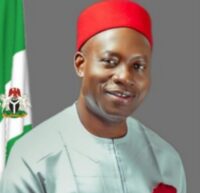
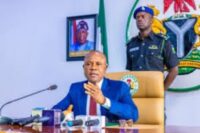
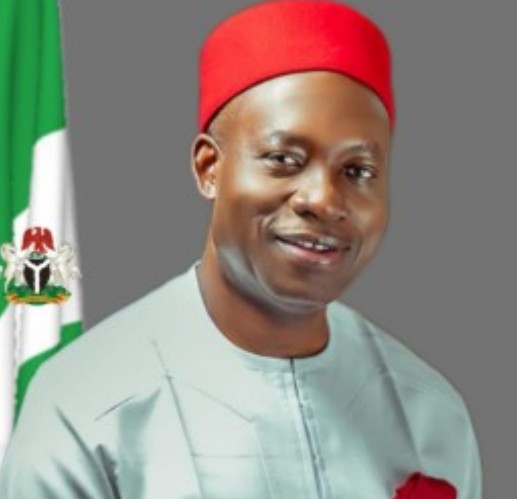
Anambra State Governor and former Central Bank of Nigeria (CBN) Governor, Professor Chukwuma Soludo, has said Nigeria must achieve double-digit economic growth and attract investments exceeding 30 per cent of its Gross Domestic Product (GDP) to realise its ambition of becoming a $1 trillion economy.
Soludo, while acknowledging President Bola Tinubu’s efforts in stabilising an economy he said was on the brink of collapse, warned that the current growth rate of about four per cent was insufficient to significantly reduce poverty, create jobs and accelerate industrialisation.
He spoke on Thursday while delivering the keynote address at the presentation of a book, Economic Diversification and Structural Transformation in Nigeria: The Past, The Present, The Future, authored by a member of the House of Representatives, Abdulmumini Jibrin Kofa, at the Presidential Villa, Abuja.
Speaking on the theme, “Speeding Up and Building to Last,” Soludo called for a new phase of economic transformation driven by massive investments, industrialisation, competitive exchange-rate policies and reforms sustained beyond electoral cycles.
He said: “The administration has done very well, rescued the economy. As I previously described it, the economy when this government came in was like a dead horse that was still standing.
“It sprayed some oxygen to it. Growth has begun to come back, and we are now on the right trajectory. But acceleration, speed and building to last become important considerations going forward.”
However, he said the current growth rate remained inadequate for Nigeria’s development aspirations.
“Four per cent growth rate for the economy so far is an improvement over the recent past, but very moderate growth for the requirement for significant poverty reduction or accelerated transformation.
“Such growth that will be required to be able to have a $1 trillion economy in the next few years will require this economy growing at a minimum of double digit.
“And to grow at double digit, you require huge investments in excess of 30 per cent of GDP. Currently, we are doing about 17-point-something per cent,” he said.
The governor warned that Nigeria could not afford further delays, particularly with its population projected to reach about 400 million in the next three decades and approximately 70 per cent of its citizens currently below 30 years.
“We have lost time and must now run at the speed of 1,000 kilometres per hour if we want to leapfrog, catch up and surpass our peers in this increasingly competitive and disruptive world,” he said.
Soludo identified weak industrialisation as a major obstacle to economic transformation, noting that manufacturing had contributed about eight per cent of GDP for 56 years.
He said: “There is a major missing link. Nigeria transited from the primary to the tertiary services sector.
“Our conomic diversification and transformation have happened with a missing middle. There is a middle that is missing, which is the secondary sector.”
According to him, Nigeria must strengthen manufacturing to generate employment for its rapidly growing population.
“The manufacturing sector is still less than 10 per cent, and that is where the jobs are for the 400 million Nigerians coming. They need manufacturing jobs.
“Industrialisation must happen if we are to have a sustainable economy that creates jobs and widespread prosperity,” he added.
The former CBN governor also stressed the need for a competitive exchange-rate policy to promote exports and industrial growth, commending Tinubu for confronting longstanding distortions in the foreign exchange market.
He recalled resisting pressure from the International Monetary Fund (IMF) to revalue the naira during his tenure at the CBN, arguing that an overvalued currency undermined industrial competitiveness.
“Having an overvalued real effective exchange rate and expecting industrial competitiveness was one of Nigeria’s greatest mistakes on the road to transformation.
“There can be no sustained diversification and competitiveness of the economy without an exchange rate strategy,” he said.
On infrastructure, Soludo urged the Federal Government to consider connecting Onitsha to the Lagos-Calabar Coastal Highway and port facilities around Onne to improve maritime access for businesses and manufacturers in the South-East.
He commended the administration’s transport infrastructure projects, saying interconnected economic corridors linking Lagos, Onitsha, Port Harcourt, Ibadan and Kano could stimulate industrial and commercial growth.
Soludo also warned against abandoning long-term economic reforms for short-term political gains ahead of the 2027 general elections, urging leaders to sustain development policies beyond electoral cycles.
He called on Nigerians to patronise locally manufactured goods, saying consumer preference for domestic products could attract investments and create millions of jobs.
“Imagine for a moment if all Nigerians only eat and wear made-in-Nigeria products. Imagine the millions of jobs and the foreign direct investment that will relocate to exploit the Nigerian market,” he said.
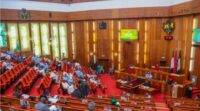
President Tinubu was represented at the event by the Speaker of the House of Representatives, Tajudeen Abbas. Other dignitaries included the Chief of Staff to the President, Femi Gbajabiamila, ministers, lawmakers and senior government officials.