By Joyce Ekeh
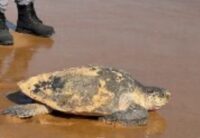
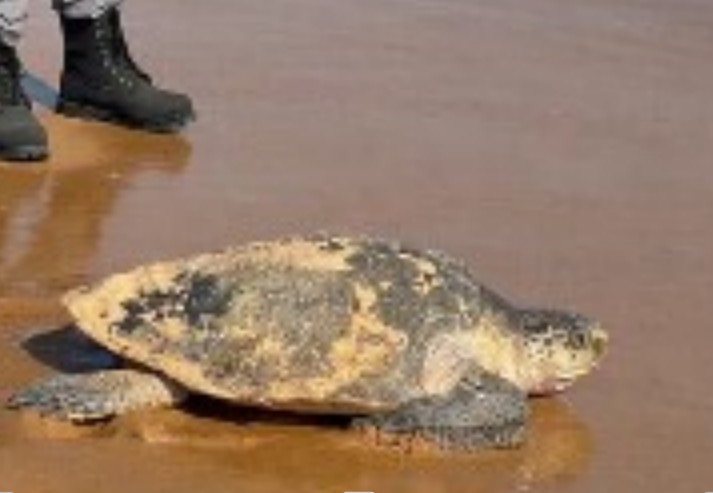
The Nigeria Customs Service (NCS), Seme Area Command, has intercepted a live endangered sea turtle allegedly being smuggled through an illegal footpath linking Nigeria and the Republic of Benin.
The Olive Ridley Sea Turtle, scientifically known as Lepidochelys olivacea, was intercepted at about 10.30pm on Thursday, November 12, 2026, during a routine border patrol by Customs officers.
The suspected smuggler reportedly abandoned the animal and fled into a nearby bush after sighting the patrol team.
According to the command, the officers had noticed a suspicious individual carrying a sack along the border route but could not apprehend him as he escaped upon detecting their presence.
A search of the abandoned sack subsequently revealed the live sea turtle concealed inside.
The command’s Public Relations Officer, Superintendent of Customs, John Tunde Ayagbalo, said the animal was immediately secured and placed in safe custody before being handed over to relevant wildlife authorities for proper care, rehabilitation and eventual release into its natural habitat.
The Acting Customs Area Controller, Seme Area Command, Deputy Comptroller Norman Olisah Alumanah, described the interception as evidence of the vigilance and professionalism of officers in the fight against wildlife trafficking.
He warned smugglers, poachers and their collaborators against using Nigeria’s borders as corridors for the illegal trade in endangered species.
Alumanah said the command had intensified patrols, surveillance and intelligence gathering across its area of responsibility to frustrate criminal activities, including the trafficking of protected wildlife.
He also urged residents of border communities to provide credible intelligence to assist security agencies in identifying and apprehending individuals involved in wildlife smuggling.
The Customs chief stressed that enforcement operations would be complemented with stakeholder education and public sensitisation on the importance of protecting endangered species and the legal consequences of their unauthorised trade.
The interception highlights growing concerns over wildlife trafficking, a major environmental crime threatening biodiversity and the survival of endangered species through illegal exploitation for meat, eggs, shells, traditional medicine and the exotic pet trade.
The Olive Ridley turtle is a marine species protected under international wildlife conservation regulations, with illegal exploitation and international trade posing threats to its survival.
Nigeria is a signatory to the Convention on International Trade in Endangered Species of Wild Fauna and Flora (CITES), which regulates international trade in endangered animals and plants.
The convention is domesticated in Nigeria through the Endangered Species (Control of International Trade and Traffic) Act, Cap E9, Laws of the Federation of Nigeria, 2004.
The law provides a framework for controlling the exploitation and trade of protected wildlife species, while the Customs Service plays a critical role in preventing their illegal movement across the country’s borders.
The Seme Area Command said it would sustain its enforcement operations and collaboration with relevant agencies to prevent wildlife traffickers from exploiting border routes for illegal activities.