By Destiny Obinna
For years, Anna Felicia Onyekonwu lived with pain she could neither explain nor escape. At 18, she underwent an appendectomy. Years later, after marriage, she struggled to conceive. Even after having children, the pain persisted, becoming so severe that she eventually told her husband: “This is not life. I cannot continue like this.”
She was 41 when she finally received a diagnosis of endometriosis.
But knowing what was wrong did not end her ordeal. Instead, it opened another difficult chapter of repeated surgeries, complications, sepsis, mounting hospital bills and the frightening uncertainty of living with a disease that appeared determined to return.
In 2024, she underwent surgery after her symptoms were attributed to fibroids. During the operation, despite being under anaesthesia, she recalled feeling doctors tugging at her organs because of extensive adhesions.
“It was one of the most traumatic experiences of my life. The pain was indescribable,” she recounted.
The surgery failed to provide lasting relief. Her wound broke down, she developed sepsis and had to undergo another procedure before eventually recovering.
When the pain returned, further investigations revealed ovarian cysts. She was placed on medication, underwent additional procedures and was eventually advised to have a hysterectomy and open surgery.
At a hospital in Abuja, she was told the procedure would cost about ₦68 million.
Although she agreed to the operation, the financial shock did not end there. After paying ₦6 million before surgery, she was presented with another bill of ₦15 million.
Her bladder had been compromised during the procedure, requiring another specialist’s intervention, while additional procedures were needed to enable the surgeon to reach her uterus.
But the operation, performed in September 2025, did not end the pain. By December, scans revealed that two large cysts had developed again.
“I still have those cysts. I refuse to have them removed because I really suffered the trauma of the surgery and the uncertainty that followed,” she said.
In her desperate search for answers, she found Endo Survivors International Foundation, a patient support organisation that eventually connected her with a specialist who confirmed that she had endometriosis and adenomyosis.
The diagnosis finally gave a name to years of unexplained suffering, but the cost of further treatment remained a major obstacle.
“I cannot spend all that money and still be told that there is no permanent solution,” she said.
Her most painful reflection, however, was not about the surgeries or the money.
“I just want to say that endometriosis has taken so much from me. But the worst thing it has done is create uncertainty. Imagine being trapped in a body that is constantly in pain.”
For Felicia, finding the support group brought something she had struggled to find for years: validation.
“For a long time, I was confused. Sometimes I wondered whether I was really sure about what I was feeling. At times, it feels as though I am having a prolapse, as if something is about to fall out of me, but I cannot explain it. Nobody seems to understand.
“But I want to thank God for helping me find this community because now I know that I am not alone. My pain is real and, most importantly, I am not alone.”
Her experience reflects the ordeal of many women living with endometriosis in Nigeria, where years can pass between the onset of symptoms and diagnosis. Some move from one hospital to another, undergo repeated procedures and spend heavily on treatment, while struggling to convince healthcare providers that their pain is real.
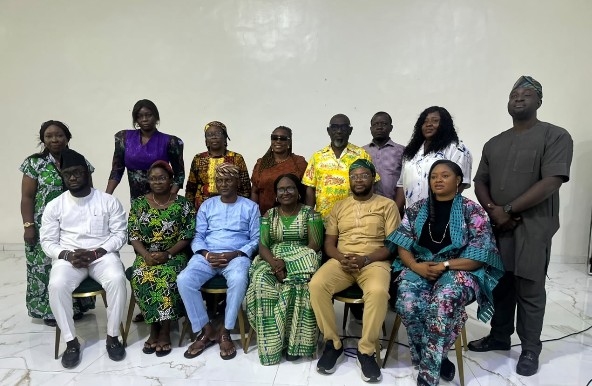
At a special Endometriosis Support Group meeting organised by Endo Survivors International Foundation in Lagos, survivors, caregivers, medical experts, government representatives and the World Health Organisation came together under the theme, “Endometriosis in Nigeria: From Awareness to Action”, to confront what advocates describe as a largely overlooked women’s health crisis.
The testimonies revealed a recurring pattern: severe menstrual pain dismissed as normal, symptoms attributed to other conditions, repeated hospital visits, expensive procedures and women struggling to obtain answers.
For some families, the battle is not only against the disease but also against the financial consequences of trying to manage it.
For Mr Edidiong Satode, watching his wife endure the condition has been an experience of helplessness.
Married for almost 18 years, he recalled how his wife experienced severe menstrual pain for years before her condition became more serious in 2024.
At the Federal Medical Centre, investigations were conducted and surgery recommended. Although the initial plan was to operate on an ovarian cyst, doctors discovered endometriosis during the operation.
The surgery did not provide the expected relief. His wife continued to experience pain, bleeding and abdominal discomfort. Further investigations at private hospitals revealed endometriosis, adhesions and adenomyosis.
She underwent a second surgery in August 2026.
The financial consequences were devastating.
“We have had to dip into our savings, borrow money and suspend other financial obligations to ensure that she receives proper medical attention. Yet, the situation is still not what we expected because she continues to experience pain,” he said.
He recalled an encounter with a doctor who dismissed his wife’s complaints, telling her that the pain was in her imagination and that everything was fine.
The second surgery revealed a more complicated condition, including adhesions and a frozen pelvis. One fallopian tube could not be seen, while the other had been removed.
Describing the emotional toll, Satode said: “Even though I am a man and I am not the one feeling the pain, it affects me because whenever I see my wife in pain, I feel I should do something. Unfortunately, there is little I can do to step in, cushion the effects or help carry her burden.”
The cost of surgery was particularly frightening.
“I remember the second-to-last surgeon I met concerning the condition. When we asked about the cost of surgery, I was honestly shocked. I told the surgeon: ‘You know what? Because of this surgery, I need to work for five years to be able to raise this money.’”
For him, discovering the Endo Survivors support group was a turning point.
“I keep saying it is a blessing because I am fortunate to have found a group that truly understands what you are feeling and going through.”
The condition has also taken a heavy toll on families who spend years searching for answers.
Wendy Olugbamila, a businesswoman and mother of Rolanda Taylor, recalled how her daughter began experiencing severe menstrual pain while still in secondary school.
Like many parents unfamiliar with endometriosis, she initially administered paracetamol and other recommended painkillers, believing the problem was ordinary menstrual discomfort.
But the episodes continued every month.
When Rolanda entered the University of Lagos, the pain became so severe that her mother sometimes had to leave home in the middle of the night to pick her up and take her to hospital. Doctors prescribed medications that provided temporary relief, only for the pain to return with the next menstrual cycle.
Further investigations eventually revealed complications involving her lungs. She underwent procedures and spent about two weeks in hospital, but her symptoms persisted.
Today, Rolanda is pursuing a PhD in the United States, but the distance has not ended her mother’s anxiety. She still calls home to report pain in different parts of her body.
On one occasion, she told her mother she was bleeding from her navel.
“I was crying. I had to call Mrs Olivia to intervene, speak with her and reassure her that all would be well,” Wendy said.
Describing the emotional and financial burden, she added: “There is no way a mother would be happy seeing her daughter constantly in pain.”
These accounts underscore the argument made by Olivia Nwankudu, Founder and Executive Director of Endo Survivors International Foundation, that awareness campaigns must translate into practical improvements in diagnosis, treatment and financial protection.
Diagnosed with endometriosis more than 16 years ago, Nwankudu said her personal experience informed her decision to establish a safe, supportive and non-judgmental community for women living with the condition and their caregivers.
Now in its eighth year, the foundation says it has empowered more than 4,000 patients through webinars, community outreaches, counselling, support meetings, patient support grants and media engagements.
But she believes much more needs to be done.
“Awareness alone is not going to save people from devastating out-of-pocket expenditures. However, awareness is a starting point. We have reached a point in our awareness work where the conversation must move beyond recognition towards practical, coordinated action,” she said.
According to her, Nigeria’s average diagnostic delay is estimated at seven to 10 years, during which women may struggle with pain that disrupts their education, employment, relationships, reproductive goals and everyday lives.
She identified limited public and healthcare-provider awareness, the normalisation of severe menstrual pain, delayed diagnosis and referral, inadequate specialist services, high treatment costs and insufficient locally generated data as major challenges.
Nwankudu disclosed that despite years of advocacy, the organisation had repeatedly been told that endometriosis was not a priority.
“In my eight years of leading this organisation, I have often been told: ‘Endometriosis is not our priority. Endometriosis is not our priority. Why not do something else? Why not let your NGO focus on something else?’”
She insisted that the foundation would remain focused on its mission.
“We exist for one mission: to reduce the burden of endometriosis in Nigeria. And we are focused on that mission.
“The fact that we have done this for eight years is a testament to how serious we are. We will stop at nothing until endometriosis becomes an issue the Nigerian government takes seriously.”
Providing a clinical perspective, Consultant Obstetrician and Gynaecologist and minimally invasive gynaecological surgeon at the National Hospital, Abuja, Dr Sekinat Ashaqe-Raji, explained that endometriosis is a chronic inflammatory systemic disease characterised by the presence of tissue similar to the lining of the uterus outside the uterus.
The condition can cause inflammation, fibrosis and adhesions, affecting not only reproductive organs but also the bowel, bladder, ureters, abdominal wall and, in some cases, the chest.
She stressed that endometriosis is not simply painful menstruation.
“It is not just painful periods. Its symptoms are diverse and can present in many different ways. The symptoms may affect schoolwork and relationships,” she said.
According to her, some patients are so severely affected that they cannot work, cook, receive visitors or even answer telephone calls during their menstrual periods.
She recalled having patients who clear their calendars during menstruation because of the intensity of their symptoms.
The disease can also present in unusual ways, including bleeding from surgical scars and, in some cases, blood in the urine during menstruation.
Raji said there is no single known cause of endometriosis, although genetic, hormonal and immunological factors have been associated with the condition. She identified having a first-degree relative with endometriosis, early menstruation and shorter menstrual cycles among recognised associations, while cautioning against treating these factors as definitive diagnostic indicators.
She also debunked the widely held belief that pregnancy cures endometriosis.
“Let us debunk the myth that pregnancy cures endometriosis. It does not,” she said.
She explained that some women experience temporary relief during pregnancy because they do not menstruate and their hormonal environment changes, but symptoms may return after childbirth.
Raji warned that one of Nigeria’s biggest challenges is the limited availability of specialist diagnostic services.
A routine pelvic ultrasound may appear normal even when a woman has endometriosis. Specialist ultrasound and MRI examinations, interpreted by trained professionals, can help identify adhesions and deep infiltrating disease that may otherwise be missed.
“A normal ultrasound result does not mean that a patient does not have endometriosis. Sometimes, an MRI may be indicated,” she said.
She also warned that the severity of symptoms does not always correspond with the extent of the disease. Some women experience severe pain despite relatively limited visible disease, while others may have extensive endometriosis with fewer obvious symptoms.
On treatment, she said management must be individualised according to the patient’s symptoms, fertility goals and response to medication. Available options include pain relief, hormonal treatment and minimally invasive surgery.
However, she cautioned that surgery does not guarantee a permanent solution, as recurrence and persistent pain remain possible.
The financial implications are substantial. According to Raji, newer hormonal medications can cost between ₦1 million and ₦1.2 million for a three-month course, while laparoscopic surgery for endometriosis remains expensive and is not widely available in public hospitals.
She called for stronger specialist capacity, better referral pathways and improved training for healthcare providers.
Nigeria must turn awareness into action – WHO
The WHO Country Representative in Nigeria, Dr Pavel Oso, said the testimonies demonstrated why endometriosis must receive greater attention within the country’s healthcare priorities.
Acknowledging the years of pain, repeated surgeries, uncertainty and financial hardship described by survivors, he said the condition affected far more than women’s physical health.
“We have heard about years of pain, uncertainty, repeated hospital visits and surgeries. We have heard about what happens when a woman describes her suffering and feels she is not believed.
“We have heard about treatment costs that force families to borrow, postpone other needs and reorganise their entire lives,” he said.
Oso noted that WHO estimates endometriosis affects about 10 per cent of women of reproductive age, representing approximately 190 million women worldwide. He said WHO estimates indicate that diagnosis can take between four and 12 years, depending on the health system and level of awareness.
While there is currently no definitive cure, he stressed that treatment can improve symptoms and quality of life.
“No woman should simply be told to endure disabling menstrual pain, and childbirth should never be presented as a cure,” he said.
Oso disclosed that WHO was developing global guidelines and tools to help countries improve endometriosis diagnosis, treatment and care, particularly in resource-limited settings.
He said WHO issued a call for experts in April 2026 to contribute to the development of the guidelines, with the work plan scheduling them for the fourth quarter of 2027.
However, he stressed that Nigeria did not have to wait until the guidelines were completed before taking action.
He outlined four priority areas: improving early recognition and referral at primary healthcare level; integrating psychological and mental health support into care; strengthening financial protection; and building Nigerian evidence through research and better data collection.
He said frontline health workers should be trained to recognise severe menstrual pain and persistent pelvic symptoms, understand when endometriosis should be suspected and know where to refer patients.
He also urged health insurance institutions to examine how assessment, medicines, referrals and specialist treatment could be incorporated into affordable healthcare pathways.
On research, he called for better information on diagnostic delays, treatment costs, access to care and patient outcomes.
He proposed that Endo Survivors International Foundation develop a patient-informed document outlining the challenges raised at the meeting to support discussions with government agencies and professional bodies. He also suggested a technical discussion to identify an achievable starting point, potentially involving Lagos State and selected healthcare facilities.
Emphasising the importance of listening to survivors, he said: “Endometriosis has largely been invisible because women’s pain has been invisible. Making it visible in our plans, budgets and data is how Nigeria can turn global recognition into national recognition and, ultimately, national action.”
He added: “We cannot promise a cure based on the current evidence. But we can promise that the health worker who meets a patient will take her pain seriously, know what questions to ask and know where to refer her.
“This is not an expensive promise. It is a promise about how we organise care.”
Lagos considers specialist centre
The Permanent Secretary of the Lagos State Health Service Commission, Dr Femi Omolulu, acknowledged the difficulties associated with managing endometriosis, saying the condition could be challenging for both patients and healthcare professionals.
He said some women might have been treated for chronic pelvic inflammatory disease or unexplained pelvic pain in the past when their actual condition was endometriosis.
According to him, early recognition must begin before patients reach specialist hospitals.
He disclosed that Lagos State had been considering making Lagos Island Maternity Hospital an endometriosis centre.
“Laparoscopy is now fully embedded at Lagos Island Maternity Hospital. However, laparoscopy is not used for endometriosis alone,” he said.
Omolulu said the state was examining how available manpower and resources could support a more focused approach to endometriosis care.
He also advocated incorporating menstrual pain assessment into routine medical consultations, recalling that he had introduced a template during his previous tenure as Permanent Secretary in Health District Six requiring doctors to ask female patients about dysmenorrhoea.
He said the approach could help healthcare providers consider endometriosis earlier rather than automatically attributing symptoms to ordinary menstrual pain.
Congratulating Endo Survivors for sustaining its advocacy, he said the voices of survivors were crucial to bringing the condition into public and government discussions.
“The voices of survivors like you make people see it. It is the work Olivia is doing that makes people hear about it and understand the condition,” he said.
For the survivors, however, the urgency goes beyond policy discussions, research and institutional commitments.
It is about the young girl whose monthly pain keeps her away from school, the woman who cannot go to work during her period, the mother who watches her daughter struggle from thousands of kilometres away, and the husband who empties his savings trying to ease his wife’s suffering.
It is also about women who have undergone multiple operations without lasting relief and those who continue to live with pain because they cannot afford another procedure.
As Felicia put it, finding a community that believes her has made a difference.
Her message to other women facing similar experiences was simple: “You are not alone.”
For Nwankudu and the women she represents, the next battle is ensuring that the healthcare system begins to believe them, recognise their pain earlier and provide care they can actually afford.
Because awareness may give endometriosis a name, but only action can change the lives of the women living with it.