By Joyce Ekeh
Behind every malnourished child is a story of missed opportunities, unrealised potential and a future compromised by circumstances beyond the child’s control.
For a mother struggling to feed her family in an underserved Lagos community, the immediate concern may be finding the next meal. For policymakers, however, the challenge raises a bigger question: how much is government willing to invest in ensuring that children survive, grow, learn and become productive citizens?
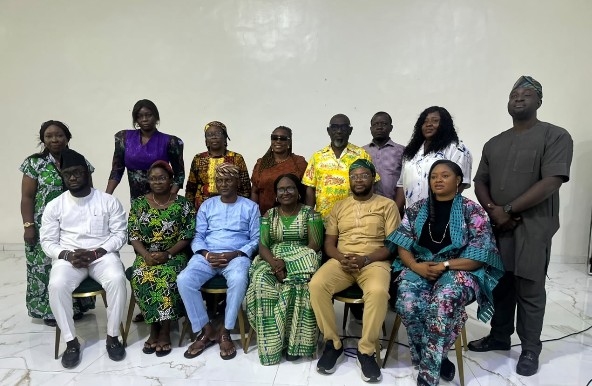
This question took centre stage at a media engagement on domestic nutrition financing organised by the Civil Society Scaling-Up Nutrition in Nigeria (CS-SUNN) in Lagos. Stakeholders called for increased government investment, stronger public-private partnerships and sustained media advocacy to tackle malnutrition.
Their central message was clear: nutrition is not simply a health intervention or another item in the government budget. It is an investment in human capital, economic growth and national development.
For a country seeking economic recovery, improved educational outcomes and a productive workforce, nutrition must become a development priority.
The cost of malnutrition
During the engagement, Mrs Lilian Okafor, Senior Communication Officer of CS-SUNN, illustrated the realities of malnutrition through the experience of a mother in an underserved Lagos community who struggles to feed her two-year-old child while earning a living.
The story highlights the vulnerability of families whose daily struggle to survive often makes adequate nutrition difficult to achieve.
Yet, the first 1,000 days of life, from conception to a child’s second birthday, represent a critical period for brain development, physical growth and long-term health. Inadequate nutrition during this period can have lasting consequences for a child’s development and future productivity.
Okafor urged journalists to move beyond routine reporting and connect the experiences of vulnerable families with government decisions on public spending.
Malnutrition, she stressed, is not merely about hunger. It can affect a child’s ability to learn, concentrate, acquire knowledge and eventually contribute meaningfully to society.
When children are denied adequate nutrition, the country risks losing valuable human resources before they have the opportunity to realise their potential.
Lagos faces a nutrition financing challenge
Despite its position as Nigeria’s commercial hub, Lagos continues to face nutrition challenges requiring sustained government attention.
Presenting an overview of Nigeria’s domestic nutrition financing landscape, Mr Ambrose Evhoesor, Senior Programme Officer of CS-SUNN, highlighted figures attributed to the 2023 National Demographic and Health Survey. The figures showed that Lagos recorded stunting of 17.3 per cent, wasting of six per cent and underweight of 14.3 per cent.
The presentation also cited a separate comparison in which Lagos recorded a wasting rate of 6.4 per cent, compared with 5.9 per cent in Gombe and 5.2 per cent in Bauchi.
For a state with Lagos’ population and economic significance, these figures raise questions about the reach and effectiveness of existing nutrition interventions.
Evhoesor explained that human capital encompasses people’s health, knowledge, skills and capabilities, all of which contribute to productivity and economic development.
Children who receive adequate nutrition have better opportunities for healthy growth, cognitive development and educational achievement. Conversely, malnutrition can undermine learning, increase vulnerability to disease and reduce future earning potential.
He identified rapid population growth, competing government priorities, inadequate budgetary allocations, delayed fund releases and weak budget tracking as major challenges affecting nutrition financing in Lagos.
He stressed that budgetary allocations alone do not guarantee improved nutrition outcomes. Approved funds must be released promptly, properly utilised and monitored to ensure they reach intended beneficiaries.
Why nutrition is an economic investment
One of the strongest arguments for increased nutrition financing is its potential economic return.
According to the investment case presented by CS-SUNN, every ₦1 invested in nutrition could generate returns ranging from ₦2.70 to ₦14.60, depending on the intervention and context. For Lagos State, the estimated return was approximately ₦2.79 for every ₦1 invested.
These figures provide an economic justification for making nutrition a government priority.
Investment in nutrition can reduce preventable illnesses, lower healthcare costs, improve educational performance and strengthen workforce productivity.
A well-nourished child has a better chance of developing the physical and cognitive abilities needed to learn effectively. In adulthood, these capabilities can translate into improved employment opportunities, entrepreneurship and higher productivity.
Conversely, inadequate nutrition places additional pressure on families and healthcare facilities. Parents may lose working hours caring for sick children, while households spend scarce resources treating conditions that could have been prevented or reduced through effective interventions.
Nutrition investment, therefore, offers benefits beyond healthcare. It supports education, economic participation, poverty reduction and national development.
The first 1,000 days matter
Mrs Taiwo Fadairo, State Nutrition Officer at the Lagos State Ministry of Health, emphasised the importance of beginning nutrition interventions during pregnancy and sustaining them until a child reaches two years.
She described the first 1,000 days as a critical window for preventing malnutrition and supporting healthy growth and development. According to her, stunting can result in lasting developmental consequences when not prevented early.
She highlighted interventions such as maternal nutrition, breastfeeding promotion, appropriate infant and young child feeding, micronutrient deficiency control and improved access to nutrition services.
Fadairo also stressed that nutrition must extend beyond maternal and child health to address the needs of adolescents, older persons and other vulnerable groups.
She disclosed that Lagos State had established Local Government Committees on Food and Nutrition to strengthen coordination and bring interventions closer to communities.
However, she acknowledged that government could not close the nutrition financing gap alone, calling for stronger partnerships involving civil society organisations, development partners, businesses and communities.
The budget gap: Allocations versus releases
A major concern at the engagement was the difference between budgetary allocations and actual expenditure on nutrition.
Figures presented by CS-SUNN indicated that Lagos State allocated approximately ₦321 million to nutrition in 2023, with budget performance reported at about 13 per cent.
Performance reportedly improved to 81.5 per cent in 2024 before dropping to approximately 10 per cent in 2025, when the allocation stood at about ₦309 million.
The figures raise questions about the reasons for the fluctuations and whether approved resources are reaching the programmes and communities for which they were intended.
The presentation also estimated that treating a child with severe acute malnutrition could cost approximately ₦250,000, while the estimated treatment requirement for affected children in Lagos was put at about ₦47 billion.
Against this, approximately ₦596 million was cited as the total allocation being considered for nutrition interventions, illustrating the scale of the financing challenge.
For policymakers, the message is that announcing budgetary allocations is not enough. Political commitment must be demonstrated through timely releases, transparent expenditure and measurable results.
CS-SUNN consequently urged journalists to scrutinise the entire budget cycle, from appropriation and approval to release, expenditure and implementation.
The organisation also encouraged the media to investigate Lagos State’s contribution to the Child Nutrition Fund, established in 2023 to support nutrition interventions through a matching funding arrangement with development partners.
States, it argued, should take greater advantage of the fund to attract additional resources rather than depend excessively on external assistance.
Nutrition requires a whole-of-government approach
Another major point from the engagement was that nutrition cannot be treated as the responsibility of the Ministry of Health alone.
Outcomes are also influenced by education, agriculture, water and sanitation, women affairs, local government administration and social protection. Consequently, nutrition interventions should be reflected in the budgets and programmes of relevant ministries, departments and agencies.
Mr Francis Fatoye, Ex-Officio of CS-SUNN in Kwara State, shared how sustained advocacy helped expand nutrition financing beyond the health sector in his state.
He explained that civil society organisations engaged legislators and government institutions to encourage ministries such as Education, Women Affairs and Local Government to make budgetary provisions for nutrition.
The advocacy helped secure nutrition allocations for local governments and facilitated the development of Local Government Plans of Action across Kwara’s 16 local government areas.
He also recounted how advocacy contributed to the approval of six months’ maternity leave with full pay for women in the state, a policy that supports exclusive breastfeeding and maternal and child wellbeing.
Similarly, Mr Richard Okoro, Abia State Coordinator of CS-SUNN, described how evidence-based advocacy helped draw the Abia State Government’s attention to the seriousness of malnutrition.
He explained that presenting nutrition indicators helped government leaders recognise that infrastructure development alone could not deliver sustainable human development without adequate investment in nutrition.
However, he noted that delayed budget releases remained a challenge.
The experiences from Kwara and Abia demonstrate how sustained advocacy can influence policy, expand government commitment and improve nutrition financing, provided implementation is closely monitored.
The media’s role in driving accountability
The engagement also featured the launch and dissemination of CS-SUNN’s Domestic Nutrition Financing Media Toolkit and Strategic Media Engagement Package.
The initiative provides journalists with evidence, statistics, budget snapshots, policy briefs, social media materials, videos and interview questions to strengthen reporting on nutrition financing.
Okafor explained that the materials were designed to help journalists translate technical information into accessible stories capable of influencing public opinion and government decisions.
She urged the media to use political and electioneering conversations to demand clear nutrition financing commitments from political leaders.
She outlined key priorities for improving nutrition financing, beginning with the need to recognise nutrition as a human capital investment rather than merely a health-sector expenditure.
She called for the expansion of high-impact nutrition interventions, working towards the 75 per cent effective coverage target by 2030 highlighted during the engagement. She also advocated dedicated annual budget lines for essential nutrition interventions, including Multiple Micronutrient Supplementation, alongside timely releases of approved funds and quarterly public reporting of expenditure.
Other priorities include maximising the Child Nutrition Fund through adequate state contributions to its matching mechanism and establishing a dedicated Lagos State Food Fortification Fund to support laboratories, inspections, data systems and industry participation.
She further stressed the need for state-specific nutrition financing strategies that reflect population needs, nutritional challenges, institutional capacity and expected returns on investment.
Achieving these objectives requires collaboration among government, the legislature, local councils, the private sector, civil society and development partners.
What is at stake for Nigeria?
Increased nutrition financing offers Lagos and Nigeria an opportunity to improve health outcomes, strengthen education, build a productive workforce and reduce poverty.
Children who receive adequate nutrition have better prospects for healthy cognitive development and learning. A healthier population is also less vulnerable to preventable illnesses, while effective nutrition interventions can reduce avoidable healthcare expenditure.
In the long term, improved health and cognitive development can translate into better employment opportunities, entrepreneurship, innovation and economic growth.
These benefits make nutrition a strategic investment across several sectors, not an isolated health concern.
Speaking, Fadairo reiterated the need for adequate funding at state, local government and community levels. She also called for stronger media participation, noting that informed journalists could help sustain public attention and encourage improved government financing.
The responsibility, however, extends beyond the media.
Government must demonstrate political commitment through adequate budgetary provisions, timely releases and effective implementation. The legislature must strengthen oversight, while the private sector can contribute resources, expertise and workplace interventions. Civil society organisations must sustain advocacy, and the media must hold institutions accountable for their commitments.
Nigeria’s ambition to become a prosperous and economically competitive nation cannot be separated from the wellbeing of its people.
Roads, bridges, industries and modern infrastructure are important indicators of development. But a country cannot realise its full potential if its children are unable to grow, learn and develop because of preventable malnutrition.
The child whose mother struggles daily to provide food in an underserved Lagos community deserves the same opportunity to survive and thrive as a child growing up in a more privileged environment.
That opportunity begins with adequate nutrition, accessible services and government policies backed by sustainable financing.
The message from the CS-SUNN engagement is clear: the cost of neglecting nutrition will ultimately be borne by families, communities, the healthcare system and the national economy.
For Lagos and Nigeria, investing in nutrition is not simply about increasing a budget line. It is about building a healthier population, a stronger workforce and a more productive economy.
Nigeria cannot secure its economic future while neglecting the nutrition of its children.