By Kazeem Waris
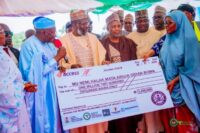
Gombe State Governor, Muhammadu Inuwa Yahaya, and his Deputy, Dr Manassah Daniel Jatau, have been decorated as Epidemic Preparedness and Response (EPR) Champions following the state’s increased investment in disease surveillance, emergency response and health security.
The recognition came as development partners, including the World Health Organisation (WHO), Nigeria Centre for Disease Control and Prevention (NCDC) and Resolve to Save Lives (RTSL), commended the state for raising its health security allocation by more than 50 per cent, from about N1.4 billion to over N3 billion in 2026.
The investiture was organised by the Legislative Initiative for Sustainable Development (LISDEL) in collaboration with RTSL, WHO and NCDC.
Leading the LISDEL delegation, its Vice-President and former member of the House of Representatives, Mohammed Usman, described Gombe as an emerging model of how political commitment and sustained investment could strengthen epidemic preparedness at the sub-national level.
He identified the provision of five fully equipped ambulances, improved emergency response mechanisms, blood-bank facilities, vaccines, cold-chain infrastructure, laboratory equipment and disease-surveillance facilities as evidence of the state’s investment in health security.
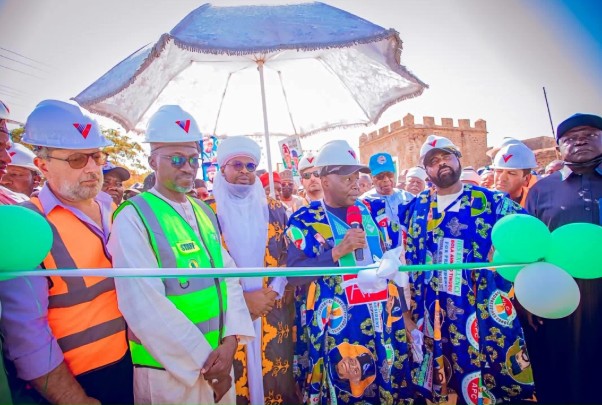
Usman also described the newly constructed Infectious Disease Hospital as a major addition to Gombe’s capacity to prevent, detect and respond to public health emergencies.
He, however, urged the state government to strengthen its legal and institutional frameworks to ensure clear responsibilities, effective coordination and accountability among relevant ministries, departments and agencies.
He also recommended a Joint External Evaluation (JEE)-aligned assessment, with technical support from the NCDC, to identify gaps and develop a comprehensive State Health Security Action Plan.
Responding, Governor Yahaya said the recognition would encourage his administration to deepen investment in sustainable health institutions and systems capable of protecting lives beyond its tenure.
He said the government’s healthcare investment was driven by the belief that health was wealth, adding that the true measure of governance should be its impact on people’s lives rather than publicity.
The governor recalled the challenges facing the state’s health sector when he assumed office in 2019, saying his administration had since prioritised healthcare delivery, human capital development and grassroots services.
He said key institutions, including the State Hospitals Management Board, Primary Health Care Development Agency, Drugs and Medical Supplies Management Agency and GoHealth, had been strengthened to improve coordination and service delivery.
Yahaya also recalled Gombe’s response to the COVID-19 pandemic, particularly the establishment of a molecular diagnostic laboratory, describing it as a strategic investment in the state’s ability to detect and respond to emerging infectious diseases.
He stressed that effective health security required more than budgetary allocations, noting that timely release of approved funds was essential to keeping emergency response systems functional.
The governor attributed the progress recorded to prudent resource management, institutional reforms, teamwork and sustained investment in primary healthcare.
He also acknowledged the contributions of development partners and the Federal Government, particularly the establishment of the Federal Medical Centre, Kumo, and the upgrading of the Kaltungo Snakebite Hospital into a research centre, with plans for local production of anti-snake venom.
In his remarks, Deputy Governor Jatau disclosed that the governor had approved the immediate procurement of diagnostic equipment capable of testing for Ebola, diphtheria, Lassa fever and other infectious diseases.
He described health security as a collective responsibility requiring the participation of government institutions, traditional rulers, legislators, civil society organisations and healthcare professionals.
Jatau urged governments to prioritise preventive healthcare rather than wait for disease outbreaks and other public health emergencies before taking action.
Earlier, the Commissioner for Health, Prof. Danladi Bojude, said the state’s health security funding had increased from about N1.4 billion to over N3 billion, with the government releasing 100 per cent of the approved funds.
He said the increased funding had significantly strengthened the state’s preparedness and response capacity.
Also speaking, Dr Itohan Imasuen, representing Resolve to Save Lives, commended the government for establishing a functional multisectoral health security coordination committee, a public health molecular laboratory and providing quarterly funding for health security activities.
Similarly, Pharmacist Chibuzo Eneh, representing the Director-General of the NCDC, said Gombe’s progress demonstrated the importance of political leadership and sustained government investment in building resilient health systems.
She reaffirmed the agency’s readiness to strengthen technical collaboration with the state, particularly in supporting its first sub-national Joint External Evaluation and the development of a comprehensive State Health Security Action Plan.
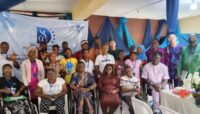
The ceremony was attended by representatives of LISDEL, RTSL, WHO, NCDC, members of the State Executive Council and other health sector stakeholders.