By Jonathan Uneze
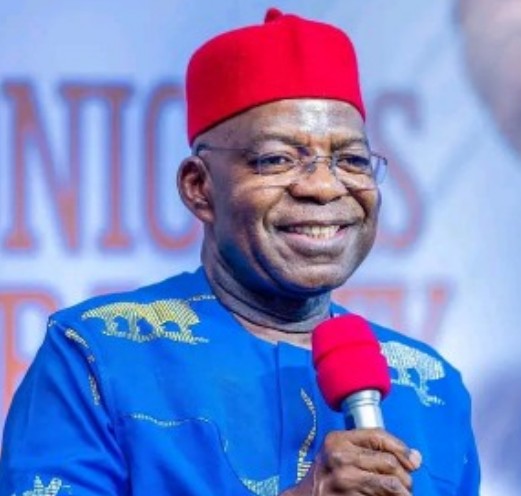
The Labour Party (LP) presidential candidate for the 2027 elections, Dr Chibuzo Okereke, has defended Abia State Governor, Alex Otti, over his participation in the reception of President Bola Tinubu in Enugu, describing the gesture as a matter of official protocol rather than political defection.
Okereke urged critics of Otti to stop what he described as political sensationalism and focus on issues affecting Nigerians, insisting that the governor’s presence at the presidential reception should not be confused with partisan allegiance.
He was reacting to criticisms of Otti’s participation in receiving Tinubu and comparisons with former Labour Party presidential candidate, Peter Obi’s visit to Aba, Abia State.
According to him, Otti’s presence at the reception reflected institutional respect, diplomatic courtesy and recognition of the office of the President, rather than an endorsement of the ruling party or its political agenda.
The LP standard bearer said Otti, as a serving governor and member of the National Economic Council, understood the distinction between official responsibilities and partisan political engagements.
“His presence was consistent with established protocols of intergovernmental relations, not a political campaign,” Okereke said.
He argued that Obi’s visit to Aba was fundamentally different, describing it as a campaign engagement during which Otti ensured a peaceful and conducive environment for the former governor to interact with voters and solicit their support without intimidation or obstruction.
Okereke said there was no constitutional or protocol obligation requiring Otti to personally receive a presidential campaign visitor who was not a serving President.
“These are fundamentally different circumstances and should not be deliberately conflated for political mischief,” he said.
Describing Otti’s conduct as an expression of political maturity and tolerance, Okereke maintained that showing respect to public institutions should not be interpreted as partisan loyalty.
“Honour, protocol and deserved courtesy is not partisanship,” he said.
He further argued that political differences should not prevent democratic coexistence, noting that the culture of tolerance and inclusiveness in Abia State was encouraging national cohesion and a more accommodating democratic environment.
According to him, democracy should allow political actors to maintain differing positions while respecting one another’s constitutional responsibilities and rights.
“Democracy thrives on tolerance and healthy competition, not intimidation; not exclusion; and not personal attacks,” Okereke said.
He urged politicians and their supporters to embrace issue-based politics and campaigns centred on offering solutions to the country’s challenges rather than engaging in personality-driven controversies and distractions.