By Desire Uzochukwu
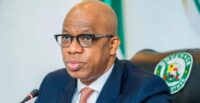
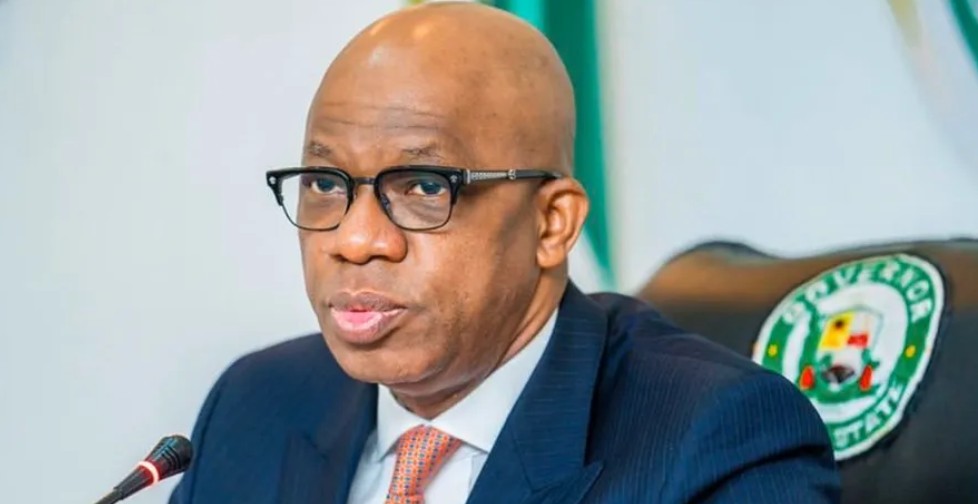
Ogun State Governor, Dapo Abiodun, has declared his administration’s readiness to establish a state police force, describing it as a critical step towards strengthening security, protecting investments and sustaining the state’s growing economic activities.
The governor also announced the immediate commencement of a social investment cash transfer programme aimed at providing financial support to vulnerable residents amid rising food and transportation costs.
Abiodun made the announcements at a town hall meeting on the 2027 budget and the 2027–2029 Medium Term Expenditure Framework (MTEF) for Remo Division, held at the Akarigbo Palace, Sagamu.
Speaking on the proposed establishment of state police, the governor, who chairs the Nigeria Governors’ Forum Committee on State Police, said Ogun was prepared to embrace the initiative, noting that the state’s expanding industrial and commercial activities required a stronger security framework.
“I am the Chairman of the Governors’ Forum on State Police creation. Ogun State is ready for state police,” he declared.
Abiodun said his administration had continued to strengthen the state’s security architecture through the provision of operational vehicles, allowances and equipment, as well as increased recruitment into the Ogun State Security Network, popularly known as Amotekun.
He disclosed that Amotekun and the So-Safe Corps currently had a combined strength of about 6,000 personnel.
“To protect the gains we have made, we have continued to strengthen our security architecture by providing them with vehicles, allowances and equipment. We have empowered our Amotekun and increased their recruitment,” he said.
On the cash transfer programme, the governor said it was designed to provide direct financial assistance to vulnerable households struggling with the rising cost of living, particularly food and transportation.
He attributed some of the prevailing economic pressures to disruptions in the global oil and gas supply chain arising from the ongoing Israel-American-Iran conflict, which he said had contributed to rising oil prices and transportation costs.
“We are going to start the implementation of our social investment cash initiative. We are going to transfer cash to our people to cushion the effects of this America-Israel-Iran war,” he stated.
The governor disclosed that the programme would commence immediately in Sagamu, with beneficiaries already identified and captured in the state’s database expected to receive payment alerts.
He added that the initiative would subsequently be extended to other communities across Remoland and the entire state.
“I am starting that today in Sagamu. I’m going into Ogijo from here. All those who have been generated to benefit will get their alerts today while I’m there. I’m going to do the same across Remoland and of course, the whole state,” he said.
Abiodun also announced plans to sink boreholes in all 236 wards across the state, while providing transformers and solar-powered streetlights to improve access to basic amenities and enhance community security.
He assured residents that Remoland remained central to his administration’s development agenda, stressing that the division was actively participating in and benefiting from Ogun’s economic transformation.
“Remoland is not on the sidelines of these developments. You are right in the middle of it. You are a participant and a contributor to this economic improvement,” he said.
Earlier, the Economic Adviser to the Governor and Commissioner for Finance, Mr Dapo Okubadejo, said effective governance depended on open dialogue, active citizen participation and mutual accountability between the government and the people.
He noted that the performance of any administration should ultimately be assessed by the tangible improvements its policies and programmes brought to citizens’ lives, particularly through infrastructure development and social interventions.
Providing an overview of the state’s fiscal performance, Okubadejo disclosed that Ogun recorded an expenditure of N490 billion out of its N703 billion budget estimate for 2024, representing approximately 70 per cent performance.
He said the 2025 budget of N1.05 trillion recorded expenditure of about N700 billion, representing 65 per cent performance.
According to him, the 2026 budget, valued at N1.67 trillion, had continued to support government interventions in infrastructure, education, youth empowerment, agriculture and other critical sectors.
“As we commence preparation for the 2027 budget within the 2027–2029 Medium Term Expenditure Framework, this town hall meeting provides the opportunity to share the policies, programmes and projects that would be embarked upon next year,” he said.
Speaking on behalf of the chairmen of Sagamu, Remo North and Ikenne Local Government Areas, the Chairman of Sagamu Local Government, Afolabi Odulate, appealed to the state government to address what he described as the encroachment of Lagos into Ogun through border communities.
He also called for the rehabilitation of deteriorating roads across the three local government areas to improve movement, stimulate commercial activities and enhance residents’ living conditions.
The Akarigbo of Remoland, Oba Babatunde Ajayi, commended the state government for development projects executed across the division but called for the establishment of a monitoring team to ensure that public facilities were properly utilised and maintained.
The monarch also appealed for the establishment of federal tertiary institutions in Remoland and urged the state government to ensure that indigenes of the division were adequately included in its economic development initiatives.
Similarly, the Chairman of the Remo Division of the Institute of Chartered Accountants of Nigeria (ICAN), Chief Adewale Kalejaye, called for stronger collaboration between the professional body and the state government to broaden the tax base and improve revenue generation.
He also advocated increased funding for Sustainable Development Goals initiatives, particularly programmes aimed at reducing poverty and hunger and improving children’s access to education.