By Destiny Obinna
The World Health Organisation, WHO, yesterday warned that antimicrobial resistance, AMR, is claiming about one million lives annually, with drug-resistant bacterial infections alone killing two people every minute across the world.
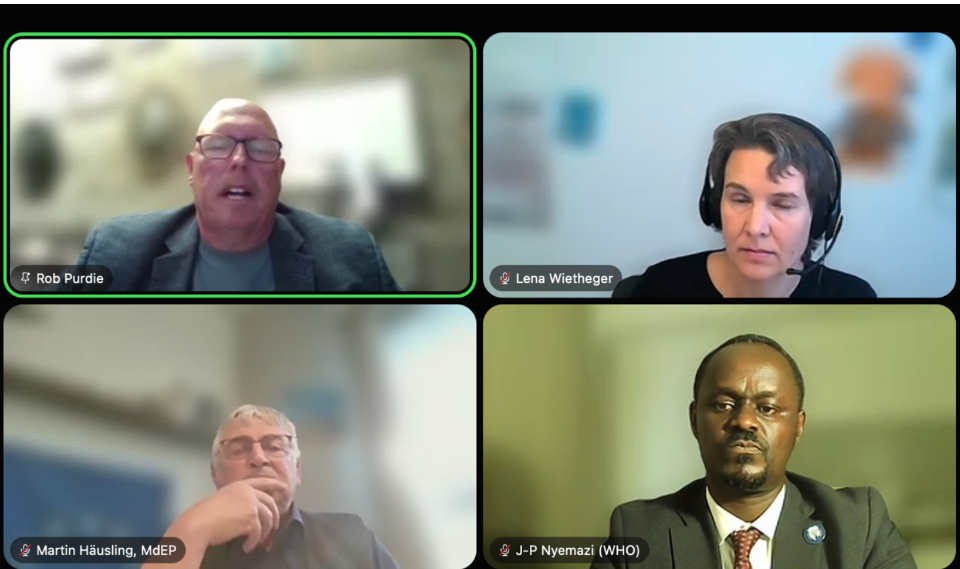
The WHO warning came as experts and survivors called for urgent action against the growing threat at a press conference organised by the WHO and Member of the European Parliament, MEP, Martin Häusling, to mark an exhibition on AMR at the European Parliament in Brussels.
The exhibition, titled “AMR: The Human Stories Behind a Silent Pandemic,” which runs from September 28 to October 2, 2026, features personal accounts of people affected by antimicrobial resistance from across Europe.
Acting Director, AMR Department, WHO headquarters, Dr Jean-Pierre Nyemazi, said the scale of deaths from drug-resistant infections means AMR should no longer be treated as an abstract or distant threat.
“One million people die every year due to drug-resistant bacteria alone — that is, two people every minute die of bacterial AMR,” Nyemazi said.
“Although we call it a ‘silent pandemic,’ I do not think we should continue to call it that while AMR is taking this many lives.”
According to him, AMR is no longer confined to the health sector, as drug-resistant pathogens affect humans, animals, plants, food systems, economies and the environment.
“Drug-resistant pathogens move across sectors and across borders. We have seen drug-resistant pathogens moving from one country to another, from one continent to another, from animals to humans and vice versa,” he said.
Nyemazi therefore stressed that the One Health approach must move beyond being a policy concept to concrete action involving governments, health workers, farmers, veterinarians, industries, communities and individuals.
He said AMR also carries significant economic consequences, as patients with resistant infections often spend longer periods in hospitals, while relatives may have to abandon their jobs to care for sick family members.
“Parliamentarians have a critical role in ensuring that national commitments to prevent AMR with One Health approach, are backed by legislation, financing and accountability,” he said.
He also urged the media to make AMR a subject of sustained public discussion.
“The media also plays an indispensable role. Journalists help bring AMR out of scientific circles and into public debate. They raise awareness, combat misinformation, and ensure that AMR remains visible to decisionmakers and the public alike,” Nyemazi said.
‘Stop mass treatment of animals’
Häusling, who organised the exhibition, warned against indiscriminate use of antibiotics in humans and animals, particularly the routine treatment of entire groups of animals when only one animal is sick.
He said the practice was contributing to the development and spread of drug-resistant pathogens.
“I usually focus on poultry because thousands of animals are kept in one place. When one chicken becomes sick, the entire group is given antibiotics even if the others show no symptoms. We have to move away from this mass treatment,” Häusling said.
He also raised concerns over the environmental consequences of antibiotic use in intensive animal production.
“We have a large slaughterhouse nearby, and it is no coincidence that drug resistant pathogens end up in the environment. Wastewater from the slaughterhouse contains AMR pathogens, so people can come into contact with them through water without even knowing it,” he said.
Häusling called for an end to prophylactic treatment and excessive use of last-resort antibiotics in food-producing animals.
“These are the antibiotics we urgently need when other options fail,” he said.
The MEP said AMR was a global problem requiring stronger political attention.
“This is an issue not only in Europe but globally. We are still not advanced enough in addressing it,” he said.
According to him, the exhibition was designed to help European lawmakers understand that AMR can affect anyone.
“AMR can affect anyone. It is not a problem of a marginal group. AMR can destroy families and livelihoods. I will do everything in my power to keep this issue on the parliamentary agenda,” Häusling said.
Survivor recounts 13-year battle
An AMR survivor and member of the WHO Task Force of AMR Survivors, Rob Purdie, gave a personal account of how a delayed diagnosis and resistance to antifungal drugs transformed a seemingly ordinary illness into a life-changing condition.
Purdie said his ordeal began in January 2012 with what appeared to be a headache. After the condition worsened, he was diagnosed with a sinus infection and prescribed antibiotics.
He completed the first 10-day course but became worse. A second doctor gave him another antibiotic after making the same diagnosis.
It was not until he saw an ear, nose and throat specialist that he underwent diagnostic testing.
“I walked in with the report, which the doctor held it up to the light and said: ‘You do not have a sinus infection.’ He was the first person who took the step of trying to give me a real diagnosis,” Purdie said.
His condition later deteriorated, with severe headaches, nausea and vision problems.

After being taken to a hospital emergency room, a lumbar puncture was performed and he was eventually diagnosed with a fungal infection that had progressed to meningitis.
“I was admitted to the hospital, and on Valentine’s Day 2012, I received a diagnosis: a fungal infection that had progressed to meningitis,” he said.
Purdie said his illness eventually proved resistant to several antifungal drugs. Because of the limited number of antifungal medicines available, doctors resorted to salvage therapy involving a combination of drugs.
He said the treatment controlled the infection but produced severe side effects.
One of the medicines caused photosensitivity which, he said, resulted in squamous cell carcinoma in 2015. He has since had five additional squamous cell carcinomas removed.
Purdie said the illness also devastated his ability to work.
“My ability to earn a living was completely eliminated for about five years in a single-income household where I provided for my wife and two children,” he said.
“Imagine going from being a productive member of your community to relying on social safety nets.”
More than a decade after his diagnosis, Purdie said he remains on daily antifungal medication because existing drugs can control his infection but cannot cure it.
“You lose a lot,” he said.
He called for greater attention to the experiences of AMR survivors.
“That is why it is so important for those of us who have survived and are able to speak, to remove the word ‘silent’ from the ‘silent pandemic,’” he said.
WHO: Prevention remains key
Nyemazi said prevention remained the most effective way of tackling AMR, stressing that vaccination, infection prevention and control, WASH, improved animal husbandry, responsible use of antimicrobials, surveillance and access to quality medicines and diagnostics could significantly reduce the threat.
“The tools exist and the evidence is there, but the cost of inaction is rising. The longer we delay action, the higher the cost becomes,” he said.
He said governments must strengthen primary healthcare so that patients could obtain timely diagnosis and appropriate treatment rather than resorting to self-medication or purchasing antibiotics directly from pharmacies.
Nyemazi said regulations against dispensing reserve antibiotics without prescriptions must also be enforced.
He called for public education, stronger pharmacy regulation and the use of digital technology to track medicines being dispensed.
“In short, there is no single solution. It requires combined efforts from everyone,” he said.
He added that governments, civil society and the private sector all had roles to play, particularly in countries such as Nigeria where private providers operate a significant proportion of health facilities.
Nyemazi identified poor coordination as one of the major obstacles to AMR control because the problem cuts across multiple sectors.
New global plan targets AMR
According to Nyemazi, the updated Global Action Plan on AMR adopted by WHO Member States in May 2026 places greater emphasis on prevention, governance, measurable targets and behavioural change.
He said the plan was developed jointly by WHO, the Food and Agriculture Organisation, FAO, the United Nations Environment Programme, UNEP, and the World Organisation for Animal Health, WOAH.
“The previous plan was heavily focused on human health. This time the four Quadripartite organisations worked together and engaged all sectors,” he said.
Nyemazi said the global commitment to reducing deaths associated with bacterial AMR by 10 per cent by 2030 was achievable through measures including infection prevention and control, vaccination and improved access to quality antimicrobials.
Purdie agreed that a reduction was possible but said success would require public education and sustained media attention.
“A 10% reduction is achievable, but it takes all of us — including educating journalists and the public. Journalists have an enormous influence on the public,” he said.
Nyemazi also called for continued investment in research and development of new antibiotics, antifungals, phage therapy and other technologies.
But he warned that new medicines alone would not solve the problem if existing drugs were not protected from inappropriate use.
“We have to do both: develop new tools and protect the ones we already have, with clear plans for their use, paired with diagnostics and proper training for prescribers,” he said.
Purdie said the development of new antifungal medicines could take decades, making responsible use of existing medicines an urgent priority.
“We can make a big difference today simply by valuing these medicines for what they are: the foundation of modern medicine,” he said.