By Blessing Elo Oghene
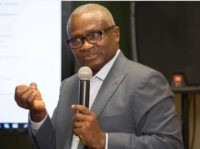
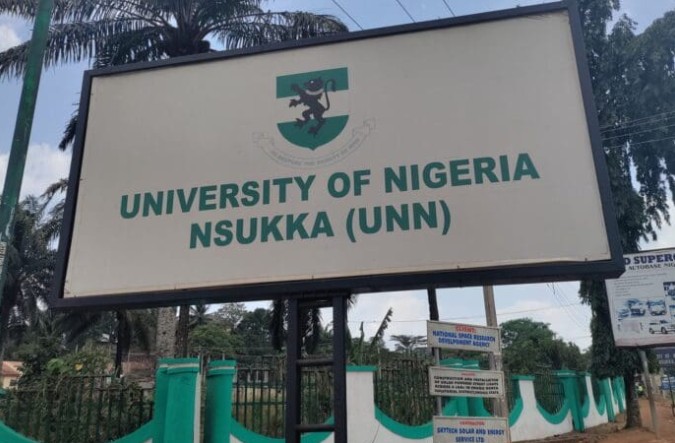
A Professor of Management at the University of Nigeria, Nsukka (UNN), Vincent Onodugo, has urged Nigeria to combine human intelligence, indigenous knowledge and artificial intelligence (AI) to tackle its development challenges and promote sustainable economic growth.
Onodugo made the call while delivering the keynote address at the 2026 International Conference of the College of Postgraduate Studies, Enugu State University of Science and Technology (ESUT), Enugu.
Speaking on the theme, “Integrating Human and Indigenous Knowledge with Artificial Intelligence for Sustainable Development,” he stressed the need for Nigeria to prioritise research and technological innovations that reflect its socio-economic realities rather than depend heavily on solutions developed for other societies.
He cautioned against adopting foreign economic theories and technological models without carefully considering their relevance to developing countries.
The professor identified security, manufacturing, human capital development, energy, technology and agriculture as critical sectors requiring sustained investment to accelerate national development.
According to him, human intelligence remains essential for creativity, sound judgment, contextual interpretation and empathy, while AI is more suitable for data processing, repetitive tasks and operations requiring speed and accuracy.
Onodugo argued that addressing insecurity would improve investor confidence and attract foreign investment, while strengthening manufacturing and agricultural processing would create jobs, reduce poverty and improve food security.
He also emphasised the importance of reliable electricity, describing it as essential for productivity, business expansion and the delivery of affordable goods and services.
The don further advocated greater investment in education and skills development to equip Nigerians with the expertise needed to compete globally and position the country as an exporter of skilled manpower.
In a lead paper, a Professor of Surveying and Geoinformatics, Victor Chukwuemeka Nnam, called for the integration of AI, indigenous knowledge and remote sensing in geospatial analysis.
Nnam warned that automated systems could conceal human decisions concerning data selection and accuracy, stressing that indigenous knowledge and professional judgment remained essential for reliable mapping and environmental analysis.
He urged researchers to acknowledge the limitations of their findings, consult community elders and maintain human accountability in technology-driven research.
Similarly, the Chief Executive Officer of IntelliScan.Africa, Professor Stephen Onu, warned that Africa risked becoming merely a supplier of data and labour while ownership and the economic benefits of AI remained concentrated in foreign hands.
Presenting a paper titled “Whose Intelligence: Injecting Indigenous African Knowledge into Artificial Intelligence for Epistemic Sovereignty and Sustainable Development,” Onu said AI systems trained predominantly on foreign data could misrepresent African realities in critical sectors such as agriculture, healthcare and financial services.
He called for the protection of collective data rights, transparent benefit-sharing arrangements and greater African ownership of AI systems.
Onu also urged governments to ensure that AI technologies deployed in Nigeria were tested on local populations and developed or adapted to accommodate indigenous languages and local conditions.
Another speaker, Dr. Sarah Dyson, a researcher in Ethical AI Governance, presented a paper on human capital in sustainable organisations.
In his welcome address, the Provost of the College of Postgraduate Studies, ESUT, Professor Charles Chime, said the conference was designed to connect local research with emerging technologies to address community needs and global development challenges.
Chime described the event as the college’s first international conference since its elevation from a postgraduate school, commending the Vice-Chancellor, Professor Aloysius-Michaels Nnabugwu Okolie, for supporting academic reforms.
The conference attracted scholars from within and outside Nigeria, providing a platform for discussions on the role of indigenous knowledge, human intelligence and emerging technologies in sustainable development.