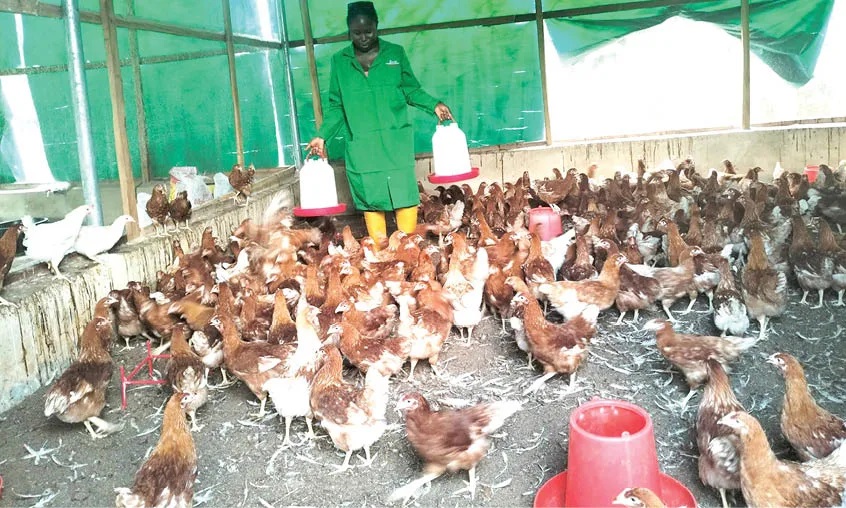
For millions of Nigerians, poultry farming is more than a business. It is a source of food, income and financial security. Across rural communities, chickens often provide a means of paying school fees, settling medical bills and meeting other household needs.
Yet, this vital livelihood remains under constant threat from Newcastle disease, a highly contagious viral infection that continues to devastate poultry flocks across the country.
Nigeria has an estimated 640 million poultry birds, making it one of Africa’s largest poultry-producing nations.
Newcastle disease is caused by the Newcastle disease virus (NDV), a highly contagious avian virus. It affects domestic and wild birds, including chickens, turkeys, ducks, pigeons and guinea fowls, although chickens are the most vulnerable. The virus attacks the respiratory, digestive and nervous systems, causing coughing, sneezing, difficulty in breathing, greenish diarrhoea, paralysis, twisted necks, reduced egg production and sudden death. In severe outbreaks, mortality in unvaccinated flocks can reach 100 per cent within days.
The disease spreads rapidly through saliva, nasal discharge, faeces and other secretions from infected birds. It can also be transmitted through contaminated feed, drinking water, poultry equipment, vehicles, egg trays and even the clothing and footwear of farm workers. Live bird markets, where birds from different locations are mixed, remain among the biggest centres of transmission, while wild birds can also introduce the virus into poultry farms.
There is no specific cure for Newcastle disease, making prevention the most effective defence. Veterinary experts recommend routine vaccination, strict farm biosecurity, restricting contact with wild birds, regular cleaning and disinfection of equipment, and the safe disposal of dead birds through burial or burning. Farmers are also advised to report suspected outbreaks immediately to veterinary authorities to prevent further spread.
Recognising the enormous threat posed by the disease, the Federal Ministry of Livestock Development, in collaboration with the Global Alliance for Livestock Veterinary Medicine (GALVmed), has inaugurated the National Technical Working Group on Newcastle Disease to develop Nigeria’s first National Newcastle Disease Strategic Plan.
The Permanent Secretary of the ministry, Dr Chinyere Ijeoma Akujobi, represented by the Director of the Project Coordination Unit, Dr Adedoyin Adeniyi, described the initiative as Nigeria’s first coordinated national effort to tackle Newcastle disease through a structured, evidence-based approach.
According to her, Newcastle disease remains one of the most devastating viral diseases affecting poultry in Nigeria, causing significant economic losses, reducing farmers’ incomes, threatening food security and slowing the growth of the poultry industry. She said the strategic plan would provide a roadmap for disease surveillance, vaccination, biosecurity, rapid response and long-term control while addressing the poor coordination that has hampered previous disease-control efforts.
Dr Akujobi noted that although Newcastle disease is a transboundary animal disease, it is not zoonotic, meaning it cannot be transmitted from birds to humans. She stressed the need for stronger collaboration among the federal and state governments, improved surveillance systems, enhanced veterinary services and greater participation by development partners and the private sector.
She also highlighted Nigeria’s capacity to produce Newcastle disease vaccines locally through the National Veterinary Research Institute (NVRI), saying the strategy would prioritise last-mile vaccine delivery, farmer education on disease detection and reporting, and the promotion of good biosecurity practices.
The ministry reaffirmed its commitment to strengthening animal disease control through increased funding and partnerships with organisations, including ECOWAS, AU-IBAR, NEPAD and the Food and Agriculture Organisation (FAO).
Earlier, the Director and Head of the Department of Animal Health and Reproductive Services, Dr Mitchell Alao, described the initiative as a landmark in Nigeria’s animal health sector. He said the national strategy would serve as a framework for government, development partners, research institutions and the private sector to harmonise interventions, deploy limited resources more effectively and measure progress against clearly defined targets.
In his presentation, titled The Control of Newcastle Disease in Village Chickens in Nigeria: Current Status, Challenges and the Way Forward, the Chief Veterinary Officer and National Programme Coordinator for African Swine Fever, Dr Ago, highlighted the importance of village poultry in improving household nutrition, food security and reducing poverty, particularly among rural women and vulnerable households.
He noted that village chickens remain an important source of affordable animal protein and income for millions of households, underscoring the urgent need to control Newcastle disease.