By Destiny Obinna
From the introduction of complex surgical procedures to the training of generations of medical professionals, former Chief Medical Director (CMD) of the Lagos University Teaching Hospital (LUTH), Prof. Akin Osibogun, has reflected on the milestones of his career, describing his years in public health as an opportunity to serve humanity.
Osibogun, who retired from public service at 70 on Tuesday, said his tenure at LUTH was particularly fulfilling because of the hospital’s progress in specialised medical care, including renal transplantation, open-heart surgery and laparoscopic surgery.
Speaking at his valedictory lecture at the Old Great Hall of the University of Lagos College of Medicine, Idi-Araba, Lagos, the renowned Professor of Public Health said Nigeria must invest more in healthcare, train additional health professionals and create conditions that would encourage them to remain in the country.
“I think the first thing we need to understand is that health is wealth. And that without health, there cannot be any development.
“And we know from statistics and from data available that countries that are wealthy are also countries that have better health indices. So we need to work hard and improve the health indices and the health outcomes for Nigerians. And what do we need to do? We need to fund health better.
“And we need to put in place mechanisms to train more health workers and retain more health workers. Those two things are very strategic in developing the health system for Nigerians. Thank you so much,” he said.
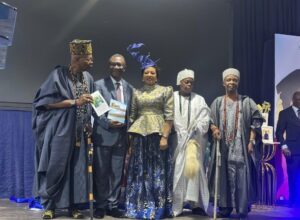
The event attracted former President Olusegun Obasanjo, represented by his wife, Chief (Mrs.) Bola Obasanjo; Minister of State for Health, Dr. Iziaq Adekunle Salako; and UNILAG Vice-Chancellor, Prof. Folasade Ogunsola, alongside senior medical practitioners, academics, traditional rulers, former students, colleagues and family members.
Reflecting on his years as LUTH CMD from 2006 to 2014, Osibogun said the hospital introduced procedures that demonstrated the potential of Nigerian medical institutions to deliver highly specialised care when adequately supported.
“Well, I had the opportunity of being the Chief Medical Director of the Lagos University Teaching Hospital. And during my tenure, we started a renal transplantation programme. We started open heart surgery. And then we started laparoscopic surgery at the Lagos University Teaching Hospital.
“All these procedures that I mentioned are highly skilled and highly resource intense procedures. And we were able to do all that. And I think that is very important for the country,” he said.
His achievements featured prominently in tributes delivered at the valedictory lecture, titled “Strengthening Health Systems, Shaping Futures: A Tribute to Leadership in Health.”
Representing Obasanjo, Mrs. Obasanjo described the retiring professor as a great scholar and an administrator par excellence, recalling her daughter’s experience during her National Youth Service Corps (NYSC) scheme at the institution.
“My association with Professor Akin Osibogun dates back to when my daughter served here during her National Youth Service Corps (NYSC) scheme. She would frequently return home with glowing reports of his exceptional efficiency, profound dedication, and tireless work ethic.”
She praised his ability to mobilise doctors, nurses, cleaners and support staff towards institutional growth, describing him as an outstanding physician who worked harmoniously with different categories of healthcare workers to make LUTH a centre of excellence.
Addressing him directly, she said: “Professor Osibogun, though you are officially retiring, I firmly believe you are not yet tired. You still have a vast wealth of knowledge and service to offer. Your career stands as a powerful testament to what it means to be excellent, dedicated, diligent, courageous, selfless, and hardworking.”
Mrs. Obasanjo also recalled that former President Obasanjo approved Osibogun’s appointment as CMD despite having no prior personal relationship with him, and maintained an interest in the hospital’s development.
The Minister of State for Health, Dr. Isaq Salako, represented by the current LUTH CMD, Prof. Wasiu Adeyemo, described Osibogun as a “super administrator” whose contributions to public and community health had benefited humanity.
Salako said leadership in healthcare required courage, patience, fair judgment and the ability to balance competing demands. He identified mentorship as one of Osibogun’s most enduring contributions.
“Prof. Osibogun has nurtured an entire generation of doctors, shaping not only their professional competence but also their understanding of responsibility, leadership, and planning. The true measure of a great academic position lies not simply in the number of publications produced or professional roles occupied, but in the lives transformed and the calibre of people produced.”
Speaking, UNILAG Vice-Chancellor, Prof. Folasade Ogunsola, described Osibogun as the personification of humanity, greatness and professional excellence.
She commended his leadership of LUTH from 2006 to 2014, highlighting the introduction of open-heart surgery and a landmark kidney transplant on a 15-year-old boy among the milestones recorded during his tenure.
“At UNILAG, you have served excellently as a scholar, teacher, mentor, and leader,” she said, referring to his elevation to the rank of Distinguished Professor of Public Health.
“Because a goldfish has no hiding place, I know that as you step into retirement from UNILAG, you are simply stepping into higher service.
“Your legendary achievements have already gone ahead of you, as evidenced by your recent appointment as the Vice-Chancellor of a new private medical university here in Lagos. So, I believe you will do greater exploits, and I wish you the best in your future endeavours.”
Delivering the valedictory lecture, Vice-Chancellor of the Lagos State University of Science and Technology (LASUSTECH), Prof. Olumuyiwa Odusanya, said Osibogun had devoted more than four decades to strengthening healthcare through medical practice, teaching, research and institutional leadership.
Odusanya said Nigeria’s health system faced persistent challenges, including inadequate funding, shortages of health personnel, migration of skilled professionals, rising medicine costs and insufficient diagnostic equipment.
He argued that the effectiveness of a health system depended on more than hospitals and health workers, identifying leadership and governance, service delivery, health financing, medical technologies and reliable health information as interconnected components.
He called for stronger leadership and accountability at all levels, particularly primary healthcare, as well as sustained investment in the health workforce, research, modern medical technologies and basic infrastructure such as electricity, water and sanitation.
The lecturer maintained that health should be treated as an investment in national development, urging governments to ensure that budgetary allocations translated into better services and improved health outcomes.
Osibogun also warned against complacency in disease surveillance, saying epidemics and pandemics would continue to occur and countries must prepare to prevent, detect and contain outbreaks.
“Well, I think that epidemics and pandemics will always happen.
“So what countries need to do is to be prepared. To be prepared for early detection, for prevention, early detection and containment. Once you put in place mechanisms to prevent and mechanisms to detect in case there is any leakage, if there is any leakage into the country, then we will be in good state.”
Referring to Nigeria’s response to the imported Ebola case, he cautioned against relaxing surveillance measures.
“You know, fortunately for us, a single case of Ebola that came into the country has now been transported out of the country. And the WHO says that Nigeria is now currently Ebola-free. But that is not to suggest that we should lose our guards.
“We need to be watchful. You know, we talk about surveillance. We need to intensify disease surveillance mechanisms so that we will be on the watch out for any leakage.”
The professor advised Nigerians to drink plenty of water, remain hydrated and avoid direct exposure to excessive heat during periods of extreme temperatures.
Beyond his institutional achievements, Osibogun expressed gratitude to God for his career and the opportunity to mentor younger professionals.
“I have been a beneficiary of grace. I have never struggled for anything, and that is the grace of God on me,” he said.
He said he felt fulfilled that his department had produced about 10 full professors and seven or eight associate professors, many of whom had benefited from his mentorship.
Advising younger professionals, he urged them to build confidence, study hard, work diligently and embrace delayed gratification rather than pursue immediate rewards at the expense of professional standards.
“Well, my message to the younger ones would be to have confidence in themselves. That’s the first one. To study hard, work hard, and then to imbibe the spirit of delayed gratification.
“Don’t be in a hurry to be gratified. Have the spirit of delayed gratification. Because at the end of the day, if you are hard-working, if you are professional, and if you do the right things, you’ll be comfortable at the end of the day without cutting corners.”
He added: “I think overall I thank God for the opportunity.”
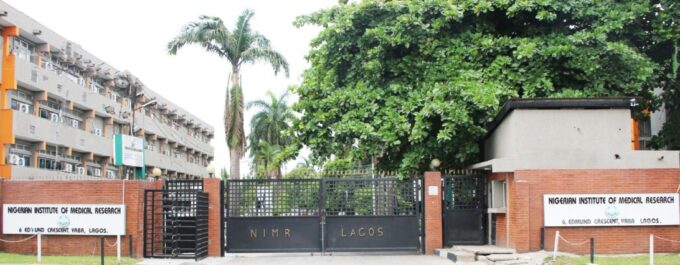
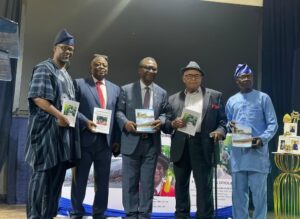
The ceremony also featured the presentation of three new books authored by Osibogun. Among those present were LUTH CMD, Prof. Wasiu Adeyemo; College of Medicine Provost, Prof. Ademola Oremosu; Director-General of the Nigerian Institute of Medical Research, Prof. John Obafunwa; President of the Postgraduate Medical College, Prof. Anthony Nnaemeka Ikefuna; and other senior academics and medical professionals.
Osibogun’s retirement from public service marks the close of a career spanning medical practice, public health, academic leadership and hospital administration, while his subsequent appointment as vice-chancellor of a new private medical university points to another chapter in his contribution to medical education.