By Destiny Obinna
The World Health Organisation, WHO, has validated Timor-Leste’s elimination of trachoma as a public health problem, making the country the latest to achieve a major milestone in the global campaign against preventable blindness.
The development has also effectively cleared the WHO South-East Asia Region of trachoma as a public health problem, with Timor-Leste previously the last country in the region with suspected endemic transmission of the disease.
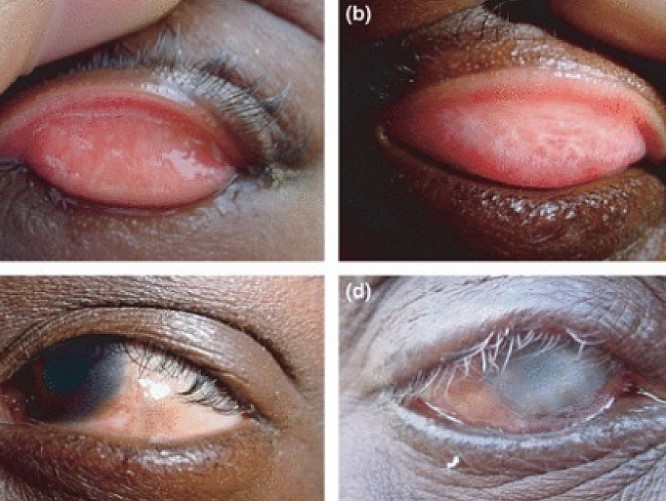
Trachoma remains the world’s leading infectious cause of blindness and is associated with repeated infection that can progressively damage the eye and lead to irreversible blindness.
WHO Director-General, Dr Tedros Adhanom Ghebreyesus, described the achievement as evidence of what strong health systems, scientific evidence and effective surveillance can accomplish.
“I congratulate Timor-Leste on this important achievement. By combining sound planning, careful field investigation and modern surveillance, the country has shown how science and strong health systems can protect people from preventable blindness,” Tedros said.
“The elimination of trachoma from the South-East Asia Region is a significant step towards our global target of eliminating trachoma worldwide by 2030,” he added.
The validation followed a multi-year assessment to determine whether trachoma remained a public health problem in Timor-Leste and whether the country had the capacity to detect and manage any cases that might occur in the future.
Between 2015 and 2017, investigations examined children on Atauro Island, screened patients attending eye clinics across the country and conducted targeted house-to-house searches.
No trachoma was detected during the investigations.
Further evidence was subsequently generated through additional studies, including a 2025 survey covering all 13 municipalities.
WHO said 4,949 samples collected from children aged one to five years were analysed, with testing finding no evidence of transmission at a level requiring trachoma-specific public health intervention.
The WHO South-East Asia Regional Office said the achievement demonstrated the importance of national ownership and integrating disease surveillance into broader health systems.
Dr Nilesh Buddha, Officer-in-Charge of the regional office, said: “Timor-Leste has once again demonstrated that strong national leadership, high-quality evidence and integrated health services can deliver lasting public health gains.”

“The country’s approach also shows the value of integrating surveillance across diseases so that limited resources produce the greatest possible benefit for communities,” he said.
WHO stressed that elimination as a public health problem does not mean the complete disappearance of every individual case.
Timor-Leste will therefore maintain the capacity to identify and manage individual cases of trichiasis and other eye diseases through its eye-care system.
Specialised services, including trichiasis surgery, remain available through the National Eye Centre at Hospital Nacional Guido Valadares in Dili, alongside outreach services to municipalities.
The country is also continuing programmes aimed at expanding access to safe water, sanitation and hygiene, while trachoma surveillance will be incorporated into existing national disease and neglected tropical disease surveillance platforms.
Timor-Leste’s Minister of Health, Dr Élia A. dos Reis Amaral, described the WHO validation as a major national achievement.
“Timor-Leste’s elimination of trachoma as a public health problem, officially validated by WHO, is a source of immense national pride,” Amaral said.
She attributed the success to “sustained national commitment and the collective efforts of our health workers, communities and partners.”
According to her, the achievement would further strengthen the country’s commitment to universal health coverage and an equitable and resilient health system.
WHO Representative to Timor-Leste, Dr Arvind Mathur, said the validation reflected the country’s “unwavering commitment to ending preventable diseases.”
“It reflects strong national leadership, dedicated health workers, sustained community engagement, and robust, high-quality integrated surveillance and public health action,” Mathur said.
He added that WHO would continue to support Timor-Leste in sustaining the gains and advancing its broader multi-disease elimination agenda.
The evidence underpinning the validation was generated by Timor-Leste’s Ministry of Health with support from WHO and eye-health and research partners, including the Royal Australasian College of Surgeons, The Fred Hollows Foundation, Menzies School of Health Research, the London School of Hygiene & Tropical Medicine, the Kirby Institute at UNSW Sydney, Lions Clubs International Foundation and the International Agency for the Prevention of Blindness.
WHO said Timor-Leste’s achievement strengthens momentum towards the global goal of eliminating trachoma as a public health problem worldwide by 2030.