By Ademola Ade
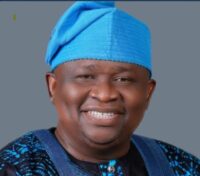
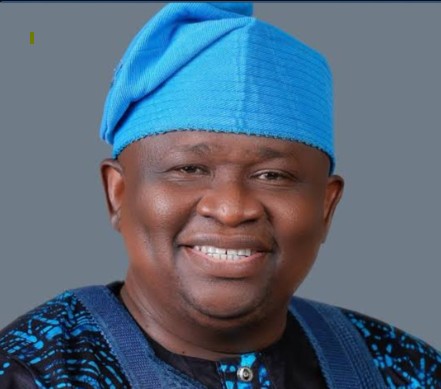
Governorship candidate of the All Progressives Congress (APC) in Ogun State, Senator Solomon Olamilekan Adeola, has unveiled an ambitious development blueprint anchored on a projected ₦17 trillion state economy, promising to create more than 50,000 formal jobs annually, construct and rehabilitate 2,500 kilometres of roads and generate an additional 200 megawatts of electricity if elected in 2027.
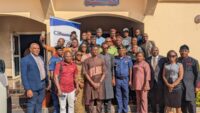
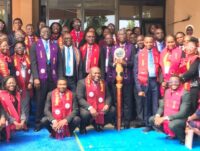
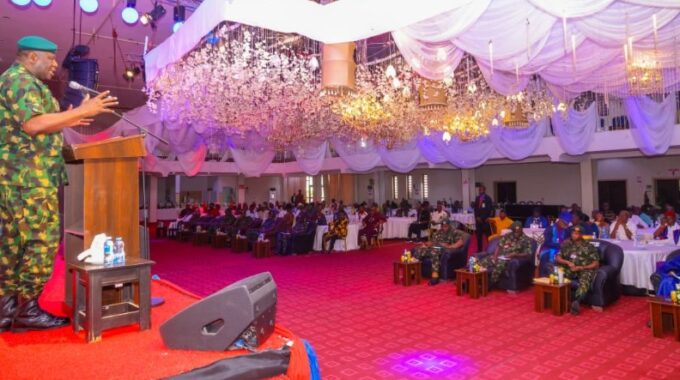
Adeola unveiled the blueprint, tagged ITESIWAJU: Governance That Works for Everyone, at its formal launch held at the June 12 Cultural Centre, Abeokuta, on Friday.
The manifesto, which outlines his proposed development agenda up to 2031, is built around nine pillars covering infrastructure, tourism, education, security, healthcare, women and youth empowerment, agriculture, industrialisation and urban renewal.
Addressing political leaders, traditional rulers, stakeholders and other guests, the senator said the document was developed through consultations with communities across the 20 local government areas of the state.
He described the manifesto as a social contract with the people, insisting that political aspirants must present clear development plans before seeking electoral mandates.
“Today, I place that agenda, built on your voices, back in your hands. This agenda is a plan, not a performance. Read it as you would read a contract, because that is exactly what it is,” he declared.
Adeola pledged to sustain and expand the infrastructure and economic development initiatives of the incumbent administration of Governor Dapo Abiodun, commending successive administrations in the state for laying the foundation for its growth.
He particularly praised former governors Olabisi Onabanjo, Olusegun Osoba, Gbenga Daniel and Ibikunle Amosun, while describing Abiodun’s ISEYA Development Agenda as an important foundation for the state’s economic expansion.
He cited the Gateway International Agro-Cargo Airport, proposed Kajola and Ijebu-Ode dry ports, planned Gateway Deep Sea Port, road construction and housing projects as strategic investments capable of transforming the state.
According to him, Ogun’s economy has grown to approximately ₦17 trillion, while internally generated revenue has also increased significantly.
“ISEYA laid the foundation for economic growth. ITESIWAJU will build the foundation for more economic growth and prosperity for our people,” he said.
The APC candidate assured residents that his administration would not abandon ongoing projects or discontinue policies already producing results.
“Governance is not a sprint; it is a relay race. Each leader must take the baton, run farther, and hand it to another for further development. To abandon good projects is to waste resources of the people and betray a trust.
“I am not coming to disrupt, but to deliver for the people. We are not reinventing Ogun State, but repositioning it for good,” he said.
Adeola identified the state’s strategic location, bordering Lagos State, the Republic of Benin and several other Nigerian states, as a major advantage for industrialisation, trade, logistics and regional economic integration.
He put the state’s economy at approximately $11 billion, comparing its size to that of the Republic of Togo, but lamented that economic growth had yet to translate into improved living conditions for many households.
He cited the challenges of traders operating without reliable electricity, farmers losing produce due to inadequate storage facilities, unemployed graduates and overstretched healthcare workers.
“The gap between Ogun and Lagos is not in our people or our potential. It is in how well we plan, organise and collect,” he said.
The senator proposed positioning Ogun as the “New Jersey” to Lagos, arguing that improved transportation, reliable electricity, planned residential communities and an investor-friendly environment would enable the state to benefit more from its proximity to Nigeria’s commercial capital.
Under his women and youth empowerment programme, Adeola promised to establish a ₦10 billion Enterprise and Empowerment Fund to support 60,000 businesses owned by women and young people.
He also pledged to train 100,000 youths in digital skills, including coding, data analysis, graphic design and digital marketing, while another 100,000 women would receive practical and entrepreneurial skills training.
The manifesto proposes reserving at least 30 per cent of senior government appointments for women, alongside the establishment of sports hubs, youth academies and an annual Ogun State Sports Festival.
Adeola also promised a social safety net for 20,000 widows, elderly citizens, persons living with disabilities and low-income households.
On infrastructure, he pledged to construct and rehabilitate 2,500 kilometres of rural, urban and border-town roads by 2031, with priority given to routes connecting farming communities to markets and improving access to essential services.
He also promised to address the state’s estimated 600-megawatt electricity deficit through an initial additional 200 megawatts of embedded and renewable energy generation.
The proposed projects include the Oke-Mosan Independent Power Project, renewable energy investments around Oyan Dam, power development around Ewekoro and solar mini-grids for underserved communities.
On transportation, Adeola promised to introduce between 50 and 100 compressed natural gas-powered buses within 12 months of assuming office.
The buses, he said, would operate along priority routes including Abeokuta, Sango-Ota to Lagos, Mowe-Ibafo-Berger, Sagamu to Abeokuta and Sagamu to Lagos.
He also proposed establishing a Gateway Metropolitan Area Transport Authority to coordinate public transportation and introducing OgunRide, a regulated ride-hailing service covering cars, tricycles and licensed motorcycles.
“No one in Ogun State should wait under a tree for a bus again,” he declared.
To accelerate industrialisation, the APC candidate promised to generate more than 50,000 formal jobs annually through industrial expansion, investment promotion, agricultural processing and logistics development.
He proposed strengthening existing industrial estates, establishing export-oriented industrial clusters and transforming border communities such as Idiroko, Imeko and Ipokia into commercial and logistics centres.
His proposed Ogun State Local Content and Skills Development Law would require businesses to prioritise the employment and development of local talent without imposing additional taxes or levies.
He also promised 12,000 apprenticeship and internship opportunities by his fourth year in office, including 4,000 in the energy and minerals sectors and 5,000 for young people from Ogun Waterside in the petroleum supply chain.
On agriculture, Adeola said only about 30 per cent of the state’s estimated 1.2 million hectares of arable land was currently cultivated, promising to increase the figure to 60 per cent through a programme tagged Grow Ogun, Feed Nigeria.
The initiative, he said, would focus on farm mechanisation, irrigation, improved extension services, agricultural financing and better market access.

He also proposed cocoa production hubs in Ogun East, cashew hubs in Ogun West and oil palm hubs in Ogun Central, linking them to Special Agro-Industrial Processing Zones.
The senator pledged to build on the proposed $250 million dairy investment in the state to develop a viable dairy value chain, while promising to make the Imala Cattle Hub fully operational and establish pasture systems and community peace committees to address recurring farmer-herder conflicts.
In education, he promised to rehabilitate 2,000 classrooms, construct 500 new educational facilities and train more than 35,000 public-school teachers.
He also set a target of achieving 95 per cent primary school completion through improved learning facilities, technology integration, curriculum modernisation and better teacher welfare.
On healthcare, Adeola promised to equip and adequately staff primary healthcare centres across the state’s wards and establish a Centre of Medical Excellence in each of the three senatorial districts.
He further pledged to expand the Ilera D’ero health insurance programme to cover two million residents by 2031 and reduce maternal mortality to below 200 deaths per 100,000 live births.
On security, he promised to strengthen the Amotekun Corps, reposition the State Security Trust Fund and establish a Joint Intelligence Fusion Centre.
He also proposed deploying CCTV surveillance and drones in major towns and border communities within three years, while preparing the state for a possible transition to state policing following the conclusion of necessary national legislation.
Adeola identified tourism and the creative economy as additional sources of employment and revenue, promising to develop 12 flagship tourism destinations, attract 500,000 visitors annually and generate projected revenue of ₦15 billion by 2031.
Among the attractions highlighted were Olumo Rock, Bilikisu Sungbo Grove, the Ojude Oba Festival, Lisabi Festival, Oronna Festival and coastal attractions in Ogun Waterside.
He also proposed establishing an Ogun Film Village to promote film production, fashion, music and the state’s indigenous Adire textile industry.
On natural resources, the senator promised to maximise opportunities in oil, gas and solid minerals, expressing optimism about prospective commercial oil production around Eba Island.
He pledged to pursue the state’s constitutional entitlement to 13 per cent derivation when applicable and proposed establishing a naval base on Tongeji Island to strengthen maritime security.
He also identified gold, tantalite, kaolin, limestone and bitumen as mineral resources that should be processed locally to generate employment and greater economic value.
Under urban renewal and environmental sustainability, Adeola promised to attract ₦500 billion in private investment into urban development, identifying the Ota-Agbara, Mowe, Sagamu, Lagos-Ogun border, Sagamu-Ijebu and Abeokuta-Owode corridors as priority areas.
He also proposed preparing physical development master plans for all 20 local government areas and establishing physical planning offices in each council to improve access to building approvals.
On environmental management, he promised to strengthen the Ogun State Waste Management Agency, introduce performance-based contracts for private waste operators and establish waste-to-energy facilities and incinerators across the three senatorial districts.
He also pledged to expand recycling programmes and eliminate open defecation by 2031.
Beyond the nine development pillars, Adeola identified six strategic enablers for the implementation of his agenda: fiscal discipline and revenue mobilisation, justice sector reform, legislative reform, civil service reform, optimisation of government assets and local government autonomy.
He promised to introduce a Single Window Revenue Collection System to improve transparency, reduce revenue leakages and eliminate multiple taxation.
According to him, the state’s internally generated revenue increased by 136 per cent to ₦238.5 billion in 2025, although federal allocations still account for approximately 40 per cent of government expenditure.
He pledged to widen the state’s revenue base without imposing additional taxes or double taxation on investors.
On justice administration, he proposed mobile courts, fast-track courts and electronic justice systems to reduce delays and improve access to justice.
He also promised merit-based recruitment, improved pension administration, digital workflows and sustained implementation of the minimum wage in the civil service.
Adeola further pledged to ensure that statutory allocations reach the 20 local government areas directly, fully and promptly in accordance with constitutional provisions.
To ensure accountability, the APC candidate promised to establish a Governor’s Delivery Unit within 30 days of assuming office.
He said commissioners and heads of government agencies would sign performance agreements tied to specific targets, with their continued stay in office determined partly by their performance.
A public performance dashboard, he added, would track six indicators every quarter: secondary school completion, household electricity access, youth unemployment, maternal mortality, internally generated revenue as a proportion of total revenue and access to primary healthcare facilities within five kilometres.
He also promised that citizens would be able to report service delivery failures and receive responses within 21 working days.
An independent panel, he said, would assess government performance twice yearly, while an annual State of Ogun Report would be presented to the public.
“We will measure progress not by the ribbons we cut, but by the lives we change,” he said.
Outlining his economic targets for 2031, Adeola promised to increase per capita income from approximately $1,740 to $2,500, raise annual economic growth from about four per cent to between six and seven per cent and increase revenue per resident from ₦39,600 to ₦66,000.
He also pledged to reduce the proportion of households living in multidimensional poverty from 68 per cent to below 45 per cent.
The senator acknowledged that some proposals, including state policing, the extension of Lagos rail lines into Ogun and the full realisation of oil derivation benefits, would require cooperation with the Federal Government.
He nevertheless promised to pursue the necessary partnerships and keep residents informed about the progress of the initiatives.
Adeola urged residents to scrutinise the manifesto and hold him accountable for every commitment if elected governor, describing the document as a covenant that should be reviewed in 2028, 2029 and 2031.
“I do not ask you to believe me. I ask you to hold me to this covenant,” he said.
He added: “We are not coming to rule over you. We are coming to work beside you. We will listen closely. We will learn with humility. We will act with the fear of God and with decisive resolve.”