By Editor
As millions of older persons continue to face discrimination, poverty, social exclusion and barriers to healthcare, human rights advocates have renewed calls for a legally binding United Nations treaty to protect their rights and guarantee dignity in old age.
The advocates warned that despite existing international and regional human rights frameworks, older people remain largely invisible in government policies, official statistics and accountability mechanisms, leaving many without adequate protection, social security and access to essential services.
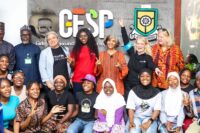
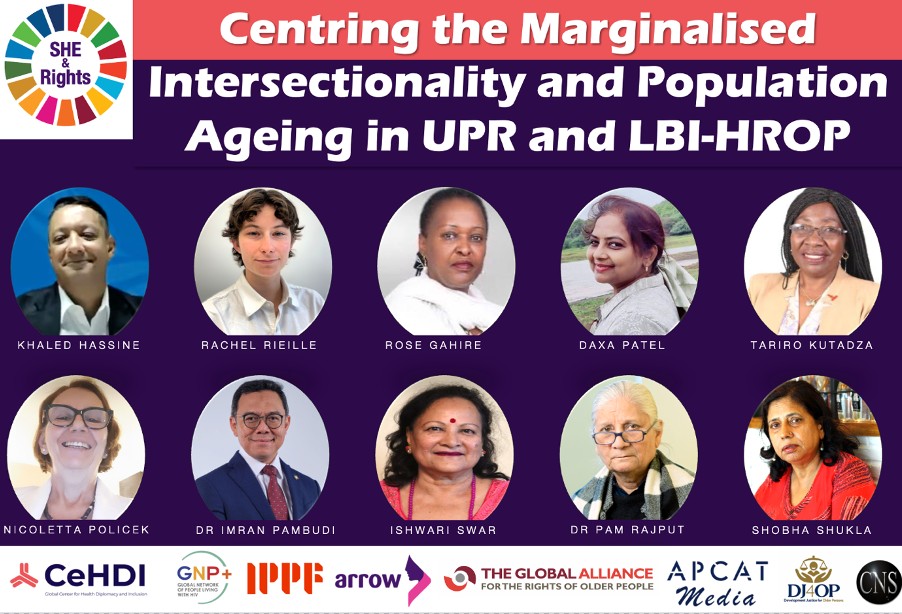
The call was made at a SHE & Rights session organised ahead of the United Nations Inter-Governmental Working Group on the human rights of older persons by the Global Center for Health Diplomacy and Inclusion (CeHDI), CNS and partner organisations.
Shobha Shukla, Executive Director of CNS and SHE & Rights coordinator, said the scale of the exclusion was reflected in the United Nations Human Rights Council’s Universal Periodic Review, UPR, process.
According to her, only 681 of more than 124,539 recommendations made since the review mechanism was established in 2008 have addressed older persons, representing about 0.5 per cent of the total.
The figures, she said, highlight the gap between the global commitment to “leave no one behind” and the limited attention given to the rights and needs of older people.
Khaled Hassine, Secretary of the Inter-Governmental Working Group at the Office of the United Nations High Commissioner for Human Rights, said a dedicated treaty was needed to address persistent gaps in the protection of older persons.
He noted that age discrimination and ageism, which include stereotypes, prejudice and exclusion based on age, remained insufficiently recognised and constrained.
Hassine said ageing experiences were shaped not simply by chronological age but also by social, economic and personal circumstances throughout life. When older persons are inadequately represented in official data and human rights reports, their needs are likely to be overlooked in policy and service delivery.
The proposed treaty, he said, should establish a coherent global framework for ensuring that older persons can effectively enjoy their human rights.
Only 144 health recommendations target older people
The extent of the gap was also highlighted by Rachel Rieille, Data Manager at CeHDI, who presented the Health and Rights Observatory, a free, public and interactive platform linking UN human rights recommendations with health indicators.
Rieille said that of approximately 29,000 health-related recommendations under the UPR process, only 144 specifically addressed the health of older persons.
Although governments supported about 92 per cent of those recommendations, she said the limited number showed how poorly older people’s health needs were reflected in international human rights monitoring.
The observatory provides a tool for civil society organisations and policymakers to track government commitments, assess progress and identify gaps in health-related rights protections.
Advocates said such evidence would be important in monitoring the implementation of any future convention on older persons’ rights.
Older women, people living with HIV face added barriers
The advocates stressed that older persons are not a homogeneous group, warning that discrimination often intersects with gender, disability, poverty, race, ethnicity, migration status, sexual orientation and geographical location.
Older women may face economic dependence, unequal access to property and gender-based violence, while older persons with disabilities can encounter inaccessible services. People ageing with HIV may also experience stigma, breaches of confidentiality, fragmented healthcare and inadequate social protection.
Rose Gahire, Co-Chair of the Global Alliance for the Rights of Older People, said a legally binding treaty should clarify governments’ obligations and strengthen accountability while building on existing international and regional standards.
“Ageing is universal, but ageing with dignity, security and respect is not yet a universal reality,” she said.
Gahire said the proposed instrument should address discrimination that undermines older persons’ independence, employment opportunities, participation in policymaking and protection during conflicts and natural disasters.
She also pointed to the African regional protocol on the rights of older persons, which came into force in 2024, as an existing framework that a global convention could complement and reinforce.
The principle, she said, should be: “Nothing about older persons without older persons.”
Feminist and international law advocate Pam Rajput similarly called for civil society participation in shaping the proposed treaty, arguing that it should recognise intersecting forms of discrimination and build on existing standards, including the 2015 Inter-American Convention on Protecting the Human Rights of Older Persons.
She said older people should be recognised as active rights holders whose wisdom, experience and contributions remain valuable to society, rather than being treated merely as recipients of care.
Ageing with HIV demands dignity and rights
The experiences of older people living with HIV were cited as an example of why healthcare protections must go beyond access to clinical treatment.
Nicoletta Policek, co-founder and director of PRISMA, a European community-driven observatory on ageing and HIV, said living with HIV for 42 years had reinforced the importance of rights, resources and the power of affected communities to shape policies.
She said longer life expectancy among people living with HIV represented a major scientific and collective achievement, but many continued to face discrimination, confidentiality breaches, fragmented care and barriers to social protection.
Policek called for community-led evidence to guide public policy and for governments to be held accountable for protecting older people living with HIV, particularly in long-term care.
“Living longer must also mean living with rights, dignity and the power to shape our own lives,” she said.
Tariro Kutadza, Advocacy Lead at the Zimbabwe National Network of People Living with HIV, and Daxa Patel, Co-Founder and former President of India’s National Coalition of People Living with HIV, called for stronger peer-support networks, integrated HIV and healthy-ageing services, improved social protection and more responsive, gender-sensitive healthcare.
They said longer survival should be accompanied by measures that enable older people to live well and participate fully in their communities.
Weak implementation undermines protection
The session also highlighted challenges facing older people in rural communities, where migration by younger generations can leave elderly residents isolated and without adequate family support.
Ishwari Swar, Founder-Chairperson of the Senior Citizens Welfare Association Nepal, said older people in remote areas often struggled to access healthcare and social protection despite existing legal safeguards.
Weak implementation, inadequate budgets and limited essential services continued to undermine their rights, she said.
Presenting Indonesia’s experience, Dr Imran Pambudi, Director for Vulnerable Groups at the country’s Ministry of Health, highlighted integrated primary healthcare, free health checks, community-based long-term care and disability-inclusive services as practical responses.
He called for stronger health systems, sustainable financing, support for caregivers and improved international accountability.
“Ageing is a triumph of human development; our responsibility is to ensure that everyone can experience it with dignity, health and meaning,” he said.
The advocates said a legally binding UN treaty would offer an opportunity to clarify state obligations, close protection gaps and strengthen mechanisms for monitoring progress.
They maintained that older persons must be directly involved in drafting and implementing the proposed instrument.
As Gahire put it: “Human rights do not diminish with age. Dignity has no expiry date.”