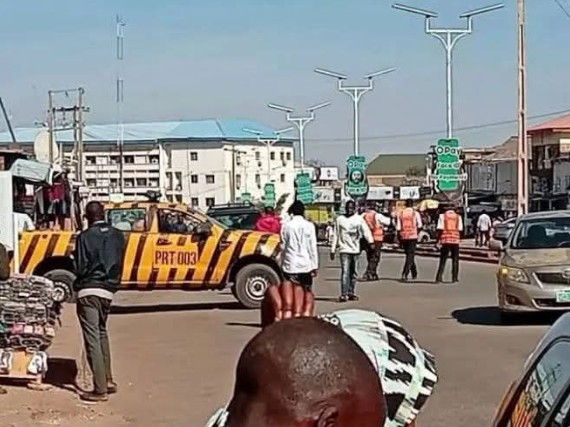
The Minister of Defence, General Christopher Musa (retd.), has called for the reintroduction of tollgates on major highways, alongside the deployment of modern tracking technology, to strengthen security and improve the identification of criminal activities.
Musa said tollgates could serve as important security checkpoints, particularly when supported by technology that allows security agencies to identify and track vehicles without requiring motorists to stop for manual payments.
The minister spoke at the Abuja roundtable titled, “Promise to Proof: The Renewed Hope Conversation,” organised by the APC Progressive Strategy Roundtable and convened by the Executive Chairman/CEO of PICNG and EVs, Ismaeel Ahmed.
Responding to concerns about highway insecurity and a suggestion that motorists could contribute to security funding through tollgate levies, Musa described the proposal to restore tollgates as a good idea, noting that Nigeria might have erred by dismantling them.
He explained that modern tolling systems in other countries use technology to identify vehicles through their registration numbers, with payments processed electronically.
According to him, the same technology could assist security agencies in identifying suspicious vehicles and tracking their movements.
The defence minister also advocated a stronger national identification system through the use of personal identification numbers, facial recognition and fingerprints to improve security monitoring.
He said such measures would make it easier for security agencies to establish people’s identities and track criminal activities.
On the country’s broader security situation, Musa said the Federal Government was making progress in tackling terrorism, banditry and kidnapping through increased defence spending, improved intelligence gathering, joint military operations and stronger cooperation among security agencies.
He disclosed that the Federal Government allocated N5.4 trillion to defence in the 2026 budget and was recruiting an additional 12,000 military personnel to strengthen manpower and security coverage.
He added that the government was investing in modern weapons, surveillance systems and operational platforms to improve intelligence gathering, mobility, firepower and rapid response capabilities.
Musa further disclosed that Nigerian security forces had killed more than 300 terrorists and bandits, including over 10 commanders, in operations conducted in the week preceding his presentation.
Identifying porous borders as a major security challenge, the minister noted that Nigeria shared extensive boundaries with neighbouring countries, particularly Niger Republic, through which criminal groups and illicit arms could move.
He said the government was strengthening border security and expanding bilateral, regional and international defence cooperation through intelligence sharing, specialised training and technological support.
Musa also disclosed that Nigeria maintained security relationships with Niger, Burkina Faso and Mali despite their withdrawal from ECOWAS, including military training and cooperation around border areas.
He warned that instability in the Sahel posed a serious threat to West Africa, urging regional countries to work together to prevent the collapse of neighbouring states.
On local defence manufacturing, the minister said the government had strengthened the country’s defence industry through legislative reforms and partnerships with equipment manufacturers.
He disclosed that Nigeria recently hosted the first African International Military Defence Exhibition, which attracted 63 countries and provided opportunities for local manufacturers to engage international partners and secure investment agreements.
According to him, domestic production of military equipment would reduce dependence on foreign suppliers, create employment opportunities and generate foreign exchange.
He urged Nigerians with expertise in cybersecurity, drone manufacturing and other defence technologies to present their ideas for possible collaboration with the Defence Industry Corporation of Nigeria.
Addressing concerns over the increasing involvement of the military in internal security operations, Musa acknowledged that prolonged deployments across the country had overstretched the armed forces.
He, however, said military intervention remained necessary in situations where security challenges exceeded the capacity of the police.
The minister explained that the military was working to strengthen the capacity of the police to enable soldiers to gradually return to their primary responsibilities.
He said the armed forces were already supporting the police, while the government pursued additional recruitment, equipment procurement and institutional reforms.
Musa also described cooperation among security agencies as unprecedented, saying interagency coordination had improved significantly.
He emphasised the importance of community participation in tackling insecurity, urging Nigerians to report suspicious activities rather than remain indifferent.
According to him, criminal groups often operate within communities and depend on local support, making citizens’ cooperation essential to the success of security operations.
He identified community-based intelligence and civilian joint task forces as important components of the country’s security strategy, noting that residents could provide timely information to security operatives.
The minister also disclosed that the military was collaborating with forest rangers and other community-based security structures to protect farmers and ensure agricultural activities continued in vulnerable areas.
On military welfare, Musa said the Federal Government had increased soldiers’ salaries and was improving their living conditions, healthcare and operational support.
He recalled that a private soldier previously earned about N49,000 monthly before the salary was increased to approximately N100,000 and subsequently to nearly N200,000.
He added that military personnel and their families were entitled to free medical treatment, while soldiers requiring specialised care could be flown abroad.
The minister further explained that military personnel underwent psychological preparation before deployment and assessment after operations to address the effects of traumatic experiences.
He said returning soldiers were monitored for psychological challenges, including post-traumatic stress disorder, anger and other behavioural changes.
According to him, personnel could undergo two to three weeks of post-deployment assessment and support before returning to their families and units.
He added that the military provided support for soldiers’ spouses and families through access to loans, medical care and educational assistance for their children.
On fallen military personnel, Musa said their families were entitled to salaries, allowances and other benefits, while their children received support through university education.
He stressed that caring for injured soldiers and families of fallen personnel was essential to maintaining the morale and commitment of troops serving in dangerous conditions.
Also speaking, the Executive Secretary of the Nigerian Police Trust Fund, Alhaji Mohamed Shaidou, said the Federal Government was addressing longstanding challenges in police funding, training, equipment and welfare.
Shaidou said years of inadequate funding and neglect had affected the police force’s ability to effectively discharge its responsibilities of maintaining internal security and enforcing the law.
He explained that the Nigerian Police Trust Fund was established as an intervention agency to support police training, equipment procurement and officers’ welfare.
According to him, the current administration had placed greater emphasis on strengthening policing and was also considering ways to improve funding through the proposed establishment of state police.
He disclosed that the government had approved about N100 billion for the rehabilitation of police training institutions following an assessment of facilities across the country.
The Trust Fund, he added, was investing in continuous training, police stations, operational vehicles, bulletproof vests and other equipment needed by officers.
Shaidou stressed that improving police training institutions was important to ensuring that officers received adequate professional and psychological preparation before deployment.
He also disclosed that the Trust Fund had entered into partnerships with the Rural Electrification Agency (REA), the National Agricultural Land Development Authority (NALDA) and Family Homes Funds to improve the welfare of police officers and their dependants.
Under the housing initiative, he said the Fund was working towards providing 1,000 housing units per state to enable police officers to own homes.
He disclosed that a groundbreaking ceremony had already been conducted for about 250 housing units in Nasarawa State.
Shaidou said the Trust Fund was also collaborating with the REA to provide electricity for housing projects and police facilities.
He revealed that some smart police stations had been equipped with off-grid solar power systems to ensure uninterrupted operations despite electricity challenges.
On transportation, the Trust Fund executive secretary said the agency had introduced welfare buses to convey police officers in Abuja from locations including Mararaba, Zuba and other communities to their duty posts.
He explained that the initiative was designed to reduce the financial burden on officers who previously spent personal resources commuting to work.
He acknowledged contributions to the transportation initiative, including the donation of a 40-seater bus and a 50-seater bus.
The Fund, he added, was considering the deployment of compressed natural gas buses to reduce fuel and maintenance costs and ensure the sustainability of the programme.
Shaidou further disclosed that the Trust Fund had partnered with NALDA to provide agricultural opportunities for dependants of police officers.
He said the initiative would enable families of officers to access farmland and engage in farming as an additional source of income and food supply.
According to him, discussions had already commenced with the governors of Kano and Niger states on the programme.
On the proposed establishment of state police, Shaidou said the Trust Fund supported the initiative but emphasised the need to strengthen the existing federal police structure.
He argued that countries operating state police systems also maintained federal police institutions, adding that Nigeria must adequately strengthen its federal police force as it considers the proposed reform.
Earlier, participants at the roundtable raised concerns about the protection of citizens who provide security intelligence, particularly whistleblowers who fear exposure or retaliation.
Responding, Musa said protecting informants was important and encouraged Nigerians to continue providing credible information to security agencies.
He disclosed that the Defence Ministry and military service headquarters received correspondence from citizens and were working towards establishing an emergency reporting line to facilitate the transmission of security information.
Participants also called for stronger collaboration between security agencies and private-sector organisations, particularly in the power sector, to ensure reliable electricity for local defence manufacturing.
Musa welcomed the proposal, describing energy supply as a major challenge facing defence manufacturers, and pledged to connect the relevant parties for further engagement.
The minister also urged Nigerians to promote national unity, saying the country’s security challenges required collective responsibility beyond religious, ethnic and regional differences.
He maintained that the ultimate measure of security success should be farmers returning to their farms, travellers moving safely on highways, markets reopening and businesses operating without fear.