By Joyce Ekeh
The Diocese of Okene, Church of Nigeria (Anglican Communion), Kogi State, has directed members to stop rushing the burial of deceased relatives, prescribing a minimum two-week period for families to prepare burial arrangements.
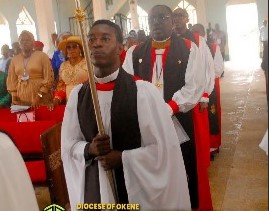
The directive was contained in resolutions adopted at the 1st Session of the 6th Synod of the Diocese, held at St. Paul’s Anglican Church, Obeiba, Ihima, from August 7 to 9, 2026.
The Synod, chaired by the Bishop of the Diocese, Dr Emmanuel Onsachi, said the two-week window was necessary to give families adequate time to organise what it described as befitting burial programmes for their departed parents.
It also sought to remove the fear among members that keeping the bodies of their deceased relatives in mortuaries beyond a few days could attract evil consequences.
The resolution stated: “In view of the need to continue to allow members of the Church to have enough time to prepare for and organise befitting burial programmes to honour their departed parents, it is therefore resolved that a minimum period of two weeks be allowed for them to prepare for the burial arrangements.”
The Synod further encouraged members “that no evil consequence would follow such resolve for the bodies of their departed parents through embalming.”
The directive effectively discourages families from allowing instructions allegedly given by deceased parents against keeping their remains in a morgue for more than a week to dictate the timing of burial.
The Diocese said such instructions should be discountenanced, maintaining that families would not suffer any consequence for delaying burial beyond the period requested by their departed relatives.
The resolution, however, did not impose the two-week period as a barrier on families who have the means and are otherwise prepared to conduct the burial earlier, according to the communique.
In another major decision affecting burial ceremonies, the Diocese banned the use of externally sourced undertakers for burial programmes in its parishes.
Instead, it directed churches to engage the Boys Brigade in their respective parishes for such duties.
The Synod said the decision was intended to prevent the involvement of a parallel body whose activities could conflict with established Church norms.
“The Diocese does not want a parallel body to be involved in our burial programmes whose activities may be in conflict with our Church norms,” the resolution stated.
Beyond burial practices, the Synod adopted a number of resolutions aimed at strengthening the economic, spiritual and organisational development of the Diocese.
On economic empowerment, it resolved that the Church should establish a yearly investment policy identifying areas and opportunities in which members could participate.
It also proposed the provision of soft loans to members for investment purposes as part of efforts to improve their economic well-being.
The Synod also introduced a directive affecting members of the Diocese living abroad, resolving that they should remit at least 50 per cent of their tithe to their home churches to support the growth of the Church.
It, however, directed that implementation should be pastoral and focused on encouraging compliance.
On future Synod gatherings, the Diocese resolved that food requirements should be clearly defined and communicated to each Archdeaconry ahead of time, with each expected to provide specified items.
The arrangement, it said, was aimed at reducing the burden placed on the host church during Synod.
The Synod also directed churches across the Diocese to intensify evangelism, calling for “intentional and aggressive evangelism” as a mission drive to increase membership.
In a move targeted at greater youth participation, it designated the third Sunday of every month as Youth Sunday, with the aim of mobilising young people and giving them greater responsibility in church programmes in which they participate.
The Diocese also fixed a formal transition point for children moving from Sunday School into the adult congregation.
Under the resolution, children are to leave Sunday School after completing Junior Secondary School Three, JSS 3, with the formal transition scheduled for May 27 every year.
The Synod further directed churches to engage in intentional discipleship and Christian instruction to build, sustain and retain members and promote Church growth.
As part of preparations for the 110th anniversary of Christianity in Ebira land, the Diocese converted its Synod Planning Committee into the planning committee for the anniversary celebration.
Engineer Philip Omeiza was appointed chairman of the anniversary planning committee, while Mr Moses Bello was named Chairman of the Synod Central Planning Committee.
The resolutions, dated August 12, 2026, were adopted for implementation throughout the Diocese of Okene.