By John Attah
The United Nations Children’s Fund, UNICEF, and the Benue Rural Water Supply and Sanitation Agency, BERWASSA, have stepped up efforts to prevent disease outbreaks linked to unsafe toilets and open defecation, mobilising rural communities to embrace improved household sanitation.
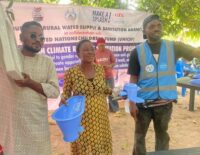
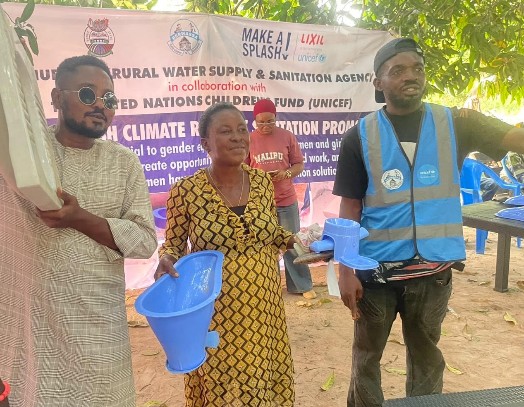
The campaign, held at Pev Market, Ute Mbalaha, Vandeikya Local Government Area, LGA, to mark the 2026 World Toilet Day, WTD, focused on upgrading unimproved toilets, promoting safe sanitation practices and protecting women and girls from the health and security risks associated with inadequate toilet facilities.
Organised with support from LIXIL Make A Slash 2026, the campaign was held under the theme, “Sanitation and Gender Equality: Safe Toilets. Equal Futures.”
The intervention comes as BERWASSA raises concerns that communities already declared Open Defecation Free, ODF, could relapse if households fail to upgrade unimproved toilets and sustain acceptable sanitation standards.
Speaking at the event, the General Manager of BERWASSA, Engr. Daniel Manger, represented by the agency’s UNICEF Focal Person II, Patrick Ihuma, said Mbalaha Council Ward was deliberately selected because of the high number of unimproved toilets in the area.
He said: “As an agency, we sincerely appreciate UNICEF for all the support they have rendered to Benue State. November 19 of every year is set aside by the United Nations as World Toilet Day, and we decided to mark it emphatically this year because we have intervened in Vandeikya LGA and helped the council achieve Open Defecation Free, ODF, status.
“However, from our records, the toilets available in this particular community are largely unimproved. This means that although they have met the criteria for ODF declaration, they could relapse if we do not make concerted efforts to improve their sanitation status by moving them up the sanitation ladder.”
Manger commended Governor Hyacinth Alia for providing an enabling environment for development partners to support sanitation programmes in the state.
According to him, Vandeikya and Ushongo LGAs, which were declared ODF earlier this year, received certificates from the National Task Group on Sanitation through the Clean Nigeria Campaign Secretariat in Abuja.
He said: “We cannot thank the Governor of Benue State enough for providing the enabling environment for our donors to come and intervene in the state. We selected Vandeikya and Ushongo LGAs last year, and with his support, we were able to achieve our target. We are not taking that for granted.
“All thanks to our Governor for providing the enabling environment and UNICEF for always supporting us technically whenever the need arises.”
He warned that achieving ODF status without sustaining improved sanitation practices could undermine the gains already recorded.
“All that we do, if they are not sustained, will end in futility. We want a community where, after attaining ODF status, the people will be able to sustain it on their own,” he said.

Manger disclosed that BERWASSA had promoted the installation of improved SATO Pans in households with pit latrines and selected youth vanguards to monitor compliance.
“Believe you me, with what we have done today, and the improved toilet SATO Pans they have purchased and are ready to install, we are confident that the situation will improve.
“We have also carefully selected a Youth Vanguards who will follow up with households to ensure compliance. I believe that if you come back in the next two weeks, all households that previously had unimproved latrines would have upgraded to improved sanitation facilities through the SATO Pans and other steps we have promoted today,” he said.
Also speaking, BERWASSA’s Sanitation Marketing Desk Officer, Sunday Agbehi, warned that households without toilets expose family members to infections, insecurity and loss of privacy.
He said: “A toilet is a very important compartment in every home. Without toilets, there will be problems, diseases, infections, lack of privacy and safety.
“You can imagine a family without a toilet having to access the bush whenever they want to ease themselves. Anything could happen, including snake bites and other dangers. It could also lead to situations that bring embarrassment and shame.”
Agbehi urged residents to recognise toilets as essential household facilities and ensure they construct and use them.
The Village Head of Bilada Mbalaha, Zaki Wilfred Ule, commended UNICEF, LIXIL and the state government for taking the intervention to the community, saying improved toilets would protect residents against pollution and contaminated water.
He said: “It would help my people live healthy lives and remain completely free from pollution and contaminated water. That is why we are encouraging everyone to ensure that they buy the SATO Pan where they have pit latrines. We thank them for coming to help our community.”
A community member, Margaret Iorapuu, who bought a SATO Pan during the campaign, said the product would help address flies and offensive odours from her household toilet.
“Now I will go and have my husband install this pan in our toilet, and we will put an end to the problem of flies and bad smells coming from our toilet,” she said.
Similarly, a Toilet Business Owner, TBO, and President of TBOs in Ushongo LGA, Ejike Mbam, urged residents to take advantage of the affordable sanitation products to improve their household facilities.
He said: “As TBOs, we encourage people to get the SATO Pan and install it in their toilets. It is affordable. We thank UNICEF and LIXIL for making it accessible and affordable. It is also durable, which is why we are encouraging people in every community to buy and install it in their homes. It will help them prevent infections.”
Mbam said several residents had purchased the products and registered to collect them on specified dates, describing their response as encouraging.
The campaign attracted community members, traditional leaders and traders, who participated in the sensitisation exercise and embraced the call for improved household sanitation.