By Ademola Ade
The Nigerian Institute of Quantity Surveyors (NIQS) has backed ongoing legislative efforts to strengthen real estate regulation in Nigeria, saying independent professional valuation and verification of construction progress will protect investments, promote accountability and restore confidence in the sector.
The institute also endorsed the Nigeria Capital Market Master Plan 2.0 (2026–2036), describing it as an opportunity to mobilise long-term investments for infrastructure and housing development amid the country’s growing housing deficit.
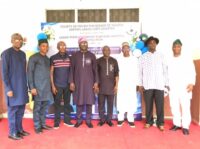
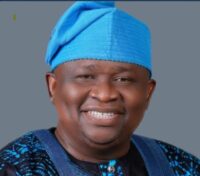
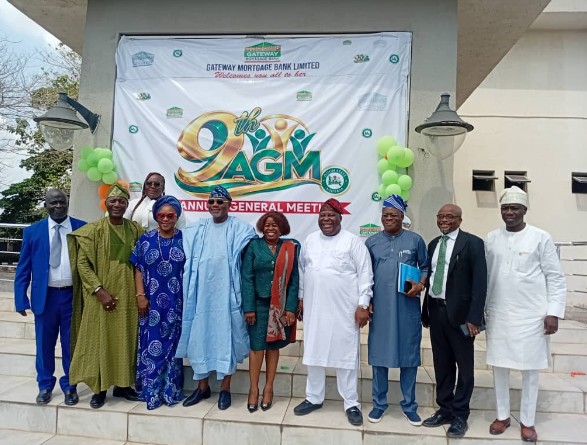
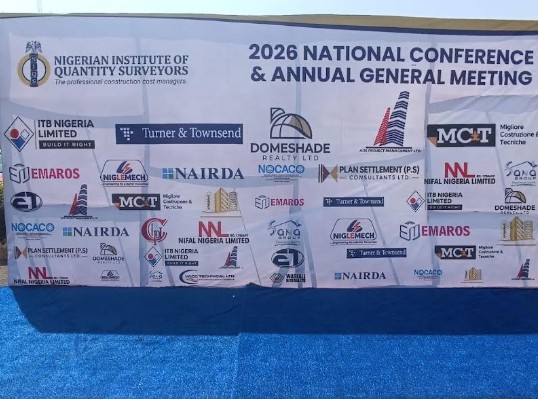
President of NIQS, Dr Aminu Bashir, stated these at the institute’s Annual General Meeting in Ilorin, Kwara State, on Wednesday, where he called for stronger collaboration among professionals, government and investors to address Nigeria’s housing challenges.
Bashir said effective regulation and professional oversight were critical to ensuring that investments in real estate translated into completed projects and affordable homes.
“We welcome ongoing legislative discussions on strengthening real estate regulation and believe independent professional valuation and verification of construction progress can significantly protect investments and improve accountability,” he said.
On the capital market master plan, the NIQS president said innovative financial instruments could help bridge the funding gap in the housing sector.
“The launch of the Nigeria Capital Market Masterplan 2.0 (2026–2036) presents opportunities for mobilising long-term investment for infrastructure and housing development.
“Housing bonds, real estate investment trusts, mortgage-backed securities and other appropriate financing arrangements can help bridge the gap between available resources and the country’s housing needs,” he said.
Bashir, however, stressed that attracting investments would depend largely on investors’ confidence in the viability, cost and management of proposed projects.
“Attracting investment requires confidence. Investors need assurance that proposed developments are viable, construction costs are realistic, project risks are properly understood and funds released are matched by work actually undertaken,” he said.
He described Nigeria’s housing deficit as one of the country’s most pressing development challenges, citing findings presented earlier this year by the Federal Government’s National Housing Data Technical Committee at the National Council on Lands, Housing and Urban Development in Ilorin, which put the deficit at nearly 15 million units.
“It is perhaps fitting that we have gathered in Ilorin to discuss one of Nigeria’s most pressing development challenges. Earlier this year, at the National Council on Lands, Housing and Urban Development held here in Ilorin, the Federal Government’s National Housing Data Technical Committee presented findings indicating that Nigeria faces a housing deficit of nearly 15 million units,” he said.
He added that behind the figures were millions of families struggling to secure decent accommodation, young Nigerians unable to enter the housing market and workers whose incomes could no longer accommodate rising housing costs.

“The question before us is therefore not simply how to build more houses, but how to make decent housing genuinely accessible and affordable to Nigerians,” he said.
Bashir maintained that financing and effective cost management must go hand in hand if the country was to overcome its housing challenges.
He explained that projects could remain unrealised because of inadequate or expensive financing, while substantial investments could also be wasted where costs were poorly assessed and implementation inadequately managed.
“A housing project may be well conceived and efficiently designed, yet remain unrealised because the required capital is unavailable or too expensive. Equally, substantial investment may be committed to a development without achieving the desired results if its costs are poorly understood or its implementation is inadequately managed.
“For us, therefore, financing and cost management must work together,” he said.
The NIQS president explained that decisions taken before construction, including design choices, feasibility assessments, procurement strategies, building materials and financing arrangements, largely determined the eventual cost of housing.
He said quantity surveyors had a critical responsibility to provide developers, investors and governments with reliable cost information and sound commercial advice to ensure that housing projects were financially viable.
He, however, cautioned that affordability should not be measured solely by construction costs, noting that homes must also be within the financial reach of the people they were intended to serve.
“The real test of affordability is whether the intended beneficiaries can realistically acquire, occupy and maintain the homes being provided,” he said.
He called for greater attention to household incomes, land costs, infrastructure provision, mortgage terms and the long-term cost of maintaining buildings.
He also advocated improved construction productivity, wider use of appropriate local building materials and reduction of avoidable waste without compromising safety or durability.
In his goodwill message, a retired Permanent Secretary and pioneer General Manager/Chief Executive Officer of the Kwara State Public Procurement Agency, Raheem Abdulbaki, described the housing deficit as a major national challenge requiring innovative financing models and stronger public-private partnerships.
He called for effective policies and active participation of professionals across the built environment to address the crisis.
Also speaking, the Kwara State Acting Head of Service, Dr Olufunke Mercy Shittu, advocated the introduction of housing and rent subsidies by government to ease the burden of accommodation on workers and other Nigerians.
She also urged corporate organisations to channel part of their corporate social responsibility programmes towards housing development.