By Damilola Samuel
Nigeria LNG Limited (NLNG) has urged gas producers to treat methane reduction as a commercial priority, arguing that preventing gas losses can increase revenue while reducing emissions.
According to a press release signed by Sophia Horsfall
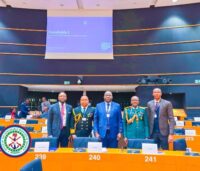
General Manager External Relations & Sustainable Development ,The company’s Managing Director and Chief Executive Officer, Adeleye Falade, made the call at the Gastech 2026 Exhibition and Conference in Bangkok during a panel discussion on methane abatement across natural gas supply chains.
Falade said methane that escapes during production and processing should not be viewed only as an environmental problem because it also represents gas that could have been sold.
“Every tonne emitted is lost product, lost revenue and lost energy; gas we could have sold. Every molecule of methane avoided is both an emissions reduction and a recovered energy resource.”
He said NLNG’s experience showed that methane reduction projects could deliver financial returns alongside environmental benefits.
According to him, the company’s new boil-off gas compressor and start-up gas recovery project are expected to cut methane emissions by about 10 to 15 per cent each, with both projects having positive projected net present values.
“The most compelling business case is the simplest one: the projects that cut our methane also pay for themselves.”
Falade said the same investments could also improve the reliability and efficiency of gas facilities.
He explained that NLNG begins its methane reduction efforts by measuring losses, identifying where they occur and directing investment towards interventions that can recover the gas. The company also subjects its emissions reporting to independent verification.
NLNG, he said, has achieved Gold Standard recognition under the Oil and Gas Methane Partnership (OGMP) 2.0 and became the first company in Africa to attain Level 5 methane emissions reporting. Its measurement, reporting and verification system is independently assured by DNV in line with ISO 14064.

The company uses optical gas imaging, a Leak Detection and Repair programme, continuous monitoring and real-time dashboards across its plant and vessels.
Falade said the experience demonstrated that credible emissions measurement was possible in developing economies.
“The industry does not need weaker standards; it needs stronger, shared ones backed by real measurement.”
He also disclosed that methane reduction had been incorporated into the design of NLNG’s Train 7 project, which is expected to increase the company’s LNG production capacity from 22 million to 30 million tonnes per annum.
Beyond its own operations, NLNG is extending its emissions requirements to its suppliers through its Scope 3 Advocacy Plan. The company engages feed-gas suppliers and contractors to measure, disclose and reduce their emissions, while verified upstream emissions data and environmental, social and governance considerations form part of supplier evaluation.
Falade also pointed to Nigeria’s reduction in gas flaring, saying NLNG’s long-standing gas monetisation activities had contributed to reducing the country’s gas-flaring rate from above 65 per cent to below 20 per cent.
He said methane data was becoming increasingly important to buyers and investors, as emissions intensity could influence procurement, financing and buyer confidence.
On the tension between emissions reduction and energy needs in developing countries, Falade said both objectives could be pursued together.
“Developing economies cannot be asked to choose between economic development and emissions reduction. Both must progress together.”
He called for greater consistency in methane measurement and reporting rules across countries to make regulation and comparisons more effective.
Falade was joined on the panel by Zubin Bamji of the World Bank, Niels Dijksman of Brunei LNG and Hiroyuki Mori of JOGMEC, with energy economist Dr Carole Nakhle of Crystol Energy as moderator.