By Chiamaka Egwu
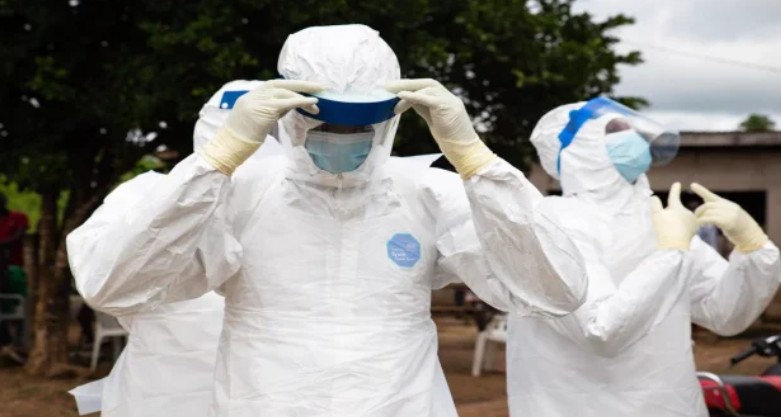
The Norwegian Refugee Council (NRC) has called for an urgent scale-up of the Ebola response in the Democratic Republic of the Congo (DR Congo), warning that the outbreak, which has surpassed 10,000 confirmed cases and claimed almost 5,000 lives, is outpacing humanitarian operations.
The humanitarian organisation said the outbreak, caused by the Bundibugyo virus, had affected eight provinces in DR Congo, with the concentration of cases in the eastern part of the country raising fresh concerns about the capacity of an already overstretched response.
The recent reporting of cases in Kenya and Nigeria has also heightened fears of a wider regional outbreak, underscoring the need for sustained and coordinated action by health authorities, humanitarian agencies and international partners.
NRC, which has operated in DR Congo for more than two decades, is participating in the Ebola response, including in Ituri, one of the worst-affected provinces.
Speaking on the scale of the crisis, NRC emergency team leader, Silvia Beccacece, said the outbreak was compounding years of violence, displacement and inadequate access to essential services in affected communities.
“As I move around Ituri I’m seeing just how hard the disease is hitting communities, and I am struck by how much more needs to be done to bring this outbreak under control,” Beccacece said.
She noted that many families were already struggling to survive the effects of prolonged insecurity and forced displacement before the outbreak further strained their ability to cope.
“Families here have been struggling for years as a result of extreme violence, forced displacement, and the lack of essential services. Ebola comes on top of that, at a point where many have exhausted their ability to cope with the additional challenge it brings,” she said.
Beccacece warned that the scale of the humanitarian response remained inadequate compared with the magnitude of the outbreak.
“The fact remains that this response is in no way proportionate to the vast scale of the outbreak,” she added.
The NRC stressed that containing the epidemic would require closer cooperation among health authorities, humanitarian organisations, community-based groups and international partners, with affected communities placed at the centre of response efforts.
It also called for interventions to reflect local customs and traditions, warning that effective outbreak control required approaches that communities could understand, trust and support.
The organisation urged donors and humanitarian partners to increase funding and operational support for DR Congo, particularly in areas facing the combined pressures of Ebola and displacement.
Beccacece described the milestone of 10,000 confirmed cases as a warning that demands immediate action from political leaders and international partners.
“10,000 confirmed cases must be a wake-up call that this response is not getting ahead of the outbreak, and is not supporting communities with what they need to bring transmission under control,” she said.
“The warning signs are here for all to see: now it depends on whether leaders will take notice and take the required action.”