By Destiny Obinna
The evacuation of Nigeria’s first imported case of Bundibugyo virus disease to Switzerland has exposed critical gaps in the country’s outbreak preparedness, including delayed diagnosis, limited access to specialised isolation facilities and concerns over support for exposed health workers, the Academy of Medical Sciences of Nigeria has warned.
The Academy said the evacuation of the 42-year-old Ugandan-born woman must not distract authorities from the urgent task of containing the outbreak, stressing that the 53 contacts identified in connection with the case remain central to Nigeria’s response.
In a public health statement issued on Monday, the Academy said the patient’s transfer abroad was permissible under international health regulations, provided appropriate biosafety measures and coordination between the countries involved were observed.
The woman, who is married to a Swiss embassy staff member in Abuja, was evacuated by air ambulance to Switzerland alongside her asymptomatic husband following approval by the Coordinating Minister of Health and Social Welfare, Professor Muhammad Ali Pate.
However, the Academy said the circumstances surrounding the case raised broader questions about Nigeria’s capacity to detect, isolate and treat patients with dangerous infectious diseases.
“The decisive work now lies with the 53 contacts under follow-up, the health workers who cared for the patient, and the gaps this case has exposed,” it said.
The statement was signed by the Academy’s President, Emeritus Professor Osato Giwa-Osagie; Foundation President, Professor Oladapo Ashiru; and a member of its Rapid Response Committee, Professor Boaz Adegboro.
13-day delay raises alarm
One of the Academy’s major concerns was the interval between the onset of symptoms and confirmation of the infection.
It said approximately 13 days elapsed between symptom onset and testing, during which the patient was seen at more than one private health facility.
According to the Academy, the timeline highlights the need for stronger clinical suspicion of viral haemorrhagic fevers among patients presenting with fever and relevant travel histories, particularly during an international public health emergency.
The delay, it warned, increased the potential for exposure among healthcare workers and underscored the need for rapid identification, isolation and testing of suspected cases.
The Academy urged the Federal Ministry of Health and Social Welfare and the Nigeria Centre for Disease Control and Prevention (NCDC) to issue a nationwide alert directing public and private health facilities to obtain travel histories from febrile patients and promptly isolate and test those with relevant exposure risks.
Outbreak is not over
While accepting the medical evacuation as consistent with international practice, the Academy cautioned against any suggestion that the patient’s departure had reduced the risks facing Nigeria.
It said all 53 contacts, including health workers and domestic staff, must complete 21 days of follow-up, with daily monitoring and immediate testing of anyone who develops symptoms.
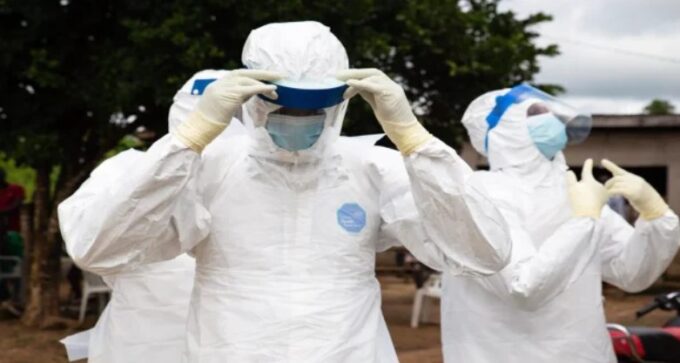
The Academy also called for adequate welfare support for contacts placed under quarantine, alongside occupational health monitoring and psychosocial support for exposed healthcare workers.
It noted that the World Health Organisation’s outbreak-closure framework requires 42 days without a new case after the last patient has recovered and tested negative, in line with the applicable criteria.
“The outbreak is not over,” the Academy stressed, warning that sustained surveillance and strict adherence to follow-up protocols would be essential to preventing further transmission.
Evacuation exposes treatment inequality
Beyond surveillance and infection control, the Academy raised concerns about unequal access to specialised treatment, arguing that Nigeria must build the capacity to provide high-level care within its own healthcare system.
“A foreign national could be flown to a high-level isolation unit abroad; a Nigerian patient could not,” it said.
The Academy called for the establishment of at least one high-level isolation and treatment centre in each of the country’s six geopolitical zones, equipped with trained personnel and the capacity to provide specialised care.
It also recommended access to investigational therapies through WHO-coordinated clinical trials, where appropriate.
The Academy said the objective should be to ensure that Nigerians facing highly infectious diseases could receive an appropriate standard of care without depending on medical evacuation abroad.
Government urged to explain evacuation protocol
The Academy called on the Federal Ministry of Health and Social Welfare and the NCDC to publish a brief account of the evacuation arrangements, including coordination with the WHO and Swiss authorities, transport safety measures, decontamination procedures and plans for sharing clinical and laboratory data.
It said transparent communication would help clarify the safeguards applied during the transfer and strengthen public confidence in the outbreak response.
The Academy explained that the International Health Regulations (2005) do not prohibit medical evacuation of patients with dangerous infectious diseases. Rather, such transfers must be properly coordinated between the countries involved and conducted with measures to prevent further transmission while respecting patients’ rights and dignity.
It cited international precedent from the 2014 Ebola outbreak, when several countries received infected patients for treatment in specialised isolation units.
The Academy also called for Nigeria to secure its share of relevant specimens and genomic sequence data and support Nigerian scientists to lead investigations into the source of the infection in collaboration with the WHO, Uganda and Kenya.
Lessons from 2014 must guide response
The Academy recalled Nigeria’s successful containment of Ebola in 2014, attributing the achievement to rapid action, discipline and the commitment of frontline health workers.
It urged authorities to apply those lessons to the current outbreak by strengthening surveillance, improving access to specialised treatment and ensuring that exposed personnel receive adequate protection and support.
“Nigeria contained Ebola in 2014 through speed, discipline and the sacrifice of its health workers. The same qualities are needed now,” the Academy said.
It added that its Fellows were ready to support the national response through expertise in clinical care, infection prevention and control, laboratory science and public health.
The Academy maintained that the priority should remain preventing further transmission, protecting healthcare workers and closing the systemic gaps highlighted by the case.