By Desire Uzochukwu
The Federal Government has disclosed that it disbursed ₦249.5 billion to Basic Health Care Provision Fund (BHCPF) implementing agencies under the President Bola Tinubu administration between 2023 and October 2026, compared with less than ₦80 billion disbursed in the fund’s preceding 10 years.
The government also reported a 60 per cent reduction in maternal case fatality in BHCPF-supported health facilities between 2024 and 2026, alongside a 22 per cent decline in obstetric emergency deaths in participating facilities.
These were among the major outcomes of the three-year implementation of the Nigeria Health Sector Renewal Investment Initiative (NHSRII), presented by the Federal Government at the 2026 Joint Annual Review (JAR) in Abuja.
The initiative, established under President Tinubu’s administration, is designed to strengthen healthcare delivery, expand access to essential services and reduce the financial burden of illness on Nigerians.
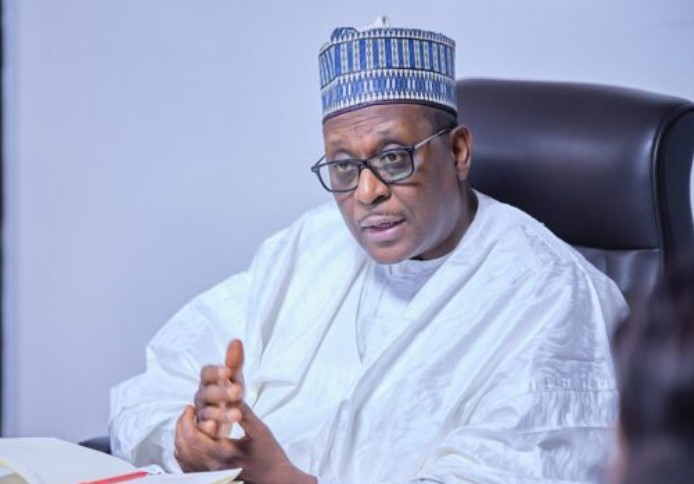
Presenting the government’s account of the reforms, the Coordinating Minister of Health and Social Welfare, Professor Muhammad Ali Pate, said the Renewed Hope health mission was to “save lives, reduce the physical and financial burden of illness and produce health for all Nigerians.”
He explained that the 2023 Health Sector Compact and the Sector-Wide Approach (SWAp) had helped align government and development partners’ investments and interventions towards common health sector priorities.
Pate said the increased disbursement to the BHCPF represented a major shift in health financing, with the Independent Corrupt Practices and Other Related Offences Commission (ICPC) supporting accountability in the utilisation of the funds.
On primary healthcare delivery, he disclosed that the Federal Government, working with state governments and the National Primary Health Care Development Agency (NPHCDA), had revitalised 3,526 primary healthcare centres, with work ongoing at another 900 facilities.
He said 78,054 frontline health workers had been trained, while 19,758 skilled birth attendants had been recruited across 22 states and 4,747 community health workers in 10 states.
The government also doubled pre-service admission quotas to expand the health workforce pipeline and selected 1,548 National Health Fellows in two cohorts, with representation across local government areas.
On disease prevention, Pate said measles and rubella vaccination campaigns had reached 100 million children, while more than 19 million adolescent girls had received HPV vaccines.
The minister said interventions targeting maternal and newborn health had also recorded significant progress through the Maternal and Neonatal Mortality Reduction Innovation Initiative (MAMII), with 750,000 pregnant women linked to health facilities through National Health Insurance Authority-empanelled services.
He added that emergency transport services had conveyed 104,566 women and newborns, while free maternal, newborn and fistula care programmes reached almost 100,000 beneficiaries over two years.
Of the beneficiaries, 80,906 received emergency obstetric care, while 6,059 accessed fistula treatment.
According to him, the reduction in maternal deaths in participating facilities demonstrated the importance of improving access to timely emergency obstetric services and strengthening frontline healthcare delivery.
On financial protection, Pate disclosed that health insurance coverage had increased from approximately 16 million Nigerians to nearly 24 million within three years.
He said the government had also reduced dialysis costs by up to 80 per cent for 5,106 patients, introduced subsidies for selected cancer medicines and expanded free emergency care within 48 hours across 507 health facilities.
The minister further disclosed that three of the six planned cancer centres, located in Enugu, Benin and Katsina, were operational, alongside 10 diagnostic and specialist centres established in partnership with the Nigeria Sovereign Investment Authority (NSIA).
He said more than 500 infrastructure and equipment projects had also been completed across 60 federal tertiary hospitals within three years.
On health security and local pharmaceutical production, Pate said the government’s recent containment of an imported Ebola case demonstrated the strength of Nigeria’s public health response system.
He disclosed that the 2024 Presidential Executive Order on healthcare manufacturing had supported pharmaceutical tax waivers worth ₦24 billion in 2025 and 2026.
Through the Presidential Initiative for Unlocking the Healthcare Value Chain (PVAC), 10 pharmaceutical factories or manufacturing lines had been commissioned, six of them in 2026.
He added that 12 technology-transfer agreements and a prospective investment pipeline exceeding $5 billion were supporting efforts to expand domestic production of medicines and other essential health products.
The government, he said, was also strengthening regulatory oversight through the National Agency for Food and Drug Administration and Control (NAFDAC) to tackle falsified medicines, while the proposed Medipool initiative would aggregate demand to support procurement and local manufacturing.
However, the minister acknowledged that significant challenges remained despite improvements across most of the assessed health indicators.
He said 12 of the 13 indicators assessed had improved, although stunting remained a major concern.
People’s Voice Surveys, he disclosed, showed that the proportion of Nigerians who perceived improvements in the health system increased from 47 per cent in 2024 to 57 per cent in 2026, while patient-perceived quality of care stood at 71 per cent.
He, however, identified affordability, inadequate staffing, remuneration, poor working conditions and patient safety as continuing priorities requiring urgent attention.
On financing, Pate called for timely release of approved funds, improved efficiency in spending, an increase in the BHCPF allocation to two per cent of the Consolidated Revenue Fund (CRF), and reforms to sugar-sweetened beverage excise duties to earmark additional resources for healthcare.
He also highlighted the 2026–2030 Nigeria-United States health partnership, which envisages nearly $2 billion in grants and an additional $3 billion in Nigerian financing, as part of efforts to end dependence on external health assistance by 2030.
The minister said the government would sustain reforms aimed at translating policy commitments and increased investments into “timely, dependable, affordable quality care, disease prevention and financial protection for Nigerians.”
He commended state governors, development partners, health workers, professional bodies, civil society organisations, traditional and religious leaders and the media for supporting the reforms, describing health workers as “the ultimate heroes of this unfolding transformation.”