By Damilola Samuel
Lagos State Government has identified five critical delays in maternal and neonatal care as areas requiring urgent action to reduce preventable deaths across the state.
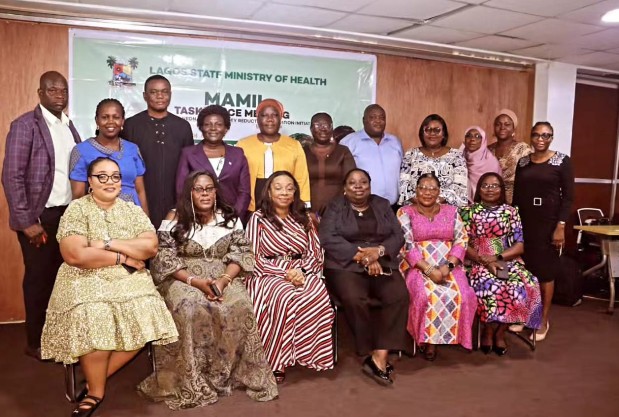
The five delays; seeking care, reaching care, receiving care, taking responsibility and coordinating response formed part of the focus of the newly inaugurated Maternal and Neonatal Mortality Reduction Initiative Innovation (MAMII) Task Force.
The initiative was unveiled at its inaugural meeting themed “Crashing Maternal and Neonatal Mortality in Lagos State,” held on Monday at the Lagos Chamber of Commerce and Industry, Alausa-Ikeja.
Permanent Secretary, Lagos State Ministry of Health, Dr Dayo Lajide, called for stronger coordination among the Ministry, Primary Health Care Board, health districts, facilities, communities and development partners.
Lajide stressed that stakeholders must move beyond programmes and trainings to interventions capable of producing measurable results, identifying effective referrals, community engagement, early antenatal care and proper management of high-risk pregnancies as key areas of focus.
Presenting the Lagos MAMII roadmap, the SWAp Desk Officer in the Ministry of Health, Dr Oyeyemi Ogunjobi, said Ibeju-Lekki had been selected as the focal implementation area.
She listed community health worker deployment, primary healthcare centre upgrades, health-worker training, digital health systems and stronger emergency referral mechanisms among the planned interventions.
MAMII Focal Person, Mrs Bukola Orukotan, said the initiative was designed to address fragmented interventions and promote a unified approach among stakeholders.
She said the approach would be built around “one plan, one budget, one report and one conversation.”
Orukotan also stressed the need for stronger community engagement, facility readiness, emergency referrals, use of data and financial protection for women seeking care.
Director, Family Health and Nutrition, Lagos State Ministry of Health, Dr Abosede Wellington, called for improved coordination and funding of interventions, while the Director, Health Care Planning, Research and Statistics, Dr Olajumoke Oyenuga, urged stakeholders to act immediately and make better use of available resources.
Meanwhile, Director, Lagos State Ambulance Service, Mrs Wuraola Makinde, highlighted the Rural Emergency Services and Maternal Transport (REMSAT) programme, which uses LASAMBUS and private ambulance operators to improve emergency transportation.
Makinde called for stronger digital integration, timely reimbursement and better data sharing, alongside wider emergency transport coverage to ensure pregnant women and newborns reach appropriate care without delay.
The state government said the MAMII approach would bring different actors together around measurable interventions aimed at reducing preventable maternal and neonatal deaths.