By Desire Uzochukwu
Nigeria’s war against counterfeit products has entered a more aggressive phase, with the National Agency for Food and Drug Administration and Control (NAFDAC) revealing that it has destroyed fake and substandard regulated products worth more than N1.5 trillion and secured 64 convictions against offenders in just one year.
The agency said the crackdown, which covered the period from June 2025 to June 2026, marked a decisive shift from simply confiscating counterfeit goods to taking their manufacturers, distributors and dealers to court — and sending convicted offenders to prison.
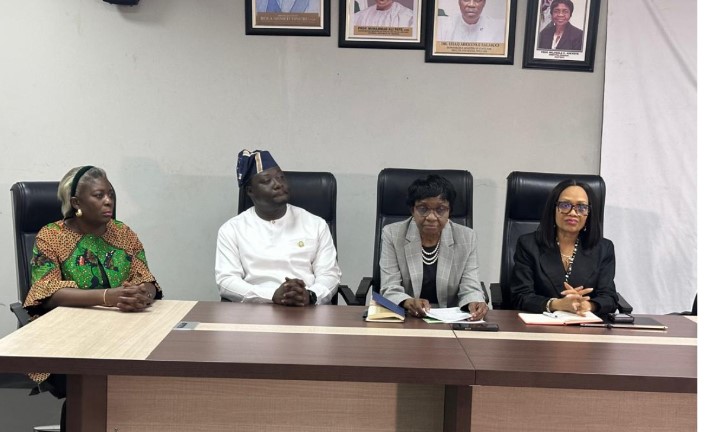
NAFDAC Director-General, Prof. Mojisola Adeyeye, disclosed the figures in Lagos while briefing journalists on the agency’s enforcement operations and intensified campaign against fake and substandard products.
She said the 64 convictions involved offences ranging from the production and distribution of counterfeit medicines and other regulated products to the manufacture of dangerous fake consumables.
The sentences, she disclosed, ranged from one to seven years in prison without the option of a fine.
Among those jailed were offenders sentenced to five years for counterfeiting Global Fund Artemether and another five years for producing a cough and cold syrup containing codeine.
Others received 12-month sentences for offences involving fake ointments and condoms, while an offender convicted for producing counterfeit antibiotics was sentenced to seven years. A woman involved in pharmaceutical counterfeiting also received a seven-year jail term.
Adeyeye said the agency was determined to ensure that counterfeiters could no longer regard seizures as the end of the matter.
“Our enforcement activities are not limited to seizures. We are ensuring that offenders are investigated and prosecuted and, where found guilty, they face the consequences of their actions.”
N1.5trn counterfeit haul
The scale of the crackdown was laid bare by coordinated raids carried out at Idumota in Lagos, Onitsha and Ariaria International Market in Aba between February and March 2025.
According to NAFDAC, the operations led to the seizure of more than 137 truckloads of counterfeit and substandard products, with the goods valued at over N1.5 trillion before they were destroyed.
The agency said the operation represented one of its largest coordinated interventions against the counterfeit trade.
But while seizures may remove dangerous products from circulation, NAFDAC says the bigger battle is identifying and dismantling the networks behind them.
47,830 facilities under surveillance
Beyond high-profile raids, NAFDAC said it now has 47,830 facilities under surveillance nationwide, covering the food, water, pharmaceutical, cosmetics, medical devices and other regulated sectors.
Adeyeye said approximately 80 per cent of the agency’s post-market surveillance activities are now focused on detecting and eliminating fake, falsified, substandard and otherwise non-compliant products.
A nationwide surveillance exercise conducted between May and July 2026 covered all 36 states and the Federal Capital Territory.
During the exercise, NAFDAC’s Post-Market Surveillance Directorate visited 6,233 facilities and removed 7,210 brands and products from circulation.
Food and water products accounted for the largest share, with 3,633 products recovered from 1,808 facilities.
The Drugs and Herbals category followed, with 2,084 facilities inspected and 2,459 products mopped up.
Adeyeye said the magnitude of the challenge made continuous surveillance unavoidable because counterfeiters were embedded within ordinary communities and commercial centres.
“Fakers are not ghosts; they exist within our communities, neighbourhoods, and business premises.”
She said NAFDAC was therefore expanding its intelligence-gathering capacity and enforcement operations to locate counterfeiters before their products reached consumers.
Fake water bottles supplied to hotels, supermarkets
One of the more disturbing discoveries involved the alleged illegal refilling of branded 19-litre dispenser water bottles.
Adeyeye disclosed that NAFDAC uncovered three companies allegedly collecting empty bottles bearing the identity and branding of a registered water company, refilling them with water from unapproved sources and returning them to the market.
The products, she said, were allegedly supplied to major hotels and supermarkets.
“They collected the empty bottles, refilled them with water from unapproved sources and supplied them to major hotels and supermarkets.”
The practice, according to the agency, creates a particularly dangerous form of deception because consumers may believe they are buying water produced by the legitimate company whose branding appears on the bottle.
The operators were sanctioned by the agency.
Fake drinks emerge as major enforcement threat
Counterfeit alcoholic beverages are also emerging as a major battleground in NAFDAC’s enforcement campaign.
The agency’s Director of Investigation and Enforcement, Martins Ilyumade, said fake alcoholic drinks accounted for more than half of NAFDAC’s recent court victories.
“As I speak right now, the cases that we mentioned that we won in court, more than 50% of them are from fake drinks.”
Ilyumade said counterfeit alcoholic beverages were being produced in factories and concealed locations across Lagos, including shops and other business premises.
He said the manufacturers and distributors were embedded within communities and markets, making cooperation with market associations and members of the public critical to disrupting the trade.
“These people are not operating in isolation. They are within the markets and communities, which is why collaboration with market associations and members of the public is very important.”
10m fake malaria drugs seized
The crackdown has also targeted counterfeit medicines, cosmetics and food products.
In February 2026, NAFDAC said it seized more than 10 million doses of counterfeit malaria medicines and cosmetics valued at about N3 billion at the Lagos Trade Fair Market.
The products were allegedly concealed inside a three-storey building disguised as a spare-parts warehouse. Four suspects were arrested.
In Nasarawa State, the agency said it uncovered a factory allegedly involved in packaging counterfeit rice and confiscated more than 1,600 bags valued at about N5 billion.
Other operations have led to the seizure and destruction of counterfeit medicines, banned alcoholic products, fake cosmetics, substandard foods and unregistered regulated products.
Adeyeye warned that the fight would not end with any single operation.
“The fight against fake and substandard products is a continuous one. As long as there are people willing to compromise public health for profit, regulatory agencies must remain vigilant.”
NAFDAC warns against social-media verdicts
Despite the aggressive enforcement campaign, NAFDAC cautioned Nigerians against declaring products fake solely on the strength of claims circulating on social media.
Adeyeye said allegations must be subjected to scientific testing and regulatory investigation before a product can officially be classified as counterfeit, adulterated, substandard or unsafe.
“We cannot declare a product fake simply because somebody says so on social media. There has to be scientific evaluation, laboratory analysis and regulatory investigation before such a conclusion can be reached.”
She said NAFDAC’s mandate covers establishment inspection, product sampling and laboratory analysis, registration, compliance monitoring, post-market surveillance, complaint investigation, product verification, withdrawal and recall, as well as enforcement.
The agency, she added, could not eliminate criminality through regulation alone.
“No law can create a society completely free of criminals or criminal-minded individuals. What we can do is strengthen our systems, enforce the law and work with the public to identify and stop them.”
Adeyeye disclosed that NAFDAC’s 24-hour call centre receives an average of 220 calls monthly, with more than 95 per cent of complaints treated and closed.
She urged consumers, manufacturers, distributors, retailers, market associations and other stakeholders to provide intelligence and report suspicious products and activities.
The agency maintained that surveillance, intelligence gathering, seizures, prosecution, convictions and public cooperation would remain central to its campaign to stop counterfeit products from reaching Nigerian consumers.