By Joyce Ekeh
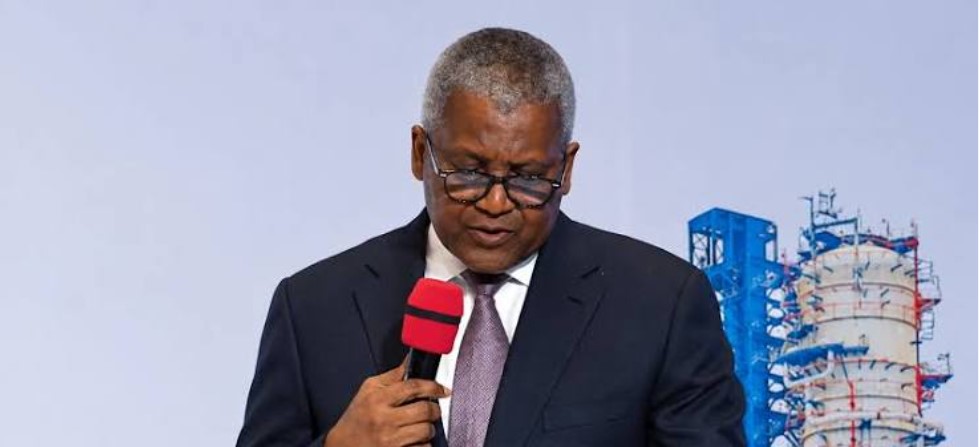
President and Chief Executive of Dangote Industries Limited, Aliko Dangote, has raised the group’s investment ambition in Africa from $50 billion to about $70 billion under its Vision 2030, unveiling plans for a major electricity generation intervention of up to 10,000 megawatts across the continent.
Dangote said the proposed investment expansion, alongside increased industrial production and job creation, would help address some of Africa’s most pressing economic challenges, including unemployment, insecurity and inadequate infrastructure.
Speaking while addressing creative industry stakeholders from Northern Nigeria, including content creators, journalists, bloggers, entertainers and Kannywood stars, the billionaire industrialist identified unreliable electricity as one of the biggest obstacles to business growth and economic development.
He warned that the high cost of generating electricity through petrol and diesel-powered generators was undermining the competitiveness of small and medium-sized enterprises (SMEs), which play a critical role in driving economic activities and creating employment.
“We initially planned to invest $50 billion. We are now looking at increasing that to about $70 billion in Africa,” Dangote said.
He explained that the proposed 10,000MW power intervention would complement the electricity-generating capacity being developed to support the group’s expanding industrial operations.
According to him, Dangote Group currently generates almost 1,500MW of electricity for its operations, a capacity expected to rise to between 4,500MW and 5,000MW by the completion of Vision 2030.
“Across the group, we currently have almost 1,500 megawatts. By the time we complete Vision 2030, that could rise to between 4,500 and 5,000 megawatts.
“That is captive power—electricity for our own operations. Separately, part of the vision is to intervene in power generation with 10,000 megawatts across Africa, potentially including Nigeria,” he said.
Dangote maintained that addressing Nigeria’s electricity challenge was fundamental to improving the livelihoods of ordinary citizens, stressing that households and businesses should not be left to shoulder the burden of providing their own power.
He argued that although individuals and companies could install solar systems and other alternative sources of electricity, such solutions would not resolve the wider national challenge.
“Installing solar power for yourself does not mean the wider problem has been solved. Other people may not have that option,” he said.
“A vibrant economy is driven by small and medium-sized enterprises. Large companies such as ours help sustain those businesses, but SMEs are essential to economic activity. When you generate electricity using diesel or petrol, it becomes very difficult to make money.”
The industrialist further stressed that economic growth must be driven by productive investments capable of creating sustainable employment, rather than an overdependence on government or the export of unprocessed commodities.
He said Nigeria had enormous entrepreneurial potential but needed consistent government policies, reliable infrastructure and a business-friendly environment to attract investments and expand industrial capacity.
“Government’s principal responsibility is to create an enabling environment through good policies. With the right policies, businesses can invest and create jobs,” he said.
On the economic opportunities available in Northern Nigeria, Dangote identified agriculture and solid minerals as sectors capable of generating substantial wealth, provided adequate investments were channelled into processing, infrastructure and value addition.
He cautioned against the continued export of raw materials, noting that Nigeria and other African countries were losing significant economic opportunities by selling unprocessed resources and importing finished products at considerably higher prices.
“It is not only about us; it is about Nigeria and the African continent.
“We should not simply export raw materials and then buy back the processed products at many times the price. That is the pattern we want to change. Without production, we will continue to face economic difficulties. We must build a productive economy,” he said.
Dangote also identified infrastructure development, particularly investment in ports and logistics, as critical to unlocking the commercial potential of agricultural and mineral resources across the country.
He maintained that stronger infrastructure would enable businesses to access wider markets, process local resources and compete more effectively in international trade.
Reflecting on his entrepreneurial journey, the business mogul attributed the growth of Dangote Group to focus, financial discipline, strategic investments and the consistent reinvestment of profits.
He explained that the group’s transition from trading to manufacturing was a deliberate strategy built around products it already understood, existing customer relationships, established distribution networks and knowledge of market demand.
“The logical next step was backward integration: producing the things we were already importing,” he said.
He advised entrepreneurs to exercise caution in managing their finances, warning against spending profits before they materialised and encouraging business owners to recognise when an investment was no longer commercially sustainable.
“Give it your best effort, but when you do the numbers and they are not adding up, you must be willing to leave,” he advised.
Despite the economic and infrastructural challenges confronting businesses across Africa, Dangote reaffirmed his commitment to sustained investments, urging smaller entrepreneurs to position themselves to benefit from opportunities created by major industrial projects.
He said large-scale investments could stimulate the growth of smaller businesses through supply chains, manufacturing, distribution and service delivery.
“People like us will continue investing. People like you can build businesses around those investments—as suppliers, producers and service providers,” he said.