By Joyce Ekeh
As global health leaders converge on Cape Town for the 18th World Congress on Public Health, Nigeria is putting forward a large-scale child-survival intervention that has reached more than 16 million children across 11 northern states, demonstrating how government leadership, community trust, frontline health workers and scientific evidence can combine to tackle childhood deaths.
The Safety and Antimicrobial Resistance of Mass Administration of Azithromycin in Children 1–59 Months in Nigeria, SARMAAN, is emerging as one of the country’s significant examples of taking a public health intervention from research to large-scale implementation while embedding safety monitoring and antimicrobial resistance surveillance into the delivery system.
The World Congress on Public Health, scheduled for September 6 to 9, 2026, is expected to focus global attention on equity, inclusion, sustainability and the need to translate evidence into effective public health action.
The SARMAAN experience comes at a critical time for Nigeria.
Although the country has recorded progress in child survival, with under-five mortality declining from 132 deaths per 1,000 live births in the 2018 Nigeria Demographic and Health Survey to 102 deaths per 1,000 live births in the 2023–24 survey, the country remains far from the Sustainable Development Goal target of 25 deaths per 1,000 live births.
At 102 deaths per 1,000 live births, Nigeria’s under-five mortality rate remains more than four times the SDG target, underscoring the urgency of interventions capable of reaching children at population scale.
The decline in mortality has been linked to improvements in immunisation, exclusive breastfeeding, antenatal care, skilled birth attendance and treatment-seeking for childhood illnesses. But health experts say closing the remaining gap will require interventions that can reach children in underserved and hard-to-reach communities.
This is where SARMAAN’s experience is attracting attention.
Lead Investigator of SARMAAN and Director of Research at the Nigerian Institute of Medical Research, NIMR, Professor Oliver Ezechi, said the project has demonstrated that large-scale delivery and rigorous scientific evaluation can work together.
“What the data from SARMAAN shows is that safety monitoring and antimicrobial resistance surveillance can be built directly into a mass drug administration project at scale, not layered on afterward.
“The experience demonstrates that rigorous science and large-scale delivery do not have to compete; they can strengthen one another,” Ezechi said.
The project’s reach, however, has depended on more than numbers.
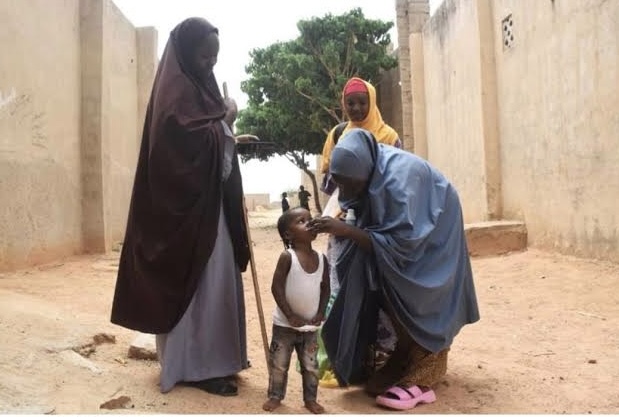
Community mobilisation, engagement of caregivers, training of frontline personnel, state government leadership and repeated engagement with communities have been central to getting children reached and caregivers to accept the intervention.
SARMAAN Champion, paediatrician and global health leader, Dr Zainab Shinkafi-Bagudu, said the scale of the programme had underscored the importance of putting equity at the heart of child-survival interventions.
“Reaching children at this scale requires health workers, caregivers, communities and government systems to work together.
“True equity is when an intervention can reach all children, regardless of where they live,” she said.
The project has also demonstrated that communities cannot be treated simply as beneficiaries of public health programmes.
Repeated implementation rounds have shown that community trust, participation and ownership can determine whether interventions are accepted and sustained.
In Jigawa State, First Lady and SARMAAN Champion, Her Excellency Hadiza Umar Namadi, said maintaining that trust would be critical to the sustainability of the intervention.
“The numbers are important, but behind them are mothers, caregivers and communities who have opened their doors and placed their trust in the people delivering this intervention.
“Sustaining that trust requires continuous engagement, respect for communities and strong government leadership. That is how public-health programmes become part of the communities they are designed to serve,” she said.
Beyond its reach, SARMAAN has placed strong emphasis on safety.
The intervention incorporates supervised drug administration, personnel training, safety monitoring, pharmacovigilance and mechanisms for responding to concerns, while antimicrobial resistance surveillance provides evidence on the potential consequences of repeated mass administration of antibiotics.
For paediatrician and SARMAAN Champion, Professor Robinson Daniel Wammanda, the programme’s ability to reach millions of children rests on a carefully designed delivery architecture.
“What is important about the SARMAAN experience is the use of multiple platforms to successfully reach these children at this scale,” he said.
The programme is part of the regional REACH, Resiliency through Azithromycin in Children, Network and is designed to accelerate efforts to reduce under-five mortality in high-burden states.
It uses mass administration of azithromycin through a government-led, multi-partner approach aimed not only at reaching children but also at strengthening systems capable of delivering interventions at scale.
As SARMAAN moves beyond its current phase, attention is increasingly shifting from implementation to sustainability.
Engagement with government stakeholders is exploring how lessons from the programme can be aligned with broader child-health priorities and existing health planning structures.
At state level, discussions are focusing on how interventions that demonstrate impact can move beyond project cycles towards stronger institutional ownership, appropriate integration and sustainable financing.
For Nigeria, the larger question is whether successful child-survival interventions can be transformed from time-bound programmes into enduring components of the health system.
With more than 16 million children reached, SARMAAN provides a powerful case study for the global public health community: reaching millions matters, but building the systems, evidence, community trust and government ownership needed to sustain that reach may matter even more.
As delegates gather in Cape Town, Nigeria’s experience offers a central lesson for the global child-survival agenda, interventions that demonstrate impact cannot afford to remain temporary successes.
The evidence they generate, the health systems they strengthen and the partnerships they create must become building blocks for a future where a child’s chance of survival is determined less by where they are born and more by the strength of the health system around them.