Desire Uzochukwu
Nigeria is set to tighten standards for menstrual hygiene products as the government, regulators, manufacturers and development partners confront concerns over the safety, quality and affordability of sanitary products in the Nigerian market.
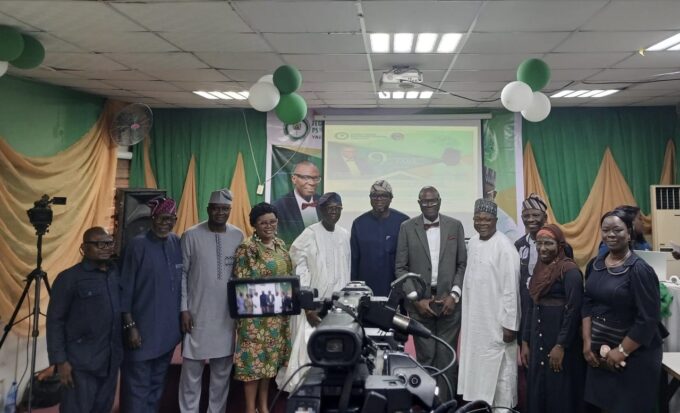
The warning came at the Nigeria Menstrual Hygiene Product Forum 2026 in Lagos, where stakeholders said menstrual health must no longer be treated simply as a private health issue but as a matter of public health, education, dignity and economic development.
The Menstrual Health Forum, is funded by the Sanitation and Hygiene Fund (SHF) and led by UNFPA in collaboration with the Standards Organisation of Nigeria (SON) and the Federal Ministry of Women Affairs and Social Development in partnership with relevant government and non-government stakeholders.
In his welcome address, the Director-General of the Standards Organisation of Nigeria (SON), Dr. Ifeanyi Chukwunonso Okeke who was represented by Mrs Talatu Ethan, SON’s director Corporate Affairs, said consumers must be able to trust that menstrual products are safe and fit for purpose.
“It is no longer sufficient to view menstruation simply as a private health matter,” Okeke said.
He stressed that access to safe, quality and affordable menstrual products affects women’s and girls’ participation in education, economic activity and society.
He said the challenge was not merely getting products into the market but ensuring they are safe, fit for purpose, consistently produced, accessible and affordable.”
Okeke said policymakers must examine the entire production chain, including raw-material costs, energy, taxation, finance, logistics, technology and regulatory requirements.
“Quality and affordability must not be treated as competing objectives,” he said.
Reinforcing this concern, the Deputy Director, Child Development Department, Federal Ministry of Women Affairs and Social Development, Mrs. Mariam Shaibu, said the market is flooded with disposable and reusable menstrual products, but stressed that not all meet required standards.
“It’s not just about having products in the market, but we want to ensure that those products meet the standards and quality that is desired to be used by women and girls in Nigeria,” she said.
Shaibu warned that prolonged use of poor-quality products raises concerns over infections and women’s reproductive health, arguing that all relevant regulatory agencies must work together to protect consumers.
She also said menstrual poverty goes beyond the inability to buy a sanitary pad.
“When we are talking of period poverty, it’s not just that you don’t have the pad. You can have the pad, there’s no quality. You can have the pad, there’s no water. You can have the pad; you use it, where are you going to dispose of the product? The consequences are particularly severe for schoolgirls.”
Shaibu said some girls miss classes and examinations because they lack menstrual products, creating a ripple effect on their education.
Also, speaking, the UNFPA Nigeria Gender/GBV Management Specialist, Dr. Zubaida Abubakar said,
“We are calling on governments, CSOs, donors, philanthropists and foundations to come and support our girls.”
She said the initiative could be sustained through school Parent-Teacher Associations, individual donations, foundations and government social-protection programmes.
Abubakar also challenged small-scale manufacturers to move beyond producing mainly for donations and establish themselves in the commercial market.
“Make your products up to quality and take it to the market,” she said, urging producers to meet required standards and certification.
According to her, Nigeria’s huge population presents a major manufacturing opportunity. With appropriate standards and investment, the country could become a regional hub for menstrual products, creating jobs, strengthening local value chains and generating export revenue.
She noted that the World Bank estimates that about 24 per cent of Nigerian schoolgirls regularly miss school because of a lack of menstrual materials and inadequate WASH infrastructure, while UNICEF estimates that about 37 million women and girls in Nigeria experience period poverty.
The stakeholders also acknowledged that quality alone will not solve menstrual poverty if products remain unaffordable.
Abubakar warned that supplying pads to schools without adequate water and safe disposal systems could create additional problems. “If we flood schools with pads, how are they going to dispose of them?”
UNFPA is also examining taxes, duties and levies affecting menstrual-product manufacturers and importers, with the aim of developing advocacy measures for a more favourable business environment and, ultimately, lower prices for consumers.
The forum also highlighted the critical role of water, sanitation and waste management.