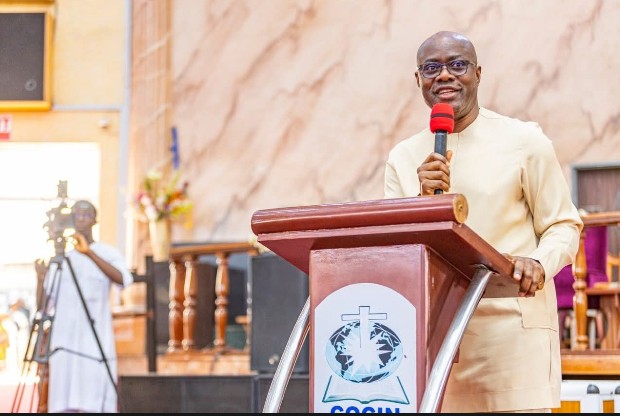
By Ademola Ade
Oyo State Governor and presidential candidate of the Allied Peoples’ Movement (APM), Seyi Makinde, has declared that Nigeria requires a fundamental political, economic and governance reset rather than piecemeal reforms to overcome its mounting challenges ahead of the 2027 general elections.
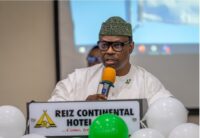
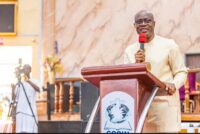
Makinde made the declaration on Sunday during a live political programme on Jay FM 101.9 in Jos, Plateau State, ahead of the APM’s presidential campaign flag-off scheduled for Monday.
Explaining his position, the governor argued that reforms would achieve little if the existing system was fundamentally failing Nigerians.
“When you talk about reform, it means that there is something good in the system that you want to improve upon. But when the bad outweighs the good, you need to take a different course of action,” he said.
He added: “If what you have in the system is only about 20 per cent of what you expected, you don’t need to continue tweaking it. You need to press the reset button, shut it down and reboot it. That is what Nigeria needs at this point.”
Outlining his proposed Reset Agenda, Makinde identified the economy, security, education, job creation and accountability as major priorities, insisting that economic performance should be measured by improvements in the living conditions of ordinary Nigerians.
“The economy must work for everybody. We should not just be talking about foreign reserves, World Bank figures or inflation statistics. What matters is whether ordinary Nigerians can afford to feed themselves and meet their basic needs,” he said.
He promised to promote skills acquisition, entrepreneurship, education and intensive production, while creating an enabling environment for businesses to expand and generate employment.
On insecurity, the APM candidate advocated decentralisation of the country’s security architecture through the establishment of state police, arguing that states willing and capable of operating the arrangement should be allowed to proceed with appropriate safeguards.
“I believe that we need to decentralise our security architecture. State police is one of the ways to achieve this, but it must be properly structured,” he said.
Recalling his engagement with former President Muhammadu Buhari on the issue in 2019, Makinde said concerns had been raised about the ability of financially weak states to fund their own police formations.
He said South-West governors subsequently adopted the Western Nigeria Security Network, popularly known as Amotekun, as an alternative approach to strengthening regional security.
Acknowledging fears that governors could abuse state police to intimidate political opponents and citizens, Makinde said accountability mechanisms must be established to prevent such excesses.
“But the fact that something can be abused does not mean we should not do it. We must design a system that ensures accountability and protects the rights of the people,” he said.
The governor also warned that Nigeria’s growing population, particularly its large youth demographic, could worsen insecurity if government failed to provide employment and economic opportunities.
“We must create opportunities for these young people. If we fail to provide pathways for them to succeed, we should not be surprised when some of them turn to crime or other activities that threaten the stability of the country,” he said.
Makinde further cited the COVID-19 lockdown in Oyo State in 2020, saying his administration had considered the economic realities of residents who depended on daily earnings for survival when making public health decisions.
He maintained that governance decisions should be guided by science, data and logic while taking account of the circumstances of ordinary citizens.
On education, he praised the legacy of the late Chief Obafemi Awolowo, particularly his free education policy, describing investment in education as a foundation for long-term national development.
He said his proposed administration would also prioritise transparency and accountability in the management of public resources.
“The first thing I will do is to tell Nigerians the truth about the state of the country. People deserve to know where we are and what needs to be done,” he declared.
Makinde, who said he was not originally a career politician, maintained that his decision to enter politics was driven by concern for Nigeria’s future and its potential to become a leading global power.