By Destiny Obinna
The Federal Government has unveiled a five-year National Oral Health Strategic Plan estimated to cost N70 billion, as part of renewed efforts to tackle Noma, dental diseases and other oral health challenges across the country.
The plan, covering 2026 to 2030, is designed to expand access to affordable oral healthcare, strengthen primary healthcare services, improve the distribution of dental professionals and reduce the burden of preventable oral diseases.
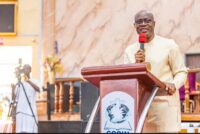
Minister of State for Health and Social Welfare, Dr Iziaq Adekunle Salako, disclosed this on Monday in Abuja while commemorating National Noma Day and National Oral Health Day and officially launching the strategic plan at Reiz Continental Hotel.
Salako said the initiative was in line with President Bola Tinubu’s Renewed Hope Agenda, which places the health and wellbeing of Nigerians at the centre of national development.
He stressed that oral healthcare must no longer be treated as a neglected aspect of the country’s health system, but recognised as an essential component of Universal Health Coverage.
“Our gathering here today will therefore speak for the many mouths that cannot speak for themselves, the mouth of a child living with Noma, the mouth of a school child suffering from untreated tooth decay, and the mouth of a diabetic patient struggling with bleeding gums and periodontal disease,” he said.
The minister described oral health as fundamental to human dignity, productivity, general wellbeing and quality of life, warning that poor dental health could worsen existing medical conditions and undermine people’s ability to learn, work and participate fully in society.
He expressed concern that Nigeria remained one of the countries with the highest burdens of Noma globally, particularly in the North-West and North-East geopolitical zones.
Noma, he explained, was a rapidly progressing infection that destroys tissues of the mouth and face, mostly affecting malnourished and immunocompromised children.
According to him, what often begins as a simple gum infection could progress within days to severe facial destruction, permanent disability and even death if not promptly treated.
Salako described the disease as one that should have no place in the 21st century, noting that survivors also suffer stigma, social isolation and discrimination.
He recalled that the World Health Organisation’s recognition of Noma as a Neglected Tropical Disease in 2023 was a major breakthrough in drawing global attention to the plight of affected children and their families.
The minister commended the contributions of the Noma Children’s Hospital, Sokoto; Médecins Sans Frontières (MSF); Noma Aid Nigeria Initiative (NANI); healthcare professionals, researchers and development partners towards the prevention and treatment of the disease.
He said Noma was preventable through good nutrition, exclusive breastfeeding, routine immunisation, proper oral hygiene and prompt treatment of childhood illnesses such as measles and malaria.
To strengthen early detection, Salako disclosed that the Federal Government had integrated Noma surveillance into the Integrated Disease Surveillance and Response system, while working to ensure that primary healthcare facilities could identify and refer cases at the earliest stages.
He said the Ministry had also commenced training frontline healthcare workers, traditional healers and traditional birth attendants on the early identification of Noma and other oral diseases in 19 states.
The minister noted that although the disease was more prevalent in northern Nigeria, the training programmes had also led to the identification of cases in the South-East, South-South and South-West, underscoring the need for a coordinated national response.
“Our ethos is that no child should die or suffer permanent disfigurement from Noma in Nigeria again,” he declared.
Over 80% of Nigerians have never visited dentist
Salako painted a worrying picture of Nigeria’s oral health situation, disclosing that more than 80 per cent of Nigerians had never visited a dentist, while two out of every three children were living with untreated dental caries.
He further revealed that the country’s dentist-to-population ratio stood at approximately one dentist to 38,000 people, compared with the World Health Organisation’s recommended ratio of one to 7,500.
The minister regretted that most Nigerians still paid out-of-pocket for dental services and often sought medical attention only when pain or serious complications developed.
He said the Federal Government was determined to reverse the trend by integrating oral healthcare into primary healthcare services through the Sector-Wide Approach and the Basic Health Care Provision Fund.
According to him, the initiative will improve access to preventive services, basic diagnosis, treatment and referral systems, making oral healthcare more affordable and accessible to Nigerians.
Salako also disclosed that the Federal Executive Council had approved the National Centre for Oral Health Establishment Bill 2026 and forwarded it to the National Assembly for enactment.
He said the proposed centre would give greater prominence to oral health in the country’s health sector transformation agenda.
N70bn plan targets 774 LGAs
Unveiling the National Oral Health Strategic Plan 2026–2030, the minister described the document as a roadmap for achieving Universal Health Coverage in oral healthcare.
He said it was developed through extensive consultations involving the Nigerian Dental Association, other professional dental bodies, academic institutions, development partners and state governments.
The plan prioritises preventive healthcare through improved access to fluoride toothpaste, school oral health programmes, sugar-reduction initiatives and the integration of oral health into nutrition, maternal and child healthcare, as well as non-communicable disease programmes.
It also seeks to strengthen the health workforce through the training and equitable distribution of oral health professionals, including dental therapists and dental surgery technicians.
Other areas of focus include upgrading primary healthcare infrastructure and equipment, strengthening referral systems and expanding access to oral healthcare services across all 774 local government areas.
The minister said the plan would also improve healthcare financing, governance, monitoring and accountability.
While congratulating the Dentistry Division of the Federal Ministry of Health and the wider oral health community for developing the strategic document, Salako urged state and local governments to domesticate and implement its provisions.
He also appealed to development partners, including the WHO, UNICEF and FDI World Dental Federation, to sustain their support for Nigeria’s oral health programmes.
He challenged healthcare professionals to break down professional barriers and embrace coordinated, integrated and people-centred healthcare delivery.
Salako specifically acknowledged MSF and NANI for their interventions at the Noma treatment centres in Sokoto and Abuja.
FG seeks end to Noma, promises better care for survivors
Reaffirming the Federal Government’s commitment to eliminating Noma as a public health problem, the minister urged stakeholders to intensify efforts towards prevention, early detection, treatment and community awareness.
He said the commemoration of National Noma Day and National Oral Health Day should serve as a renewed call to action to protect vulnerable children and ensure that survivors were not subjected to discrimination.
“Let us renew our collective resolve to ensure that no child is left behind, no case goes undetected, and no family is denied lifesaving care,” he said.
He maintained that sustained investment, effective partnerships, strong leadership and community engagement were essential to improving oral health outcomes nationwide.
Salako subsequently declared the National Oral Health Strategic Plan 2026–2030 officially launched on behalf of the Federal Government, expressing confidence that its successful implementation would improve access to quality oral healthcare and protect the dignity and wellbeing of Nigerians.