By Joyce Ekeh
The governorship candidate of the Nigeria Democratic Congress (NDC) in Lagos State, Funso Doherty, has accused powerful vested interests of sustaining the state’s persistent traffic crisis, arguing that the chaotic public transportation system is being maintained to benefit certain groups.
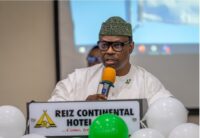
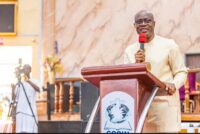
Doherty made the allegation during the 2026 Lagos governorship debate, where candidates presented their proposals for tackling traffic congestion and improving transportation across the state.
He argued that Lagos’ transportation challenges went beyond inadequate infrastructure, blaming poor management of existing roads, dilapidated commercial buses and the failure to modernise the public transport system.
Questioning why residents should continue to endure uncomfortable and poorly maintained buses when modern mass transit systems operate successfully in other countries, the NDC candidate alleged that economic interests surrounding informal transportation had frustrated meaningful reforms.
“In my opinion, the lack of a modern transportation system in Lagos is not by accident. I think there’s a vested interest in operating the bus system the way we’re operating it, with many small buses chaotically operated, because there’s an ecosystem around it,” he said.
He also criticised the informal transport network popularly associated with agberos, arguing that those benefiting from the existing arrangement could resist efforts to restructure the sector.
Doherty maintained that modernising public transportation would require political will and a willingness to confront entrenched interests.
He promised that an NDC administration would prioritise an efficient and modern transport system, insisting that his government would be accountable to Lagos residents rather than informal transportation networks.
However, the governorship candidate of the All Progressives Congress (APC), Femi Hamzat, outlined a different approach, proposing a major expansion of the state’s Bus Rapid Transit (BRT) system.
Hamzat said he planned to increase the BRT fleet from approximately 1,000 buses to 4,000, with the capacity to transport up to one million passengers daily.
He also proposed deploying Compressed Natural Gas (CNG) buses and establishing dedicated BRT corridors along major routes to improve efficiency and reduce pressure on the roads.
On broader transportation integration, the APC candidate advocated stronger connections between road, rail and water transport to provide commuters with alternative routes.
Hamzat disclosed that more than four million residents had registered for the state’s transport payment card, which allows passengers to access ferry, rail and BRT services through a unified payment system.
He further proposed deploying 77 electric ferries to improve water transportation and reduce dependence on diesel-powered vessels.
The APC candidate also disclosed plans to establish a ferry hub around the Omoroshotu axis, with proposed connections to Ikorodu and other locations.
On traffic management, Hamzat said 63 junctions had been identified for interventions aimed at easing congestion and improving movement across the state.
The debate brought contrasting approaches to Lagos’ transportation crisis into focus, with Doherty emphasising the need to dismantle entrenched interests in the sector, while Hamzat highlighted fleet expansion, integrated transportation and infrastructure improvements.