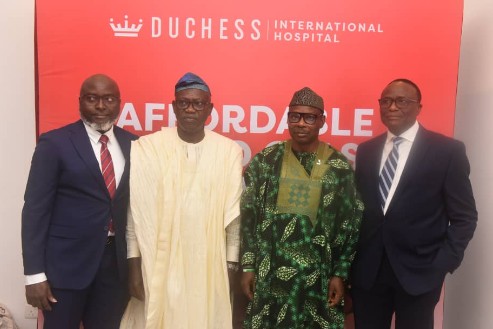
By Destiny Obinna
Duchess International Hospital, Lagos, has performed 2,053 paediatric and adult surgical procedures in five years, with about 65 per cent involving major and complex operations, including spinal surgeries, in a development highlighting the growth of specialist healthcare in Nigeria.
The hospital also disclosed that it had successfully performed 44 open-heart surgeries since launching its programme in 2023, comprising 20 paediatric and 24 adult procedures.
The figures were disclosed by the hospital’s Chief Operating Officer, Dr Olajide Ojo, during activities marking its fifth anniversary in Lagos, where he outlined the institution’s milestones in specialist medicine and efforts to expand access to advanced healthcare.
Ojo said the hospital attends to an estimated 40,000 outpatients annually and delivers about 500 babies, adding that its achievements reflected its commitment to providing world-class healthcare locally.
He said the anniversary theme, “Five Years of Delivering World-Class Healthcare: Transforming Medicine Through Innovation and Excellence,” captured the hospital’s progress in building clinical capacity and improving access to specialist services.
According to him, the hospital’s open-heart surgery programme has benefited from its collaboration with the Lagos State University Teaching Hospital, LASUTH, through the Duchess Waiting List Initiative, designed to improve access to cardiovascular surgery for patients facing prolonged waiting periods.
“These milestones tell a strategic story of a hospital committed to advancing boundaries of specialist medicine while never losing sight of the individual human being at the centre of every encounter,” Ojo said.
He added that the hospital’s first five years represented not just institutional growth, but also the steady development of clinical capabilities, stronger patient confidence and the transformation of healthcare, one patient at a time.
Ojo said the hospital was also contributing to efforts to reverse medical tourism, as more Nigerians in the Diaspora chose to return home for complex procedures, with reported savings of more than 50 per cent in surgery costs compared with treatment abroad.
He said Nigerians were increasingly able to access advanced healthcare at home instead of travelling to countries such as India, South Africa, Saudi Arabia, Egypt and the United Kingdom.
Chairman of Duchess International Hospital, Dr Yemi Onabowale, said the hospital had touched lives through its affordable healthcare programmes and corporate social responsibility initiatives.
Onabowale commended the management and staff for their dedication to quality patient care, noting that the hospital won the Nigerian Healthcare Excellence Award as the best private healthcare facility in Nigeria in 2024 and 2025.
“Our future ambition is to continue to expand access to quality healthcare, strengthening specialist services, investing in our people and technology and ensuring that more Nigerians can receive advanced medical treatment at home,” he said.
Minister of State for Health, Dr Adekunle Salako, called for improved working conditions, modern medical facilities and better remuneration to stem the exodus of Nigerian medical professionals abroad, popularly known as japa.
Salako said creating an enabling environment for healthcare workers was essential to retaining skilled professionals and strengthening the country’s health system.
He commended Duchess Hospital for its advanced medical facilities and quality patient care.
Wife of the Lagos State Governor, Dr Ibijoke Sanwo-Olu, represented by the Medical Director of General Hospital, Ebute Metta, Dr Folakemi Irewole-Ojo, said strong public-private partnerships were essential to expanding healthcare capacity, encouraging innovation and improving service delivery.
The anniversary lecture was delivered by Professor Nicholas Ossei-Gerning, a professor of cardiology at Spire Hospital, Cardiff, United Kingdom.
Ossei-Gerning discussed cardiovascular health and major risk factors, including high blood pressure, diabetes, high cholesterol, stress, depression, anxiety and lack of social support.
He also identified erectile dysfunction as a potential marker of cardiovascular disease and advised men to undergo regular medical checks to detect underlying health problems and reduce the risk of serious complications.
The hospital’s management said its priorities for the next five years included strengthening specialist services, expanding access to advanced treatment, investing in technology and personnel, and deepening its social impact.