By Destiny Obinna
The Human Rights Writers Association of Nigeria (HURIWA) has criticised President Bola Tinubu for granting an exclusive interview to American media personality, Diana London, accusing him of sidelining Nigerian journalists and undermining the country’s broadcasting industry.
The association described the development as an embarrassing vote of no confidence in Nigerian journalism, questioning why the President would choose a foreign media personality over established Nigerian television stations and experienced broadcasters.
“Is the Nigerian president no longer confident enough in his country’s journalists to grant them an exclusive presidential interview?” HURIWA asked in a statement signed by its National Coordinator, Comrade Emmanuel Nnadozie Onwubiko.
The group challenged Tinubu to explain why Nigerian journalists were bypassed despite the country’s pool of experienced broadcasters capable of conducting interviews that meet international standards.
It also questioned whether an American president or British prime minister would abandon their domestic television networks to grant an exclusive interview to a Nigerian media personality while denying their own broadcasters the opportunity.
HURIWA argued that Nigerian television stations should have conducted the interview, with international news organisations free to acquire, syndicate and rebroadcast the content.
The controversy followed reports that Tinubu granted the interview to London at the Presidential Villa, Abuja. Imran Muhammad, Senior Special Assistant on New Media to the National Chairman of the All Progressives Congress, Professor Nentawe Yilwatda, announced the engagement in a post on X.

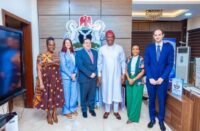
London subsequently shared photographs of herself with Tinubu and his Chief of Staff, Femi Gbajabiamila, at the Villa. She praised the security partnership between Nigeria and the United States, crediting the relationship between Tinubu and US President Donald Trump, as well as their commitment to combating terrorism, for strengthening bilateral cooperation.
She also expressed optimism about expanding economic and trade opportunities between the two countries.
However, HURIWA maintained that diplomatic relationships and international media exposure should not come at the expense of Nigeria’s domestic institutions.
The association also raised concerns about the transparency of the interview’s eventual release, warning that excessive editing or selective presentation could fuel suspicions that the conversation had been packaged to manage public perception.
“Nigerians deserve an authentic account of presidential interviews, not a carefully sanitised production that denies viewers the opportunity to assess the president’s responses in their full context,” it said.
HURIWA described the interview as a missed opportunity to promote Nigerian journalism and strengthen the international standing of local broadcasting institutions.
It therefore urged Tinubu to make Nigerian television stations and credible journalists central to future presidential interviews, insisting that the Presidency must demonstrate confidence in the country’s media professionals.
The association warned that the President could not consistently preach national pride and institutional development while his media choices appeared to undermine the very professionals sustaining Nigeria’s democratic conversation.
It insisted that Nigerian journalists must not be treated as second-class media professionals in their own country.