By Destiny Obinna
Energy industry leaders have called for stable government policies, predictable gas pricing and stronger public private partnerships to attract investments and unlock Nigeria’s vast energy resources.
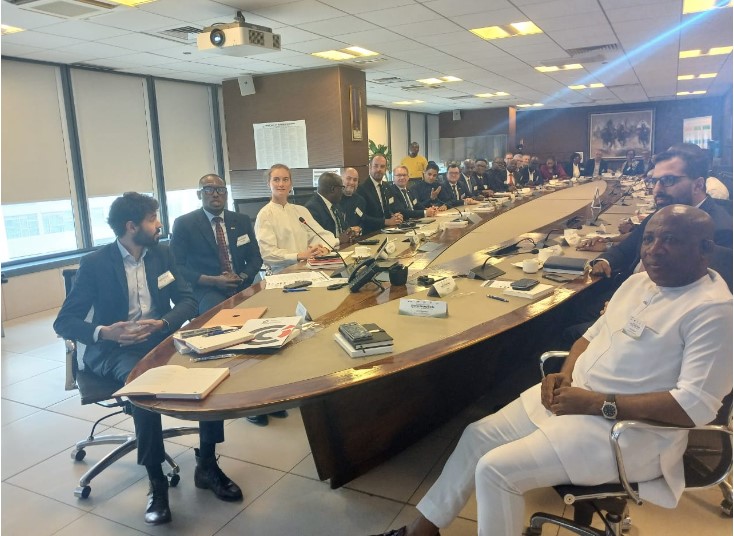
The call was made at the Energy Roundtable Session organised by the France Nigeria Chamber of Commerce and Industry (FNCCI) in partnership with TotalEnergies in Lagos on Monday 2nd of November 2026, as part of the French Week 2026 celebration.
The Managing Director and Chief Executive Officer of Nigeria LNG Limited (NLNG), Adeleye Falade, said energy transition must not come at the expense of addressing Nigeria’s energy poverty.
He said the country could increase gas exports while also expanding domestic consumption, noting that both could be achieved at the same time.
Falade disclosed that NLNG’s plant utilisation had risen to 81%, compared with about 60% in the previous two years.
He attributed the improvement to increased gas supply to the plant and more reliable operations.
He also emphasised the need for government to provide a stable investment environment, noting that investors require policies and contractual terms that can withstand changes in administration.
According to him, the private sector is ready to invest, but Nigeria must create conditions that would attract foreign direct investment and give investors confidence in their commitments.
The Conference Chair and Managing Director of TotalEnergies in Nigeria, Matthieu Bouyer, said government incentives had helped drive investments in the country’s gas sector.
Bouyer said TotalEnergies had launched two gas projects, Ubeta and Ima, with combined investments exceeding $1 billion. He said the projects account for about 10% of Nigeria’s gas production.
He added that Nigerian contractors were involved in the projects, while one of them secured 75% of its financing from local banks.
On manpower development, Bouyer said TotalEnergies had partnered with the University of Port Harcourt and the French Petroleum Institute in Paris to train professionals for the industry.
He disclosed that the programme had produced more than 1,000 alumni over the past 25 years, many of whom now hold leadership positions in the sector.
Bouyer said the company would continue to support capacity development and work with Nigerian businesses to turn investment opportunities into practical projects.
The President of the FNCCI and Chief Executive Officer for West Africa of SPIE Global Services Energy, Guillaume Niarfeix, described energy as essential to the country’s development, noting that virtually every sector, including agriculture, communication and infrastructure, depends on reliable energy supply.
He said French companies had an important role to play in Nigeria’s energy development, while Nigeria’s gas production remained significant to the energy security of France and Europe.
Niarfeix also said the chamber would make the energy roundtable an annual event to sustain discussions and strengthen business relations between Nigeria and France.
During the discussions, participants identified unstable policies, gas pricing, inadequate infrastructure and shortage of skilled manpower as some of the challenges slowing investment in the sector.
They called for long-term contracts, predictable fiscal policies and a reliable market for gas, noting that investors needed assurances before committing the huge funds required for major energy projects.
Gas pricing also featured prominently, with participants stressing the need for a pricing system that would encourage investment while ensuring that gas remained affordable for local consumers and industries.
They further called for increased support for indigenous companies through skills development, technology transfer and greater local participation in the oil and gas industry.
The organisers said a communique would be prepared from the discussions and shared with relevant stakeholders and regulators.
They stressed that future engagements must go beyond discussions and produce practical steps towards addressing the challenges facing Nigeria’s energy sector.