By Kazeem Waris
Nigeria’s gemstone industry has the potential to generate between $2 billion and $3 billion in annual export earnings if the government tackles smuggling, improves value addition and strengthens the sector’s access to international markets, the President of the Gemstone Miners and Marketers Association of Nigeria (GMAN), Engr. Adeniran Ajibade, has said.
Ajibade also urged the Federal Government to revisit the location of the International Gemstone Centre in Ibadan, Oyo State, saying concerns over insecurity and poor industry participation have hindered the facility’s full operation.
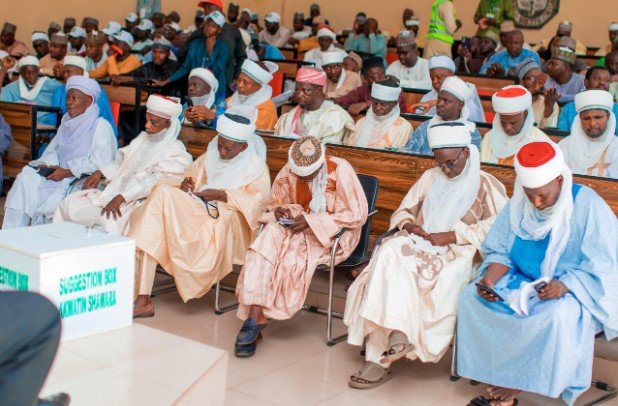
He spoke on the sidelines of the just-concluded 2026 Nigeria Mining Week in Abuja, themed “Unlocking Investment and Growth through Partnerships.”
Ajibade said Nigeria possessed high-quality gemstone deposits spread across the country, but much of the sector’s economic potential remained untapped because mining was largely conducted on a small scale and through rudimentary methods.
He said a baseline study conducted by the association on gemstone resources in northern and southern Nigeria confirmed their widespread availability.
According to him, Nigerian gemstones have already gained access to international markets, including Tucson in the United States, Bangkok, Hong Kong, Israel and India.
However, he said the country needed to improve processing, branding and compliance with international standards to maximise the value of its resources.
“It is important to note that Nigeria has a diverse range of high-quality gemstone resources spread all over the nation. So that one is an established fact,” he said.
Ajibade said the industry could become a significant source of foreign exchange if the government and private sector worked together to address persistent challenges.
“We should be thinking of some $2 billion to $3 billion in terms of export annually, but much of it is not being reflected, and that is why we are appealing to the government that they need to actually intervene in some areas,” he said.
He identified smuggling as one of the major obstacles to the sector’s growth, explaining that the high value and portability of gemstones made them easy to move across borders without necessarily reflecting in official export figures.
“They are high-end material, so they are easily movable. So, and that is why we are saying the government should work with GMAN and with the private sector,” he said.
The GMAN president assured that the association would continue engaging with the government to promote gemstone exploration, improve market access and encourage investment across the value chain.
He said value addition and branding would help Nigerian gemstones command better prices while improving the country’s competitiveness in international markets.
Ajibade disclosed that the association was already working with international industry groups, including the Thailand Gem and Jewelry Traders Association, as well as partners in Brazil, India and Sri Lanka.
He said the collaborations were designed to deepen knowledge of global markets, encourage exchanges and attract international brands to Nigeria.
“We are doing well now, but I think we can do better,” he said.
Ibadan gemstone centre raises concerns
On the International Gemstone Centre in Ibadan, Ajibade said the facility, established by the Federal Government to serve as a hub for the industry, was not operating at its full potential.
He attributed the challenge partly to its location, which he described as unsuitable because of security concerns and the difficulty of attracting miners and dealers to take up shops at the centre.
“The Federal Government already built an International Gemstone Centre in Ibadan, but it is not fully functional now because, number one, people must buy in — the dealers and miners must buy in and take shops there. But it is placed in the wrong location,” he said.
Ajibade, who said he was part of the committee that conducted the gemstone baseline study and recommended the centre’s establishment, argued that the original recommendations envisaged a strategically located facility surrounded by banks and other essential services.
He said the centre was intended to operate as a one-stop hub where traders could conduct transactions, obtain licences and access relevant government services, alongside gemstone cutting, training and gemology facilities.
“The recommendation was that it should be in a very good location where they will be surrounded by banks so that when people want to do transactions, all the facilities are well secured,” he said.
He added that the original plan also provided for government offices and facilities for training in gemology and lapidary, the art of cutting and polishing gemstones.
Despite the challenges, Ajibade said the existing infrastructure should not be allowed to waste away.
He suggested that the facility could combine gemstone trading with training programmes to attract greater participation and support the development of skilled professionals.
The GMAN president called for renewed government intervention and closer collaboration with industry stakeholders to make the centre more useful and unlock the wider economic benefits of Nigeria’s gemstone resources.