By Desire Obinna
Nigerian doctors are putting their lives at risk by neglecting their health in the course of caring for patients, with experts warning that excessive workloads, prolonged shifts, sleep deprivation and occupational burnout could increase their vulnerability to cardiovascular diseases.
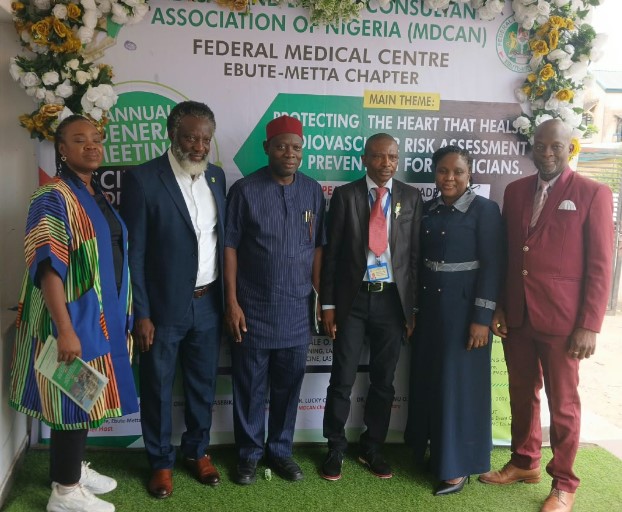
The warning came at the at the Annual General Meeting/Scientific Conference of the Medical and Dental Consultants’ Association of Nigeria (MDCAN), Federal Medical Centre (FMC), Ebute-Metta, Lagos tagged: “Protecting The Heart That Heals: Cardiovascular Risk Assessment And Prevention For Physicians”, where cardiologists and other medical experts urged physicians to stop treating their personal health as secondary to their professional responsibilities.
The experts said doctors must practise the healthy living measures they routinely recommend to patients, including regular medical examinations, adequate sleep, exercise, healthy diets and effective stress management.
Chief Consultant Cardiologist at the Lagos State University Teaching Hospital, LASUTH, Dr Folashade Daniel, said maintaining a healthy heart required deliberate efforts by physicians, particularly those whose demanding schedules often leave little room for personal care.
“I don’t think physicians can balance their work, healthy living, and their mobility. It has to be intentional,” she said.
Daniel explained that doctors must recognise that their responsibilities extend beyond their hospitals and patients.
“First of all, know that your life is not just, your life doesn’t just entail your job. You are a person, you have a family, you have responsibilities. Yes, to your patients, but also to your family, to yourself,” she said.
She advised doctors to make annual medical examinations a priority, particularly those with a family history of cardiovascular disease.
“Take your birthday, for example, your one anniversary, to do a check-up. And then look up all the results with a colleague. Don’t just be your own doctors. Let somebody look at what you have, the results you have done, and give you advice as need arises,” she added.
The cardiologist also called for healthier workplace environments, better access to affordable medicines and stronger government regulation of food products.
She warned against excessive salt, preservatives and trans fats, particularly from repeatedly used frying oil, and recommended workplace facilities that encourage walking and other physical activities.
Daniel further identified sleep deprivation as a concern among medical professionals, noting that excessive work schedules could undermine their ability to rest properly.
Earlier, MDCAN Chairman at FMC Ebute-Metta, Dr Lucky Okpetu, said the conference theme was informed by the contradiction between doctors’ professional advice to patients and their personal health practices.

“We found out that physicians hardly take care of them. They themselves don’t look after their hearts. They indulge in things they are not supposed to. They advise their patients to do the right thing. But they do not do what they tell the patients to do,” he said.
Okpetu, a consultant haematologist, urged doctors to establish relationships with personal physicians and undergo routine examinations.
“The ideal thing to do is, as a physician, you must have your own physician. You have to see your physician regularly,” he said.
He listed kidney function and blood sugar tests among the routine investigations doctors should undertake, stressing that lifestyle choices were central to cardiovascular health.
The Medical Director and Chief Executive Officer of FMC Ebute-Metta, Dr Saheed Adebowale Ogunme, also urged doctors to recommit themselves to the service of humanity while strengthening cooperation between hospital management and consultants.
He described healthcare as teamwork, saying successful treatment outcomes depended on the combined efforts of doctors and other healthcare professionals.
“If a patient comes to our hospital, has a successful surgery and goes home, it’s not the doctor or consultant that has done this alone. It’s the other people too, who participate in the care of that patient,” he said.
Ogunme also raised concerns about doctors’ tendency to neglect their own healthcare, noting that many physicians have no personal doctor to call when they experience medical problems.
On the role of technology in addressing workload and manpower shortages, Professor of Medicine and Chairman, Medical Advisory Committee, LASUTH, Prof. Adebowale O. Adekoya, said artificial intelligence could help reduce burnout by taking over repetitive documentation tasks.
He identified ambient scribe AI as one technology capable of listening to consultations and converting conversations into clinical records.
“AI can listen to conversation between the doctor, the nurse, and their patients. And then transcribe that using voice to text, using language models,” he said.
However, he warned that AI-generated medical information must be verified by healthcare professionals and that foreign datasets should not be applied indiscriminately to Nigerian patients.
“The responsibility is on us now to generate our own data,” he said.
Chairman of the occasion, Prof. Oluwatoyin Ashiru, urged doctors to protect their physical and emotional well-being, insisting that professional associations must prioritise the welfare of their members alongside improvements in medical practice and patient care.
He challenged the medical community to protect healthcare professionals, promote institutional collaboration and ensure that professional disagreements did not become more damaging than the diseases they were trained to treat.