By Daniel Kudayah
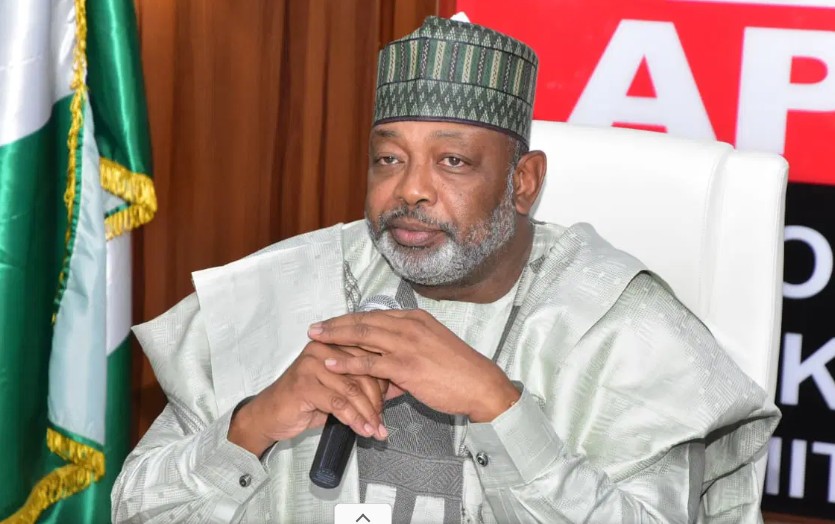
Minister of Agriculture and Food Security, Senator Abubakar Kyari, has warned opposition politicians against using the October 2026 Cadre Harmonisé food security report for political attacks, saying the projection of 33.5 million Nigerians facing food insecurity in 2027 has been misrepresented.
Kyari said the report was a technical assessment designed to identify possible food shortages and help the government plan interventions, not a prediction of election outcomes or a criticism of any administration.
The minister made this known in a statement issued on Monday in response to what he described as attempts by opposition politicians to give the report political meanings.
He stressed that the assessment did not link the projected food insecurity figures to the possible re-election of President Bola Tinubu in 2027.
According to him, the Cadre Harmonisé was developed by the Permanent Inter-State Committee for Drought Control in the Sahel (CILSS), with support from organisations including the Food and Agriculture Organisation (FAO), World Food Programme (WFP), FEWS NET, UNICEF and the Integrated Food Security Phase Classification (IPC).
He said the assessment was designed to provide early warnings about food and nutrition challenges and help governments and development partners respond before the situation worsened.
Kyari explained that the projection of 33.5 million Nigerians facing severe food and nutrition insecurity covers the period between June and August 2027.
He noted that the figure was lower than the 34.8 million Nigerians projected to face similar challenges during the same period in 2026.
The minister, however, explained that the assessment did not carry out a follow-up review after the projected period to determine whether the figures were eventually realised.
On the causes of food insecurity, Kyari identified climate change, irregular rainfall, prolonged dry spells and the Super El Niño phenomenon as factors affecting agricultural production, particularly among farmers who depend on rainfall.
He said these environmental challenges should not be blamed on the continuation of any political administration.
Kyari added that the Federal Government was working to address the situation through increased food production, improved farming methods and support for farmers.
He listed the distribution of fertilisers and other farm inputs, mechanised farming, irrigation, dry-season farming, agricultural loans, improved access to farmland, storage facilities and climate-friendly farming practices among the government’s interventions.
The minister also said improved security in some farming communities had allowed farmers who previously could not access their lands to return to farming.
He specifically mentioned Marte and Guzamala Local Government Areas of Borno State, where improved security had allowed officials to conduct the Cadre Harmonisé assessment.
According to him, farmers cannot increase food production if they are unable to safely access their farmlands.
He further disclosed that the government had recorded progress in fertiliser distribution, local fertiliser blending, support for smallholder farmers, mechanisation partnerships and access to agricultural loans through the Bank of Agriculture.
While admitting that the interventions would not solve the country’s food security problems overnight, Kyari said the challenge had existed for several years and predated the present administration.
He said the government remained committed to increasing food production and building a stronger food supply system.
“Food insecurity is a longstanding and structural challenge that has developed over many years and predates this administration. But the important thing is that we are confronting it directly, investing in production and building the systems needed to make our food supply more resilient,” he said.
The minister also said his ministry would not ignore findings from credible assessments, adding that such reports would help the government improve its policies and response to food insecurity.
He urged politicians to avoid using the hardship faced by Nigerians for political gains and called for responsible interpretation of food security statistics.
While welcoming criticism of government policies, Kyari said there was a need to separate genuine political debate from the deliberate twisting of technical reports.
He added that the government would continue to use the Cadre Harmonisé findings to identify vulnerable communities, support farmers, protect livelihoods and improve access to safe, nutritious and affordable food.