By Chidimma Oparaochaekwe
Nigerians can now verify communication devices before purchase under the Nigerian Communications Commission’s (NCC) Device Checker Platform, an initiative designed to help consumers avoid counterfeit phones, identify unapproved equipment and ensure devices meet the technical standards required for use on Nigerian networks.
The platform, introduced alongside efforts to strengthen compliance with type approval procedures, will also enable importers and dealers to verify devices before completing transactions, while helping the Commission tackle the circulation of fake, cloned and non-compliant products.
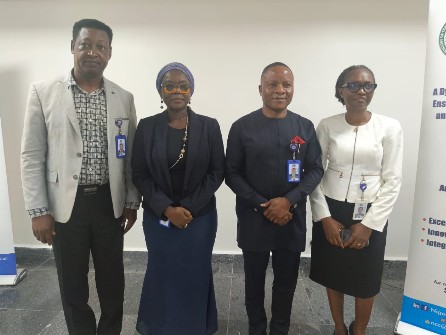
The Director and Zonal Controller of the NCC Lagos Zonal Office, Mr. Tunji Jimoh, disclosed this at a press conference on the Device Checker Platform and type approval procedures held at the Commission’s Lagos Zonal Office in Ikoyi.
Jimoh said the initiative was aimed at protecting consumers and improving accountability among manufacturers, importers, distributors and dealers as Nigeria’s digital economy continued to expand.
He explained that the Commission had reviewed its licensing and regularisation processes to enable more device dealers to obtain licences and had engaged importers and other industry stakeholders to improve compliance across the device supply chain.
Jimoh also encouraged consumers to verify devices before purchase, patronise licensed dealers and use the Commission’s online resources and consumer support channels.
Addressing concerns about users’ privacy, he said the platform was designed exclusively for device verification and regulatory compliance.
“The Device Checker Platform is not a surveillance tool.”
He clarified that the system did not access users’ messages, photographs, contacts, financial information or other private content stored on their devices.
“Its purpose is limited to device verification and regulatory compliance.”
Explaining the type approval process, the Assistant Director and Head of the Wireless Network Technical Standards and Network Integrity Department, Engr. Kings Adeyemi, said manufacturers were required to submit samples of their products, alongside relevant laboratory test reports and certifications, for assessment before mass production and entry into the Nigerian market.
He said the Commission examined each model to determine whether it met Nigeria’s technical requirements before issuing a type approval certificate. Approval obtained in another country did not automatically exempt a device from meeting applicable Nigerian standards.
Adeyemi explained that the list of approved models was available on the NCC website, allowing consumers and relevant authorities, including the Nigeria Customs Service, to verify their approval status.
He said the platform could flag devices that had not received the required approval for further regulatory action.
“The Device Checker Platform is not limited to smartphones. It also covers other devices beyond phones, including Internet of Things (IoT) devices and routers.”
Adeyemi warned that non-compliant devices could interfere with telecommunications networks because they might not regulate their transmission power properly, potentially affecting other devices operating in the same area.
He disclosed that approximately 2,920 devices had received type approval and were listed on the Commission’s website, which is updated regularly. However, he said he did not have the exact number of devices blocked since the platform’s introduction.
On existing phones, Adeyemi said their records had been migrated to the system, assuring users that they did not need to register their devices again simply because the platform had been introduced.
He added that provisions had been made for travellers entering Nigeria with their devices, allowing them 30 days to register where required through an online process.
According to Adeyemi, the platform also accommodates devices with multiple International Mobile Equipment Identity (IMEI) numbers, including those with up to four IMEIs. The IMEI is a unique identification number associated with a mobile device and can be displayed by dialling *#06#.
Adeyemi said the Commission had introduced the NG-IMEI Scanner application to simplify registration for dealers handling large quantities of devices. The application scans and organises IMEI numbers, identifies duplicate entries and reduces errors associated with manual data entry.
He added that the NCC had engaged mobile phone dealer associations, including one with more than two million members, to discourage the sale of counterfeit products and improve accountability among sellers.
“The most important thing is to encourage people to patronise genuine manufacturers and their authorised agents.”
Adeyemi said the platform would enable importers and buyers to check devices before completing transactions, making it easier to identify fake or non-compliant products and request replacements from suppliers.
On collaboration with other regulatory agencies, he said the NCC had worked with relevant agencies over the years and would continue to cooperate with them on the regulation of communication equipment across different sectors.
He added that type approval fees varied according to the category of equipment, with the applicable charges and application requirements available on the Commission’s website.
The Deputy Director and Team Lead of Regulatory Services at the NCC Lagos Zonal Office, Mrs. Toluwase Omodele-Rufai, said public awareness was a major objective of the initiative, adding that the Commission wanted consumers and industry stakeholders to understand how to use the platform.
She said the platform was owned by the NCC and accessible online, allowing users to check devices without visiting the Commission’s offices.
“The Device Checker Platform belongs to the NCC. It is a regulatory tool for enforcing type approval requirements.”
Omodele-Rufai said the Commission had no specific target for the number of devices it intended to block, explaining that its broader objective was to improve compliance and eliminate non-compliant products from the telecommunications industry.
“Our goal is to sanitise the telecommunications industry.”
She added that the Commission was engaging stakeholders and taking information to grassroots communities, with awareness materials available in Nigerian languages, including Yoruba and Edo.
Omodele-Rufai urged the media to support public education by informing Nigerians about the platform, the importance of checking devices before purchase and the need to comply with type approval requirements.
The NCC said the initiative was part of its commitment to consumer protection, fair competition, network integrity and a more reliable communications ecosystem in Nigeria.