By Kazeem Waris
Nigeria’s combined state health budgets have risen by more than 67 per cent, from ₦1.97 trillion in 2023 to over ₦3.3 trillion in 2026, while national health insurance enrolment has increased by 50 per cent, reaching nearly 24 million Nigerians.
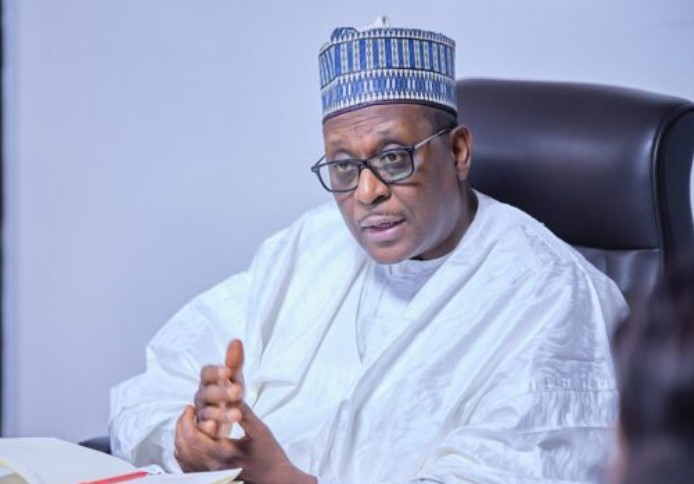
The Coordinating Minister of Health and Social Welfare, Prof. Muhammad Ali Pate, disclosed this on Thursday at the opening of the 67th National Council on Health (NCH) in Lafia, Nasarawa State, where he said the country had recorded significant progress in implementing its health sector reform agenda.
Pate, who spoke on the theme, “From Commitments to Results,” said Nigeria had fulfilled 41 presidential commitments in the health sector and recorded improvements in 12 of 13 core national health indicators since the launch of the Nigeria Health Sector Renewal Investment Initiative in December 2023.
He said the achievements reflected increased investment, expanded access to essential healthcare services and improved financial protection for vulnerable Nigerians.
Giving a breakdown of the progress, the minister said skilled deliveries in health facilities supported by the Basic Health Care Provision Fund (BHCPF) increased from 4.8 million in 2023 to nearly eight million by mid-2026, while fourth antenatal care visits rose from six million to 8.7 million.
He added that emergency transportation systems had conveyed more than 100,000 women and newborns to healthcare facilities, while the Federal Government’s free emergency obstetric care initiative had funded over 80,000 caesarean sections.
According to him, more than 50,000 patients had also benefited from free 48-hour emergency care across 507 accredited facilities, while over 5,000 dialysis patients had received subsidies of up to 80 per cent on treatment costs.
On healthcare workforce development, Pate said the proportion of facilities with at least two midwives or community health workers had increased from 12 per cent to nearly 91 per cent nationwide.
He disclosed that nearly 20,000 skilled birth attendants had been recruited across 22 states, alongside almost 5,000 community health workers in 10 states, while close to 80,000 frontline health workers had undergone retraining.
The minister also said immunisation campaigns had reached more than 100 million children aged zero to nine with measles and rubella vaccines, while over 70 million adolescent girls had received the human papillomavirus (HPV) vaccine to protect them against cervical cancer.
On local pharmaceutical production, he revealed that 10 domestic health factories and production lines were now producing medicines, rapid diagnostic test kits, mosquito nets and medical oxygen, with six commissioned in 2026 alone.
He said the facilities were supported by more than ₦24 billion in tax waivers provided under President Bola Tinubu’s June 2024 Executive Order to encourage local manufacturing of healthcare products.
Despite the gains, Pate warned that Nigerians continued to shoulder a disproportionate burden of healthcare expenditure through out-of-pocket payments, while significant inequalities persisted between urban and rural communities.
Citing household survey findings, he said fewer than four in 10 rural births were attended by skilled health workers, compared with seven in 10 in urban centres.
“The task before us now is to make them last, make them fairer, and make them felt in every ward, in every village, and in every household,” he said.
The minister urged state governments to ensure that budgetary allocations to the health sector translated into actual releases and improved service delivery, particularly ahead of the 2027 election and transition cycle.
He also warned states to prepare for declining international donor assistance by strengthening domestic health financing.
“The US government MOU has committed us to transit from dependency over the next four to five years. If the US exits and we don’t increase our domestic financing, we’ll be left with a very large gap. Sovereignty is only possible if we put our money where our mouth is,” he warned.
Pate also expressed concern over security threats facing healthcare workers, stressing the need to protect frontline personnel delivering essential services.
He commended the Nigeria Centre for Disease Control and Prevention (NCDC) and Port Health Services for containing a recently imported Ebola case among traced contacts without community transmission, while urging states to sustain surveillance in view of the ongoing outbreak in the Democratic Republic of the Congo.
Reviewing the implementation of previous council resolutions, the minister said an assessment of the 20 resolutions adopted at the 66th National Council on Health in Calabar showed an average implementation rate of more than 50 per cent across at least 15 resolutions.
He identified Niger, Benue, Akwa Ibom, Abia and Kogi states as having recorded the highest compliance scores.

“Let our scorecard show results that every citizen of this country can see in their own community,” he added.
Pate further disclosed that 70 memoranda were considered during the technical sessions of the council in Lafia, with 22 recommended for approval and 33 for noting.
He commended the Permanent Secretary of the Federal Ministry of Health and Social Welfare, Daju Kachollom, for coordinating the technical sessions, describing the gathering as her final National Council on Health in that capacity.
He urged state commissioners of health to ensure that resolutions adopted at the meeting were incorporated into their 2027 budgets and operational plans.
Declaring the council open on behalf of Governor Abdullahi Sule of Nasarawa State, his deputy, Dr. Emmanuel Akabe, called on stakeholders to move beyond policy declarations to measurable improvements in healthcare delivery.
“The real test of our commitment is not the number of policies formulated or resolutions adopted, but the tangible difference that these interventions make in the lives of ordinary Nigerians,” he said.
Akabe urged the council to attach clear timelines and accountability mechanisms to its resolutions to address the gap between budgetary allocations and actual service delivery.
Highlighting the state’s contributions to universal health coverage, he said the Nasarawa government had upgraded General Hospital, Akwanga, into a specialist hospital following the expansion and handover of Dalhatu Araf Specialist Hospital, Lafia, to the Federal Government.
He said the interventions were aimed at ensuring equitable access to tertiary healthcare across the state’s three senatorial zones.
The deputy governor also highlighted the performance of the Nasarawa State Drugs and Supplies Management Agency, established to address price volatility and eliminate counterfeit medicines.
He said the agency received an accelerated maturity rating from the Federal Ministry of Health in 2024 and subsequently emerged among the top four finalists at the 2025 Global Health Supply Chain Summit in Rwanda, becoming the first Nigerian supply chain organisation to achieve the recognition.
He added that the state government was expanding health insurance enrolment among poor and vulnerable residents across the formal and informal sectors, while prioritising primary healthcare and the welfare of health workers.
In his keynote address, the Emir of Shongom, Dr. Haliru Nadashe Yahaya, a physician and public health expert, called for stronger national discipline and grassroots participation in healthcare reforms.
Speaking on the theme, “One Plan, One Budget, One Conversation,” the traditional ruler advocated a coordinated approach to health sector planning and financing between federal and state governments.
He said previous reforms had suffered setbacks because state governments often pursued independent programmes instead of aligning their policies and implementation strategies with national priorities.
Yahaya warned that Nigeria had continued to lag behind some smaller West African countries, including Togo, in health outcomes despite committing significantly more resources to the sector.
He attributed the situation to poor coordination and weak implementation discipline, adding that dwindling international donor funding made accountability and efficient management of domestic resources increasingly important.
The monarch also cautioned policymakers and development partners against treating traditional rulers as ceremonial participants in health programmes, stressing that community interventions would achieve limited results without the involvement and understanding of local leaders.
In her remarks, the Permanent Secretary of the Federal Ministry of Health and Social Welfare, Daju Kachollom, said healthcare delivery ultimately took place at the state and community levels, making effective subnational leadership critical to the success of national reforms.
She described the 67th National Council on Health as an important platform for strengthening the partnership between federal and state governments, noting that all state governors had signed the sector-wide compact.
Kachollom urged commissioners and delegates to honestly assess the implementation of resolutions adopted at the previous council and ensure that new resolutions were clear, properly costed and assigned to specific authorities.
She stressed that every resolution must have a clear implementation pathway and measurable indicators to enable stakeholders to assess progress at the next council meeting.
The permanent secretary expressed appreciation to the Nasarawa State Government for hosting the meeting and disclosed that the Emir of Lafia, retired Justice Sidi Bage, had hosted members of the technical sessions at his palace the previous day, providing them an opportunity to appreciate the history and culture of the state.