By Blessing Elo Oghene
Oxfam Nigeria has called on governments and other stakeholders to intensify efforts to combat gender-based violence, revealing that more than one in five Nigerian women aged 15 to 49 have experienced physical or sexual violence.
The organisation also disclosed that 23.4 per cent of women in Nigeria have suffered intimate partner violence, while the National Human Rights Commission (NHRC) recorded 84,187 domestic violence complaints in 2024.
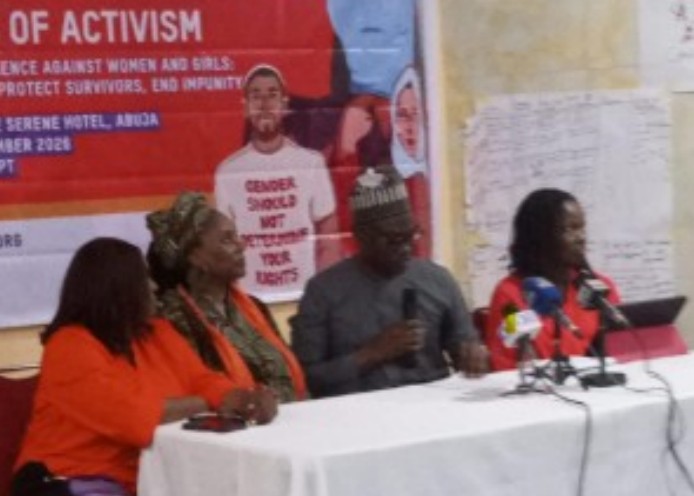
Oxfam’s Country Director in Nigeria, Tijani Ahmed Hamza, made this known on Wednesday in Abuja during a press conference to mark the 2026 16 Days of Activism Against Gender-Based Violence and the soft launch of its five-year FemFocus programme.
Hamza said the figures, drawn from the 2024 Nigeria Demographic and Health Survey and NHRC records, highlighted the urgent need for stronger institutional responses and improved access to justice for survivors.
He expressed concern that despite the enactment of laws aimed at curbing gender-based violence, their implementation remained weak, leaving several states without essential support facilities for survivors.
According to him, 35 states and the Federal Capital Territory have domesticated the Violence Against Persons (Prohibition) Act or enacted equivalent legislation, while 14 states still lack Sexual Assault Referral Centres.
He added that only eight states had consistent forensic services, while six states had neither referral centres nor shelters for survivors.
Hamza said Nigeria’s major challenge was no longer the absence of laws but inadequate implementation, funding and infrastructure.
He further noted that financial constraints prevented many survivors from accessing justice, with some spending as much as N100,000 from their pockets in the pursuit of justice.
He explained that the FemFocus programme was designed to address these challenges through improved survivor support services, stronger legal accountability and protection for Women Human Rights Defenders.
The five-year initiative, which runs from 2026 to 2030, is supported by the Ministry of Foreign Affairs of the Netherlands, with €6.4 million allocated to Nigeria.
Hamza said the programme would focus on preventing violence against women and girls, expanding access to survivor-centred services, strengthening laws and institutional accountability, as well as protecting women human rights defenders.
He urged federal and state governments, law enforcement agencies, the judiciary, traditional institutions, the media and the private sector to support survivors, fund grassroots feminist movements and ensure accountability.
Also speaking, the National Coordinator of Christian Women for Excellence, Empowerment and Development and Chairperson of the African Women Leaders Network, Prof. Fummilayo Para-Mallam, urged stakeholders to move beyond repeated awareness campaigns and embrace practical measures to tackle gender-based violence.
She called on Oxfam to partner with the Senator Oluremi Tinubu Gender Centre at the National Institute for Policy and Strategic Studies and contribute to the ongoing review of the National Gender Policy.
Para-Mallam also emphasised the need for donor-funded programmes to strengthen the institutional capacity of local partners to ensure the sustainability of interventions beyond their funding periods.
Similarly, the Executive Director of Kebekache Women Development and Research Centre, Dr. Emem Okon, called for increased community participation in addressing violence against women and girls.
She urged stakeholders to engage traditional institutions, men, families and other influential groups in challenging harmful practices and changing attitudes that promote violence.
Okon also advocated measures to discourage families of survivors from accepting financial settlements from perpetrators in exchange for withdrawing legal complaints.
The Chief Executive Officer of the Public and Private Development Centre, Lucy James Abagi, stressed the importance of sustainable funding for interventions aimed at addressing gender-based violence.
She urged governments, philanthropists and other stakeholders to establish long-term funding arrangements to ensure that projects and justice-sector interventions continued to deliver results beyond donor support.