By Desire Uzochukwu
Nigeria must urgently increase investment in health research, strengthen emergency referral systems and make women’s health a national priority to reduce preventable maternal deaths, the Director of Research, Maternal, Reproductive and Translational Research at the Nigerian Institute of Medical Research (NIMR), Dr Gregory A. Ohihoin, has said.
Ohihoin, a consultant obstetrician and gynaecologist at HICI Healthcare, said inadequate research funding, delayed access to emergency care and weaknesses in the health system continued to undermine efforts to protect women and their babies.
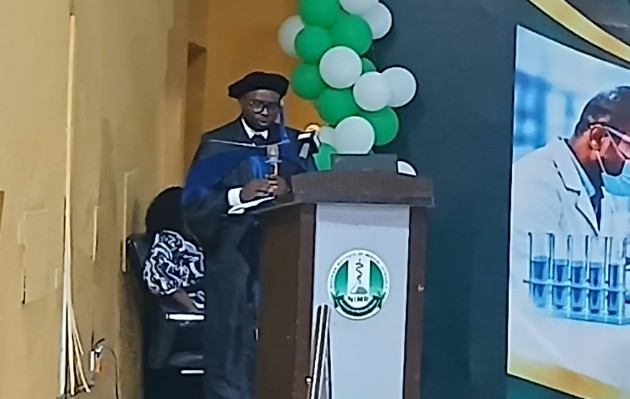
Delivering a public lecture titled, “The Woman, Her Baby and Her Health: The Odyssey of the Translational Physician-Scientist,” he cited findings from a study of women with pre-eclampsia and eclampsia at a specialist teaching hospital, which recorded a maternal mortality proportion of about 23 per cent and a perinatal mortality rate of 28.3 per cent.
He explained that the findings meant that approximately one in four women with the severe pregnancy-related conditions died, underscoring the need for early detection, prompt treatment and functional emergency referral systems.
According to him, maternal deaths are rarely caused by a single medical complication but often result from a combination of biological, social, economic and health system failures.
“Maternal death is therefore rarely the result of one isolated event. It is often the final consequence of interactive biological, social, economic and healthcare failures,” he said.
The researcher identified poor urinary output, the use of native herbal preparations, repeated seizures, low platelet count, high blood pressure and pulmonary oedema among factors associated with poor outcomes in women with pre-eclampsia and eclampsia.
He said such warning signs should prompt urgent clinical intervention, including stabilisation, seizure control, blood pressure management, laboratory assessment, close monitoring and timely delivery where indicated.
Ohihoin also called for a more effective referral system, warning that the availability of ambulances alone did not guarantee that women in obstetric emergencies would receive timely and appropriate care.
“An ambulance is not a referral system,” he declared.
He explained that an effective referral system required clear referral criteria, communication between facilities, stabilisation before transfer, trained personnel, reliable transportation and receiving hospitals equipped to manage emergencies.
Recalling lessons from a professional visit to Japan in 2012, he said the country’s efficient emergency response system influenced his efforts to promote improvements in maternal referrals in Lagos State.
He said he subsequently presented recommendations to the Lagos State Government, some of which were incorporated into the state’s health service system.
The NIMR director also highlighted the dangers of unsafe abortion, sickle cell disease in pregnancy and the difficulties faced by displaced women who cannot access antenatal and postnatal services.
On sickle cell disease, he said a study involving 32 pregnant women with the condition found that 30 required blood transfusions, while the high rate of Caesarean sections reflected the complexity of managing such pregnancies.
He stressed that identifying high-risk pregnancies was not enough unless health facilities had the personnel, equipment, blood supplies and capacity to respond to complications.
“The health system must have the capacity to respond to a risk. Identifying a risk is not really an issue. The health system must have the capacity to respond to that risk,” he said.
He further noted that poverty, insecurity, poor education, transportation challenges and lack of social support could prevent women from accessing essential maternal healthcare, particularly those displaced by conflict.
The researcher said safe motherhood must therefore extend beyond preventing obstetric complications to include equity, dignity and access to quality services.
Ohihoin, who traced his commitment to women’s health to his mother’s interrupted education and a life-threatening complication following surgery, said women should not be expected to abandon their ambitions or reproductive choices because of family responsibilities.
He recalled that his mother had returned to school after having nine children but abandoned her education because he cried every day in her absence.
The experience, he said, shaped his understanding of the barriers women face in pursuing education and personal development.
He also recalled refusing suggestions that his wife should postpone her medical residency to join him during his own specialist training, saying he did not want to reproduce the pattern of interrupted education he had witnessed in his family.
“Marriage and family life sometimes require sacrifice from everyone, but sacrifice should not become a rule applied disproportionately to women,” he said.
He added: “A woman is not merely a vessel for a baby. A woman is a person. She has aspirations. She has relationships. And she has rights. She also has fears, and she needs our support.”
The lecturer said his commitment to maternal health informed the establishment of PregnancyNigeria.com in 2010, a digital platform designed to provide evidence-based information and support to women before, during and after pregnancy.
He said the platform had grown to more than 12,000 active users, with some of its social media posts reaching nearly 750,000 accounts and generating more than 1.2 million views.
He explained that the initiative was created to address gaps in reliable maternal health information and help women recognise danger signs, make informed decisions and seek appropriate medical attention.
According to him, the platform has also extended its activities to community-based health education and free services for women, in collaboration with HICI Healthcare.
“Health information is itself an intervention,” he said, adding that an informed woman was better equipped to participate in decisions about her health and that of her baby.
Ohihoin also called for greater attention to reproductive health beyond pregnancy, including fertility, contraception, sexual health, prevention of cervical cancer and the rights of women living with HIV.
Presenting findings from research on high-risk human papillomavirus (HPV) infection among 570 Nigerian women, he said 194 tested positive, representing a prevalence of 34 per cent.
He said the findings reinforced the need for sustained HPV vaccination, cervical cancer screening and treatment of pre-cancerous conditions, while urging health authorities to address barriers that prevent women from completing the prevention and treatment process.
He also advocated self-sampling for cervical cancer screening, noting that allowing women to collect samples themselves could reduce some of the geographical, financial and cultural barriers associated with facility-based screening.
On HIV, he said research and public health interventions had significantly strengthened efforts to prevent mother-to-child transmission, while stressing that the reproductive choices and long-term health of women living with HIV must also be protected.
He said successful HIV treatment should not be measured only by viral suppression but should also consider fertility, ovarian function, contraception, pregnancy outcomes and reproductive autonomy.
Turning to research funding, Ohihoin lamented the limited resources available for health research in Nigeria, comparing the scale of funding for the United States National Institutes of Health with Nigeria’s overall public expenditure.
“We are not doing enough in terms of health research. We need to do a lot more. We are still behind. We need more funding,” he said.
He called for investment in research infrastructure, laboratories, data systems, training, mentorship and sustainable funding, while urging stronger locally led research partnerships.
He said African researchers should have meaningful roles in setting research questions, designing studies, analysing findings, determining authorship and managing intellectual property.
The NIMR director urged young clinicians and scientists to turn problems observed in clinical practice into research questions and work collaboratively to find solutions.
“Do not confuse a long education with its impact. Ask whether your work has improved a decision, a service, a policy, a scientific understanding or a patient’s life,” he said.
He added that the ultimate measure of research should be its impact on patients and communities, rather than the number of publications or their scientific rankings.
In his concluding remarks, Ohihoin called on families, institutions and policymakers to value women equally, invest in their education and protect their health and dignity.
“A woman must never become secondary to the condition we are treating. A woman must never become secondary to the research questions that we are asking,” he said.
He added: “A healthy woman is a healthy family. A healthy family is a healthy nation. That’s why we must ensure that the woman is healthy.”